Physical Address
304 North Cardinal St.
Dorchester Center, MA 02124
Physical Address
304 North Cardinal St.
Dorchester Center, MA 02124
With Michael Walker
With Michael Walker
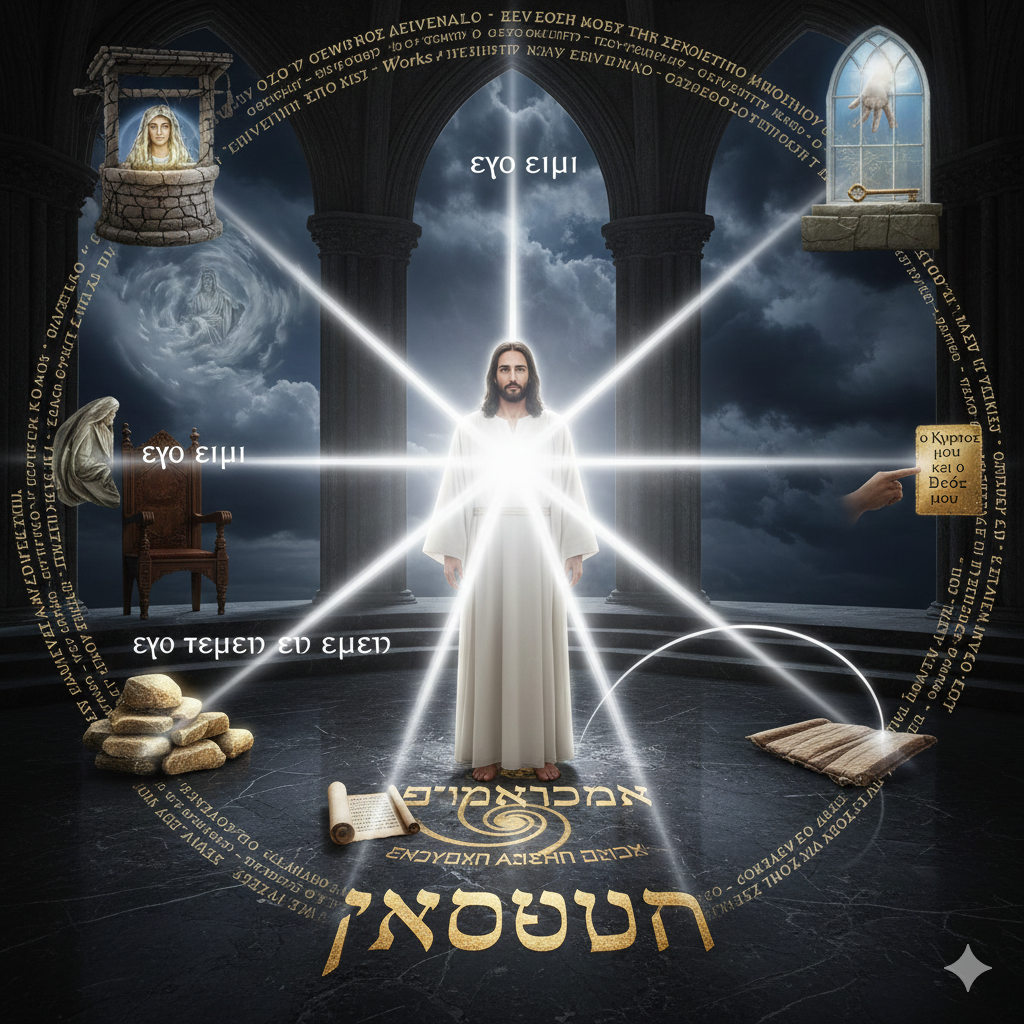
The question stands before the assembly of witnesses and centuries of reading: did Yehoshua of Nazareth ever actually say He is God, and more critically, did He need to in the idiom and covenantal frame of His own testimony? The profile must be rendered without reduction, beginning at the ground of His identity disclosed in name, role, affirmation, action, fulfillment, and essence. The name Yehoshua is not a decorative label; it is a covenant proclamation in sound, YHWH saves, the living declaration that salvation is God’s act embedded in a person. The role Mashiach (Mah-shee-akh) Messiah, in covenantal expectation, establishes appointment, to be smeared and inhabited of the Spirit Breath, and reign for deliverance. The affirmations are deliberate; they are not bare particles detached from consequence, but disclosures that bind identity to presence and enacted authority. The actions are public signs that move testimony from claim to proof. The fulfillment turns prophecy from scroll to flesh. The essence resolves technicalities, for the Word of God, the living voice, becomes flesh and dwells among humankind, taking the mantle of Son by manifestation, not from dust-origin like the first Adam, but from the essence of the Father’s Spirit, bridging heaven and earth without collapse of either. The proverb speaks plainly to daily life: some say talk is cheap and actions speak louder than words; when applied to the Messiah’s portfolio, the actions weigh the scales decisively. The idiom becomes covenantal proof. The technical critique is welcomed and answered, for title alone is never sufficient in a courtroom of careful minds; yet title joined to prerogatives and fulfillment yields verdict. This deep dive proceeds chronologically in the witness record to show that Yehoshua both speaks and acts in ways that declare divine identity, resolving the question not by Western shorthand, but by the covenant’s own grammar of revelation.
The first anchor is the Messiah disclosure at the well in Shomron (Shohm-rohn) Samaria, a covenantal conversation in which identity and presence fuse. The woman references the coming “Inhabited One” (of the Spirit Breath), and the response is immediate and unambiguous in its own register: ‘I who speak to you am He.” The words do not posture; they reveal. A clear presentation from the Greek witnesses of Codex Vaticanus renders the moment without embellishment…
Literal Interlinear Translation (Covenantal): Original: λεγει αυτω η γυνη οτι οιδα οτι Μεσσιας ερχεται ο λεγομενος Χριστος· οταν ελθη εκεινος αναγγελσει ημιν απαντα· λεγει αυτη Ιησους· εγω ειμι, ο λαλων σοι.
Transliteration: legei auto he gyne hoti oida hoti Messias erchetai ho legomenos Christos; hotan elthe ekeinos anaggelsei hemin apanta; legei aute Iesous; ego eimi, ho lalon soi.
Literal Meaning: she says to him, “the woman, that she knows that the Messiah is coming, the one called Christ; when that one comes, he will declare to us all things;” Yehoshua says to her; I am, the one speaking to you.” (John 4:25–26)
The disclosure here is Messiahship, not as an abstract office, but as a presence stamped in speech; the identity is affirmed, the mission is opened, and the encounter becomes covenantal revelation. This does not yet pronounce the Western formula I am God, yet it moves the identity forward under the weight of an Inhabited role that will be ratified by works and unity with the Father’s essence.
The second anchor is sonship affirmation under judicial pressure. In the high priestly trial, the question strikes at the core: are you the Messiah, the Son of the Blessed. The response is designed to be heard in Israel’s apocalyptic register: “I am; and you will see the Son of Man seated at the right hand of Power, coming with the clouds.” Here the Messiah affirmation is fused with enthronement and the divine court scene from Daniel, a move that pushes beyond a royal title into divine prerogative. Scripture from Codex Vaticanus supplies the textual weight.
Literal Interlinear Translation (Covenantal): Original: παλιν ο αρχιερευς επηρωτα αυτον και λεγει αυτω· συ ει ο Χριστος ο υιος του ευλογητου; ο δε Ιησους ειπεν· εγω ειμι· και οψεσθε τον υιον του ανθρωπου καθημενον εκ δεξιων της Δυναμεως και ερχομενον μετα των νεφελων του ουρανου.
Transliteration: palin ho archiereus eperota auton kai legei auto; sy ei ho Christos ho hyios tou eulogetou; ho de Iesous eipen; ego eimi; kai opsesthe ton huion tou anthropou kathemenon ek dexion tes Dynameos kai erchomenon meta ton nephelon tou ouranou.
Literal Meaning: again the high priest was questioning him and says to him; “you are the Christ, the Son of the Blessed;” and Yehoshua said; “I am; and you will see the Son of Man sitting at the right hand of Power and coming with the clouds of heaven.” (Mark 14:61–62)
The charge of blasphemy that follows in the narrative tradition is a social proof that hearers grasped a divine claim embedded in the imagery and oath. In a courtroom, jurors listen for more than vocabulary; they listen for prerogatives, place, and the claim to the divine council’s throne. The words place the speaker in the space reserved for God’s own rule.
The third anchor binds unity with the Father to public reaction, demonstrating how idiom and action converge into recognition. The statement “I and the Father are one” draws immediate fury because it collapses any space between agency and essence. The stoning attempt reads the claim as divine equivalence. Scripture from from Codex Vaticanus clarifies the construction.
Literal Interlinear Translation (Covenantal): Original: εγω και ο πατηρ εν εσμεν. εβαστασαν παλιν λιθους οι Ιουδαιοι ινα λιθασωσιν αυτον. απεκριθη Ιησους· πολλα εργα καλα εδειξα υμιν εκ του πατρος· δια ποιον αυτων εργον εμε λιθαζετε;
Transliteration: ego kai ho pater hen esmen. ebastasan palin lithous hoi Ioudaioi hina lithasosin auton. apekrithe Iesous; polla erga kala edeixa hymin ek tou patros; dia poion auton ergon eme lithazete;
Literal Meaning: “I and the Father are one.” The Jews carried stones again so that they might stone him. Yehoshua answered; “Many good works I showed to you from the Father; because of which of them do you stone me?” (John 10:30–32)
The idiom here functions like a craftsman’s signature on the workbench; when the mark matches the master’s sign, the provenance is recognized, and those who reject the provenance move to destroy the bearer of the signature rather than admit the origin. Unity with the Father is not a sentimental metaphor; it is a claim to shared essence and authority, the kind of claim that cannot be misunderstood in the covenant’s temple-centered culture.
The fourth anchor draws from the divine name idiom and pre-existence assertion, the statement before Abraham came into being, I am. In daily speech, this does not fit chronology; it fits ontology. It is a deliberate echo of God’s self-identification structured in human mouth, provoking immediate lethal response because hearers know the gravity of the phrase in Israel’s memory. Codex Vaticanus bears the construction plainly.
Literal Interlinear Translation (Covenantal): Original: ειπον ουν αυτω οι Ιουδαιοι· πεντηκοντα ετη ουπω εχεις και Αβρααμ εωρακας; ειπεν αυτοις Ιησους· αμην αμην λεγω υμιν, πριν Αβρααμ γενεσθαι, εγω ειμι. εραν λιθους ινα βαλωσιν επ’ αυτον.
Transliteration: eipon oun auto hoi Ioudaioi; pentekonta ete oupo echeis kai Abraam heorakas; eipen autois Iesous; amen amen lego hymin, prin Abraam genesthai, ego eimi. eran lithous hina balosin ep’ auton.
Literal Meaning: the Jews said then to him; “fifty years you do not yet have, and Abraham you have seen;” Yehoshua said to them; “truly truly I say to you, before Abraham came to be, I am.”” they lifted stones so that they might throw upon him. (John 8:57–59)
This sentence is a mountain crest where time meets being; in a world where lineage and age govern status, a claim to pre-existence shifts the ground to the level of divine identity. The reaction is immediate because the idiom is understood; the artisan is claiming the forge itself, not merely work produced upon it.
The fifth anchor confirms divine prerogatives enacted in public as forensic proof; release/cure of sins is not a discretionary authority in Israel’s covenant; it belongs to God. The healing of the paralyzed man is staged as an audit, a visible sign to validate an invisible decree. Codex Vaticanus presents the structure that links word and deed.
Literal Interlinear Translation (Covenantal): Original: ιδων δε Ιησους την πιστιν αυτων λεγει τω παραλυτικω· τεκνον, αφεωνται σου αι αμαρτιαι. ησαν δε τινες των γραμματεων εκει καθημενοι και διαλογιζομενοι εν ταις καρδιαις αυτων· τι ουτος ουτως λαλει βλασφημιας; τις δυναται αφιεναι αμαρτιας ει μη εις ο Θεος; και ινα ειδητε οτι εξουσιαν εχει ο υιος του ανθρωπου επι της γης αφιεναι αμαρτιας — λεγει τω παραλυτικω — σοι λεγω, εγειρε, αρον τον κραβαττον σου και υπαγε εις τον οικον σου.
Transliteration: idon de Iesous ten pistin auton legei to paralytyko; teknon, apheontai sou hai hamartiai. esan de tines ton grammateon ekei kathemenoi kai dialogizomenoi en tais kardiais auton; ti houtos houtos lalei blasphēmias; tis dynatai aphienai hamartias ei me heis ho Theos; kai hina eidete hoti exousian echei ho huios tou anthropou epi tes ges aphienai hamartias — legei to paralytyko — soi lego, egeire, aron ton krabatton sou kai hypage eis ton oikon sou.
Literal Meaning: and Yehoshua having seen their faith says to the paralytic; “child, ‘your sins are released/cured.” and some of the scribes were sitting there and reasoning in their hearts; “why does this one speak thus, blasphemies; who is able to release/cure sins except one, God;” and so that you may know that the Son of Man has authority on earth to release/cure sins — he says to the paralytic — “to you I say, rise, take up your mat and go into your house.” (Mark 2:5–11)
The healing operates like a seal pressed into wax; the visible imprint proves the authority behind the decree. The idiom actions speak louder than words is not dismissive here; it is covenantal, for God’s works validate God’s words in public view.
The sixth anchor confirms acceptance of worship and confessional recognition without correction, a sign of identity that in Israel’s strict monotheism is not granted lightly. The confession of Toma (Toh-mah) — Thomas after the resurrection shows the gravity of the moment. Scripture from Codex Vaticanus holds the clause in the Greek witness.
Literal Interlinear Translation (Covenantal): Original: απεκριθη Θωμας και ειπεν αυτω· ο Κυριος μου και ο Θεος μου. λεγει αυτω Ιησους· οτι εωρακας με πεπιστευκας· μακαριοι οι μη ιδοντες και πιστευσαντες.
Transliteration: apekrithē Thomas kai eipen auto; ho Kyrios mou kai ho Theos mou. legei auto Iesous; hoti heorakas me pepisteukas; makarioi hoi me idontes kai pisteusantes.
Literal Meaning: Thomas answered and said to him; “my Lord and my God.” Yehoshua says to him; “because you have seen me, you have trusted; blessed are those not having seen and having trusted.” (John 20:28–29)
In a culture where improper worship is disciplined, the acceptance of such a confession without rebuke functions like an oath-signed contract; the acceptance is the signature. The idiom is matched to covenantal practice.
The seventh anchor affirms that confessions from followers are ratified as revelation from the Father, strengthening the case that identity is not self-appointed. The confession of Shim‘on (Shee-mohn) — Simon Peter carries weight. Codex Vaticanus demonstrates the interplay of confession and divine disclosure.
Literal Interlinear Translation (Covenantal): Original: λεγει αυτοις· υμεις δε τινα με λεγετε ειναι; αποκριθεις δε Σιμων Πετρος λεγει· συ ει ο Χριστος, ο υιος του Θεου του ζωντος. αποκριθεις δε ο Ιησους ειπεν αυτω· μακαριος ει, Σιμων Βαριωνα, οτι σαρξ και αιμα ουκ απεκαλυψεν σοι, αλλ’ ο πατηρ μου ο εν τοις ουρανοις.
Transliteration: legei autois; hymeis de tina me legete einai; apokritheis de Simon Petros legei; sy ei ho Christos, ho hyios tou Theou tou zontos. apokritheis de ho Iesous eipen auto; makarios ei, Simon Bariona, hoti sarx kai haima ouk apekalysen soi, all’ ho pater mou ho en tois ouranois.
Literal Meaning: he says to them; “but you, who do you say that I am”; and answering Simon Peter says; “you are the Christ, the Son of the living God.” and answering Yehoshua said to him; “blessed are you, Simon son of Jonah, because flesh and blood did not reveal to you, but my Father who is in the heavens.” (Matthew 16:15–17)
The structure is like a legal charter mediated by the sovereign; the identity is not merely asserted but granted in revelation, binding heaven’s witness to earthly confession.
Miracles witnessed by multitudes seal the portfolio in the public register of testimony. Signs over nature, provision, sickness, death, and spiritual bondage position the actor at God’s operative level. The feeding in the wilderness moves with the cadence of Moses yet outstrips it; calming the storm speaks to the God who splits the seas; raising the dead confronts the final enemy; exorcisms reveal dominion over the invisible rebellion. These are not private tricks; they are enacted in open view, provoking faith and opposition in equal measure, like an artisan whose craft is performed in the marketplace so that every eye can measure the precision. The idiom actions speak louder than words applies without triviality here; the works carry the voice of the identity louder than self-reference could, for they are the covenant’s grammar written in conduct. While many signs could be presented interlinearly, the deep dive maintains coherence by noting that each miracle functions as an evidentiary ratifier of previously stated titles and claims, rendering the question not whether such works occurred, but what identity they reveal when placed beside unity with the Father and authority over sin.
Fulfillment of prophecy before the cross renders the scroll in flesh. Entry into Yerushalayim (Yeh-roo-shah-lah-yeem) — Jerusalem upon a donkey, betrayal for silver, suffering without broken bone, the pierced one recognized, the healer of the blind and lame, the light among the nations, each enacted confirmation builds a cumulative witness that does not depend upon isolated prooftexts but upon a life’s trajectory that moves inside the shape of promised redemption. In narrative terms, this is a path that dances to a melody only a few hear at first, but one that matches instruments with the score in time and harmony; the closer the alignment, the clearer the composer’s identity. The deep dive honors the instruction to remain within the Greek witness framework for interlinear presentation; thus, where the New Covenant writings quote or allude to the prophets, the Greek transmission bears the weight. The public reactions across Yehudah — Judea and Galil (Gah-leel) — Galilee demonstrate that fulfillment is not a private satisfaction of curiosity but a communal recognition and controversy that signals the stakes of messianic identity.
The analogy of sonship provides an everyday frame for essence. “If a dog has a pup, isn’t the pup a dog?” The pup is of the same essence, not a differing species, not a lesser category. The puppy carries the nature of the dog; it does not negotiate its identity by asserting its own label. Transferred to covenantal logic, Son of God does not reduce to a mere office; when joined to divine prerogatives, unity, worship acceptance, and pre-existence, sonship signals shared essence. Hearers in the narratives react accordingly: some call blasphemy, recognizing the claim at the level of God’s identity; others worship, recognizing the revelation. The analogy works like a lens ground from common experience; when placed before the eye, the text comes into focus because the pattern is familiar. The field witnesses in Israel’s precincts did not miss the pattern; their reactions are the public handwriting beneath the image clarifying what is seen.
The technical critique is welcomed into the record. On a narrowly lexical level, it is true that saying Son of God does not mechanically equal I am God, and saying Messiah does not, in every Second Temple expectation, equal a claim to deity; however, legal-evidentiary framing resolves this by asking whether the titles are joined to prerogatives exclusive to God and whether the works and unity statements close the gap. Release/cure of sins, unity with the Father, pre-existence, enthronement imagery with clouds, acceptance of worship, authority over death, and fulfillment that tracks prophecy before the cross, collectively form the portfolio in which actions are the loudest commentary upon words. besides the fact Yehoshua literally states “The Father and I are One.” It becomes unnecessary for Western shorthand to be uttered when covenantal idiom already speaks with maximal clarity. The proverb, “actions speak louder than words,” does not demote words; it elevates enacted revelation as the decisive ratifier. The idiom does not replace testimony; it confirms it.
The essence statement completes the portrait and resolves the thematic question. Yehoshua is the sound, the audible voice, the Word of God, made flesh. This is not a metaphor thrown against time; it is ontological reality expressed in human existence. The mantle Son is taken by manifestation through human birth, joining full humanity to full divinity, not through dust-origin but through the essence of the Father’s Spirit. This union bridges heaven and earth without compromise, the way a master craft joins two materials into one continuous form that exceeds the strength of either alone. The identity declared by name, affirmed by role, unified by essence, verified by action, and sealed by fulfillment, becomes a single proclamation: the Messiah does not need to utter Western syllables to satisfy the question, for the covenant’s grammar has already spoken. In light of the witnesses, the idioms, the prophecies, the miracles, and the interlinear reading of the declarations, the theme resolves with gravity: the Messiah both says and shows the identity of God, not by reduction but by revelation.
The conclusion stands as a verdict addressed to the assembled minds and hearts: the question whether Yehoshua ever actually says He is God must be judged within the covenant’s own language and evidentiary practice. The disclosures “ego eimi,” I am He, The Son of God, The Father and I are One, unity with the Father, and divine prerogatives are not stray phrases; they are architected revelations. The actions speak with covenantal volume: release and cure of sin decreed and corroborated, creation commanded, death reversed, evil expelled, prophecy walked and lived before the cross. The idiom confirms the hearing: actions louder than words where the words have already declared identity. The analogy clarifies essence: sonship of God signals God’s own nature. The name is a standing proclamation: YHWH saves, salvation as God’s act embodied. The essence settles the ground: the Word did not visit flesh as a passing voice; the Word became flesh and dwelt among humankind as the living covenant. The final declaration therefore does not rest upon a single sentence extracted from its world; it rests upon converging lines of testimony that admit no neutral reading. The Messiah’s portfolio is a unified proclamation that demands recognition: Yehoshua is God, spoken in covenantal words and thundered in covenantal deeds, rendering the proverb and the technical critique satisfied under one sovereign conclusion.