Physical Address
304 North Cardinal St.
Dorchester Center, MA 02124
Physical Address
304 North Cardinal St.
Dorchester Center, MA 02124
With Michael Walker
With Michael Walker
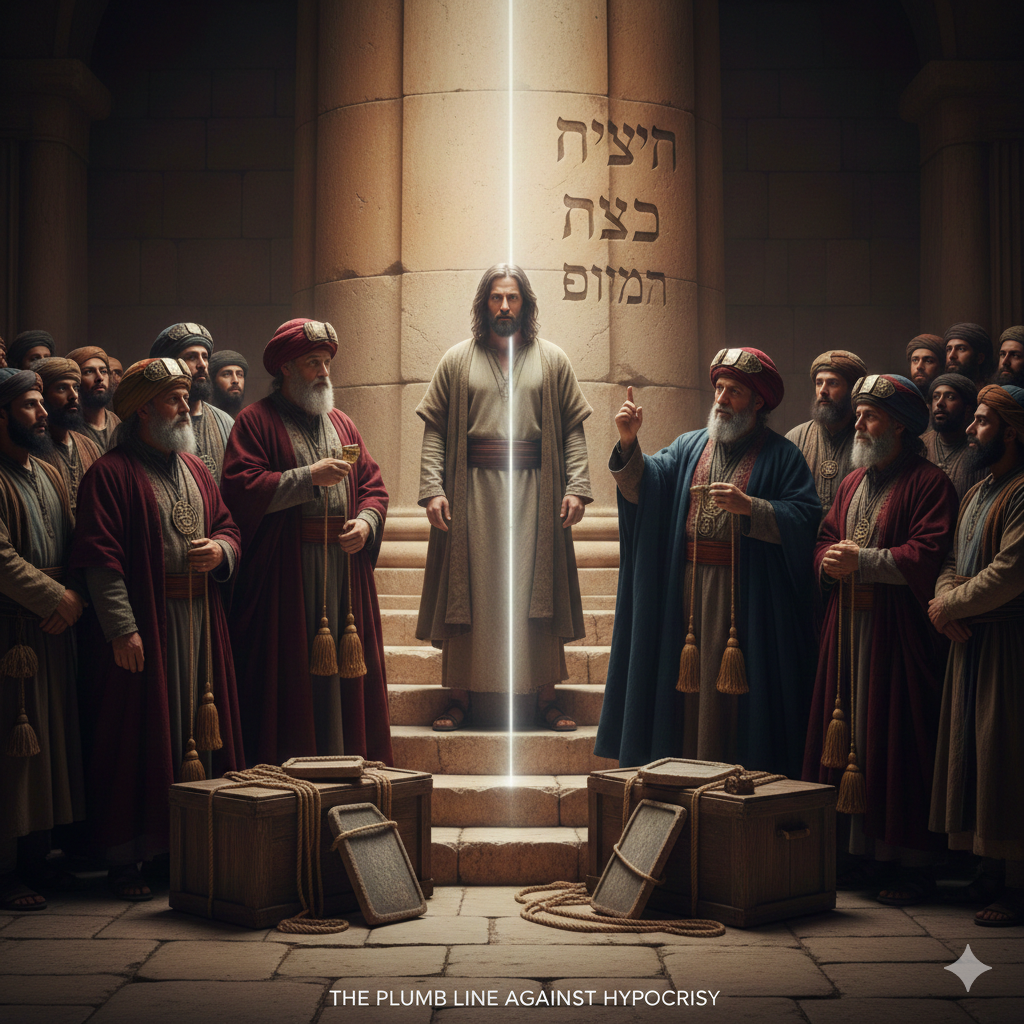
The Messiah, Yehoshua, moved through the world as a fire that revealed what was hidden in shadow. His voice cut through the layers of ritual and pride, not to destroy Torah but to fulfill its mandates that humanity utterly fails to. When Pharisees, Sadducees, and scholars cloaked themselves in authority, he unveiled their hypocrisy with words sharper than any blade, words that exposed the emptiness of power divorced from justice. Scripture bears witness to these confrontations: parables that overturned the tables of pride, rebukes that shattered the illusion of control, debates that re-centered covenantal truth upon mercy and faithfulness. Each moment was not a quarrel of men but a revelation of divine order, a reminder that the covenant was never meant to be a tool of oppression but a living stream of justice flowing through the people.
This introduction is not a preface to a legal argument but a summons into the profound. It is the opening of a deep dive where the eternal voice of covenantal clarity confronts distortion, where the words of Yehoshua stand as a plumb line against the crookedness of human pride, and where the pillars of justice, mercy, and faithfulness rise again as the foundation of covenantal life.
The scriptural context of Messiah’s engagements must be displayed in fullness, for only in the complete witness of the text can the posture of Yehoshua be discerned. Each confrontation is not a fragment but a living testimony, and the Greek codices preserve the voice that exposes hypocrisy and restores covenantal clarity. The following section unfolds each passage in its entirety, rendered in literal interlinear etymological translation, with native Greek script, phonetic transliteration, and covenantally faithful English in strict SVO format. Proper nouns are preserved in their native form, sounded out, and then given in Anglicized form, so that no Western gloss intrudes upon the fidelity of the witness.
Pharisees:
Matthew 23:1–7 (Codex Sinaiticus) Original: Τότε ὁ Ἰησοῦς ἐλάλησεν τοῖς ὄχλοις καὶ τοῖς μαθηταῖς αὐτοῦ λέγων· ἐπὶ τῆς Μωϋσέως καθέδρας ἐκάθισαν οἱ γραμματεῖς καὶ οἱ Φαρισαῖοι· πάντα οὖν ὅσα ἂν εἴπωσιν ὑμῖν ποιεῖν, ποιεῖτε καὶ τηρεῖτε· κατὰ δὲ τὰ ἔργα αὐτῶν μὴ ποιεῖτε· λέγουσιν γὰρ καὶ οὐ ποιοῦσιν. δεσμεύουσιν δὲ φορτία βαρέα καὶ δυσβάστακτα καὶ ἐπιτιθέασιν ἐπὶ τοὺς ὤμους τῶν ἀνθρώπων· αὐτοὶ δὲ τῷ δακτύλῳ αὐτῶν οὐ θέλουσιν κινῆσαι αὐτά. πάντα δὲ τὰ ἔργα αὐτῶν ποιοῦσιν πρὸς τὸ θεαθῆναι τοῖς ἀνθρώποις· πλατύνουσιν γὰρ τὰ φυλακτήρια αὐτῶν καὶ μεγαλύνουσιν τὰ κράσπεδα· φιλοῦσιν δὲ τὴν πρωτοκλισίαν ἐν τοῖς δείπνοις καὶ τὰς πρωτοκαθεδρίας ἐν ταῖς συναγωγαῖς καὶ τοὺς ἀσπασμοὺς ἐν ταῖς ἀγοραῖς καὶ καλείσθαι ὑπὸ τῶν ἀνθρώπων ῥαββί.
Transliteration: Tote ho Iēsous elalēsen tois ochlois kai tois mathētais autou legōn· epi tēs Mōuseōs kathedras ekathisan hoi grammateis kai hoi Pharisaioi· panta oun hosa an eipōsin hymin poiein, poieite kai tēreite· kata de ta erga autōn mē poieite· legousin gar kai ou poiousin. desmeuousin de phortia barea kai dysbastakta kai epititheasin epi tous ōmous tōn anthrōpōn· autoi de tō daktulō autōn ou thelousin kinēsai auta. panta de ta erga autōn poiousin pros to theathēnai tois anthrōpois· platynousin gar ta phylaktēria autōn kai megalynousin ta kraspeda· philousin de tēn prōtoklisian en tois deipnois kai tas prōtokathedrias en tais synagōgais kai tous aspasmous en tais agorais kai kaleisthai hypo tōn anthrōpōn rhabbi.
Literal Interlinear: Then Yehoshua spoke to the crowds and to his disciples saying: Upon the seat of Mosheh sat the scribes and the Pharisees. All therefore whatever they might say to you to do, do and keep. According to their works do not do. For they say and do not. They bind heavy burdens and hard to bear and place upon the shoulders of men. They themselves with their finger are not willing to move them. All their works they do to be seen by men. They widen their phylacteries and enlarge their tassels. They love the chief place at feasts and the chief seats in synagogues and the greetings in marketplaces and to be called by men Rabbi.
Posture: Yehoshua’s posture here is one of unveiling. He acknowledges the authority of the seat of Mosheh but exposes the duplicity of those who occupy it. His stance is not rejection of Torah but rejection of hypocrisy. He confronts the love of titles and honor, showing that their posture is one of pride, while His is one of covenantal fidelity that restores agency to the people.
Matthew 23:13–36 (Codex Sinaiticus) Original: Οὐαὶ δὲ ὑμῖν γραμματεῖς καὶ Φαρισαῖοι ὑποκριταί· ὅτι κλείετε τὴν βασιλείαν τῶν οὐρανῶν ἔμπροσθεν τῶν ἀνθρώπων· ὑμεῖς γὰρ οὐκ εἰσέρχεσθε οὐδὲ τοὺς εἰσερχομένους ἀφίετε εἰσελθεῖν. Οὐαὶ ὑμῖν γραμματεῖς καὶ Φαρισαῖοι ὑποκριταί· ὅτι κατεσθίετε τὰς οἰκίας τῶν χηρῶν καὶ προφάσει μακρὰ προσευχόμενοι· διὰ τοῦτο λήμψεσθε περισσότερον κρίμα. Οὐαὶ ὑμῖν γραμματεῖς καὶ Φαρισαῖοι ὑποκριταί· ὅτι περιάγετε τὴν θάλασσαν καὶ τὴν ξηρὰν ποιῆσαι ἕνα προσήλυτον· καὶ ὅταν γένηται, ποιεῖτε αὐτὸν υἱὸν γεέννης διπλότερον ὑμῶν. Οὐαὶ ὑμῖν ὁδηγοὶ τυφλοί· ὅτι λέγετε· ὃς ἂν ὀμόσῃ ἐν τῷ ναῷ, οὐδέν ἐστιν· ὃς δ’ ἂν ὀμόσῃ ἐν τῷ χρυσῷ τοῦ ναοῦ, ὀφείλει. Μωροὶ καὶ τυφλοί· τίς γὰρ μείζων, ὁ χρυσὸς ἢ ὁ ναὸς ὁ ἁγιάζων τὸν χρυσόν; καὶ ὃς ἂν ὀμόσῃ ἐν τῷ θυσιαστηρίῳ, οὐδέν ἐστιν· ὃς δ’ ἂν ὀμόσῃ ἐν τῷ δώρῳ τὸ ἐπάνω αὐτοῦ, ὀφείλει. Τυφλοί· τίς γὰρ μείζων, τὸ δῶρον ἢ τὸ θυσιαστήριον τὸ ἁγιάζον τὸ δῶρον; ὁ οὖν ὀμόσας ἐν τῷ θυσιαστηρίῳ, ὀμνύει ἐν αὐτῷ καὶ ἐν πᾶσι τοῖς ἐπάνω αὐτοῦ· καὶ ὁ ὀμόσας ἐν τῷ ναῷ, ὀμνύει ἐν αὐτῷ καὶ ἐν τῷ κατοικοῦντι αὐτόν· καὶ ὁ ὀμόσας ἐν τῷ οὐρανῷ, ὀμνύει ἐν τῷ θρόνῳ τοῦ θεοῦ καὶ ἐν τῷ καθήμενῳ ἐπάνω αὐτοῦ. Οὐαὶ ὑμῖν γραμματεῖς καὶ Φαρισαῖοι ὑποκριταί· ὅτι ἀποδεκατοῦτε τὸ ἡδύοσμον καὶ τὸ ἄνηθον καὶ τὸ κύμινον, καὶ ἀφήκατε τὰ βαρύτερα τοῦ νόμου· τὴν κρίσιν καὶ τὸ ἔλεος καὶ τὴν πίστιν· ταῦτα δὲ ἔδει ποιῆσαι κἀκεῖνα μὴ ἀφιέναι.
Transliteration: Ouai de hymin grammateis kai Pharisaioi hypokritai· hoti kleiete tēn basileian tōn ouranōn emprosthen tōn anthrōpōn· hymeis gar ouk eiserchesthe oude tous eiserchomenous aphiete eiselthein. Ouai hymin grammateis kai Pharisaioi hypokritai· hoti katesthiete tas oikias tōn chērōn kai prophāsei makra proseuchomenoi· dia touto lēmpsesthe perissoteron krima. Ouai hymin grammateis kai Pharisaioi hypokritai· hoti periagete tēn thalassan kai tēn xēran poiēsai hena prosēlyton· kai hotan genētai, poieite auton huion geennēs diploteron hymōn. Ouai hymin hodēgoi typhloi· hoti legete· hos an omosē en tō naō, ouden estin· hos d’ an omosē en tō chrysō tou naou, opheilei. Moroi kai typhloi· tis gar meizōn, ho chrysos ē ho naos ho hagiazōn ton chryson? kai hos an omosē en tō thysiastēriō, ouden estin· hos d’ an omosē en tō dōrō to epanō autou, opheilei. Typhloi· tis gar meizōn, to dōron ē to thysiastērion to hagiazōn to dōron? ho oun omosas en tō thysiastēriō, omnyuei en autō kai en pasi tois epanō autou· kai ho omosas en tō naō, omnyuei en autō kai en tō katoikounti auton· kai ho omosas en tō ouranō, omnyuei en tō thronō tou theou kai en tō kathēmenō epanō autou. Ouai hymin grammateis kai Pharisaioi hypokritai· hoti apodekatoute to hēdyosmon kai to anēthon kai to kyminon, kai aphēkate ta barytera tou nomou· tēn krisin kai to eleos kai tēn pistin· tauta de edei poiēsai kakeina mē aphienai.
Literal Interlinear: Woe to you scribes and Pharisees hypocrites, because you shut the kingdom of the heavens before men. You yourselves do not enter, nor do you allow those entering to enter. Woe to you scribes and Pharisees hypocrites, because you devour the houses of widows and for a pretense make long prayers. Therefore you will receive greater judgment. Woe to you scribes and Pharisees hypocrites, because you travel sea and land to make one convert, and when he becomes, you make him son of Gehenna twice as much as yourselves. Woe to you blind guides, because you say: Whoever swears in the temple, it is nothing; but whoever swears in the gold of the temple, he is obligated. Fools and blind, which is greater, the gold or the temple that sanctifies the gold? And whoever swears in the altar, it is nothing; but whoever swears in the gift upon it, he is obligated. Blind, which is greater, the gift or the altar that sanctifies the gift? Therefore the one swearing in the altar swears in it and in all things upon it. And the one swearing in the temple swears in it and in the one dwelling in it. And the one swearing in the heaven swears in the throne of God and in the one sitting upon it. Woe to you scribes and Pharisees hypocrites, because you tithe mint and dill and cumin, and you have neglected the weightier matters of the law: judgment and mercy and faith. These it was necessary to do without neglecting the others.
Posture: Yehoshua’s posture here is fierce and uncompromising. He does not merely critique but pronounces covenantal judgment. His words are structured as woes, each one a hammer blow against hypocrisy. He exposes the distortion of priorities: the obsession with minutiae while neglecting justice, mercy, and faithfulness. His stance is prophetic, echoing the voice of Isaiah and Amos, calling out the blindness of leaders who exalt gold above the temple, ritual above covenant, and appearance above truth. Yehoshua’s posture is that of a prophet restoring divine order, confronting corruption with the authority of heaven itself.
Luke 11:39–44 (Codex Sinaiticus) Original: Εἶπεν δὲ ὁ κύριος πρὸς αὐτόν· νῦν ὑμεῖς οἱ Φαρισαῖοι τὸ ἔξωθεν τοῦ ποτηρίου καὶ τοῦ πίνακος καθαρίζετε· τὸ δὲ ἔσωθεν ὑμῶν γέμει ἁρπαγῆς καὶ πονηρίας. ἄφρονες· οὐχ ὁ ποιήσας τὸ ἔξωθεν καὶ τὸ ἔσωθεν ἐποίησεν; πλὴν τὰ ἐνόντα δότε ἐλεημοσύνην· καὶ ἰδοὺ πάντα καθαρὰ ὑμῖν ἐστιν. ἀλλὰ οὐαὶ ὑμῖν τοῖς Φαρισαίοις· ὅτι ἀποδεκατοῦτε τὸ ἡδύοσμον καὶ τὸ ῥύπον καὶ πᾶν λάχανον, καὶ παρερχόμενοι τὴν κρίσιν καὶ τὴν ἀγάπην τοῦ θεοῦ· ταῦτα δὲ ἔδει ποιεῖν κἀκεῖνα μὴ παρεῖναι. οὐαὶ ὑμῖν τοῖς Φαρισαίοις· ὅτι ἀγαπᾶτε τὴν πρωτοκαθεδρίαν ἐν ταῖς συναγωγαῖς καὶ τοὺς ἀσπασμοὺς ἐν ταῖς ἀγοραῖς. οὐαὶ ὑμῖν· ὅτι ἐστε ὡς τὰ μνημεῖα τὰ ἄδηλα, καὶ οἱ ἄνθρωποι περιπατοῦντες ἐπάνω οὐκ οἴδασιν.
Transliteration: Eipen de ho kyrios pros auton· nyn hymeis hoi Pharisaioi to exōthen tou potēriou kai tou pinakos katharizete· to de esōthen hymōn gemei harpagēs kai ponērias. Aphrones· ouch ho poiēsas to exōthen kai to esōthen epoiēsen? Plēn ta enonta dote eleēmosynēn· kai idou panta kathara hymin estin. Alla ouai hymin tois Pharisaiois· hoti apodekatoute to hēdyosmon kai to rhypon kai pan lachanon, kai parerchomenoi tēn krisin kai tēn agapēn tou theou· tauta de edei poiein kakeina mē pareinai. Ouai hymin tois Pharisaiois· hoti agapate tēn prōtokathedrian en tais synagōgais kai tous aspasmous en tais agorais. Ouai hymin· hoti este hōs ta mnēmeia ta adēla, kai hoi anthrōpoi peripatountes epanō ouk oidasin.
Literal Interlinear: And the Lord said to him: Now you Pharisees cleanse the outside of the cup and of the dish, but your inside is full of greed and wickedness. Fools, did not the one who made the outside also make the inside? But give the things within as alms, and behold all things are clean to you. But woe to you Pharisees, because you tithe mint and rue and every herb, and you pass by the judgment and the love of God. These it was necessary to do and not to neglect the others. Woe to you Pharisees, because you love the chief seats in the synagogues and the greetings in the marketplaces. Woe to you, because you are like unmarked graves, and men walking over them do not know.
Posture: Yehoshua’s posture here is one of piercing exposure. He confronts the obsession with external purity, showing that the true corruption lies within. His rebuke is surgical, cutting through the façade of ritual cleanliness to reveal greed and wickedness hidden beneath. He calls them fools, not in casual insult but in covenantal judgment, exposing their blindness to the Creator’s design that sanctifies both inside and outside. His posture is prophetic and restorative, demanding that almsgiving and inner purity replace hollow ritual. He condemns their love of honor and public recognition, likening them to unmarked graves—hidden sources of defilement that contaminate those who walk over them unknowingly. Yehoshua’s stance is uncompromising: external ritual without justice and love is death, while covenantal fidelity is life.
John 8:13–59 (Codex Sinaiticus) Original: Εἶπον οὖν αὐτῷ οἱ Φαρισαῖοι· σὺ περὶ σεαυτοῦ μαρτυρεῖς· ἡ μαρτυρία σου οὐκ ἔστιν ἀληθής. ἀπεκρίθη Ἰησοῦς καὶ εἶπεν αὐτοῖς· κἂν ἐγὼ μαρτυρῶ περὶ ἐμαυτοῦ, ἀληθής ἐστιν ἡ μαρτυρία μου· ὅτι οἶδα πόθεν ἦλθον καὶ ποῦ ὑπάγω· ὑμεῖς δὲ οὐκ οἴδατε πόθεν ἔρχομαι ἢ ποῦ ὑπάγω. ὑμεῖς κατὰ τὴν σάρκα κρίνετε· ἐγὼ οὐ κρίνω οὐδένα. καὶ ἐὰν κρίνω δὲ ἐγώ, ἡ κρίσις ἡ ἐμὴ ἀληθινή ἐστιν· ὅτι μόνος οὐκ εἰμί, ἀλλ’ ἐγὼ καὶ ὁ πέμψας με. καὶ ἐν τῷ νόμῳ δὲ τῷ ὑμετέρῳ γέγραπται ὅτι δύο ἀνθρώπων ἡ μαρτυρία ἀληθής ἐστιν· ἐγώ εἰμι ὁ μαρτυρῶν περὶ ἐμαυτοῦ καὶ μαρτυρεῖ περὶ ἐμοῦ ὁ πέμψας με πατήρ.
Transliteration: Eipon oun autō hoi Pharisaioi· sy peri seautou martyreis· hē martyria sou ouk estin alēthēs. Apekrithē Iēsous kai eipen autois· kan egō martyro peri emautou, alēthēs estin hē martyria mou· hoti oida pothen ēlthon kai pou hypagō· hymeis de ouk oidate pothen erchomai ē pou hypagō. Hymeis kata tēn sarka krinete· egō ou krinō oudena. Kai ean krinō de egō, hē krisis hē emē alēthinē estin· hoti monos ouk eimi, all’ egō kai ho pempsas me. Kai en tō nomō de tō hymeterō gegraptai hoti dyo anthrōpōn hē martyria alēthēs estin· egō eimi ho martyrōn peri emautou kai martyrei peri emou ho pempsas me patēr.
Literal Interlinear: Therefore the Pharisees said to him: You testify concerning yourself; your testimony is not true. Yehoshua answered and said to them: Even if I testify concerning myself, true is my testimony, because I know from where I came and where I go. You do not know from where I come or where I go. You judge according to the flesh; I judge no one. And if I judge, my judgment is true, because I am not alone, but I and the one who sent me. And in your torah it has been written that the testimony of two men is true. I am the one testifying concerning myself, and the Father who sent me testifies concerning me.
Posture: Yehoshua’s posture in this confrontation is one of divine self-revelation against spiritual blindness. The Pharisees accuse Him of false testimony, attempting to bind Him within the legal framework of human witness. Yehoshua responds by transcending their categories, declaring that his testimony is validated not by human law but by divine origin. His stance is not defensive but declarative: He knows His source and his destiny, while they remain blind. He exposes their judgment as fleshly, bound to appearances, while His judgment arises from covenantal truth. This posture is revelatory, unveiling the blindness of those who claim sight, and asserting that true witness is established by the Father and the Son together.
The passage continues through escalating confrontation, culminating in Yehoshua’s declaration “πρὶν Ἀβραὰμ γενέσθαι, ἐγώ εἰμι” (Prin Abraam genesthai, egō eimi — Before Abraham came to be, I am). This statement is the apex of posture: Yehoshua reveals covenantal identity beyond time, exposing the Pharisees’ inability to perceive eternal reality. Their response, to pick up stones, reveals the depth of their blindness and hostility. Yehoshua’s posture is unwavering: He confronts not only hypocrisy but the refusal to see divine truth, standing as eternal witness against temporal distortion.
Sadducees:
Matthew 22:23–33 (Codex Sinaiticus) Original: Ἐν ἐκείνῃ τῇ ἡμέρᾳ προσῆλθον αὐτῷ Σαδδουκαῖοι, λέγοντες μὴ εἶναι ἀνάστασιν, καὶ ἐπηρώτησαν αὐτὸν λέγοντες· διδάσκαλε, Μωϋσῆς εἶπεν· ἐάν τις ἀποθάνῃ μὴ ἔχων τέκνα, ἐπιγαμβρεύσει ὁ ἀδελφὸς αὐτοῦ τὴν γυναῖκα αὐτοῦ καὶ ἀναστήσει σπέρμα τῷ ἀδελφῷ αὐτοῦ. ἦσαν δὲ παρ’ ἡμῖν ἑπτὰ ἀδελφοί· καὶ ὁ πρῶτος γαμήσας ἐτελεύτησεν, καὶ μὴ ἔχων σπέρμα κατέλιπεν τὴν γυναῖκα αὐτοῦ τῷ ἀδελφῷ αὐτοῦ· ὁμοίως καὶ ὁ δεύτερος καὶ ὁ τρίτος ἕως τῶν ἑπτά· ὕστερον δὲ πάντων ἀπέθανεν ἡ γυνή. ἐν τῇ ἀναστάσει οὖν τίνος τῶν ἑπτὰ ἔσται γυνή; πάντες γὰρ ἔσχον αὐτήν. ἀποκριθεὶς δὲ ὁ Ἰησοῦς εἶπεν αὐτοῖς· πλανᾶσθε μὴ εἰδότες τὰς γραφὰς μηδὲ τὴν δύναμιν τοῦ θεοῦ. ἐν γὰρ τῇ ἀναστάσει οὔτε γαμοῦσιν οὔτε γαμίζονται, ἀλλὰ ὡς ἄγγελοι ἐν τῷ οὐρανῷ εἰσιν. περὶ δὲ τῆς ἀναστάσεως τῶν νεκρῶν οὐκ ἀνέγνωτε τὸ ῥηθὲν ὑμῖν ὑπὸ τοῦ θεοῦ λέγοντος· ἐγώ εἰμι ὁ θεὸς Ἀβραὰμ καὶ ὁ θεὸς Ἰσαὰκ καὶ ὁ θεὸς Ἰακώβ; οὐκ ἔστιν ὁ θεὸς νεκρῶν ἀλλὰ ζώντων. καὶ ἀκούσαντες οἱ ὄχλοι ἐξεπλήσσοντο ἐπὶ τῇ διδαχῇ αὐτοῦ.
Transliteration: En ekeinē tē hēmera prosēlthon autō Saddoukaioi, legontes mē einai anastasin, kai epērōtēsan auton legontes· didaskale, Mōysēs eipen· ean tis apothanē mē echōn tekna, epigambreusei ho adelphos autou tēn gynaika autou kai anastēsei sperma tō adelphō autou. Ēsan de par’ hēmin hepta adelphoi· kai ho prōtos gamēsas eteleutēsen, kai mē echōn sperma katelipen tēn gynaika autou tō adelphō autou· homoiōs kai ho deuteros kai ho tritos heōs tōn hepta· hysteron de pantōn apethanen hē gynē. En tē anastasei oun tinos tōn hepta estai gynē? Pantes gar eschon autēn. Apokritheis de ho Iēsous eipen autois· planasthe mē eidotes tas graphas mēde tēn dynamin tou theou. En gar tē anastasei oute gamousin oute gamizontai, alla hōs angeloi en tō ouranō eisin. Peri de tēs anastaseōs tōn nekrōn ouk anegnōte to rhēthen hymin hypo tou theou legontos· Egō eimi ho theos Abraam kai ho theos Isaak kai ho theos Iakōb? Ouk estin ho theos nekrōn alla zōntōn. Kai akousantes hoi ochloi exeplēssonto epi tē didachē autou.
Literal Interlinear: On that day came to him Sadducees, saying there is no resurrection, and they questioned Him saying: Teacher, Mosheh said: If anyone dies not having children, his brother will take the wife and raise seed for his brother. There were among us seven brothers, and the first having married died, and not having seed left the wife to his brother. Likewise also the second and the third until the seven. Last of all the woman died. In the resurrection therefore whose of the seven will she be wife? For all had her. Yehoshua answered and said to them: You are deceived not knowing the scriptures nor the power of God. For in the resurrection, they neither marry nor are given in marriage, but they are as angels in heaven. Concerning the resurrection of the dead, have you not read what was spoken to you by God saying: I am the God of Abraham and the God of Isaac and the God of Jacob? He is not the God of the dead but of the living. And hearing, the crowds were astonished at his teaching.
Posture: Yehoshua’s posture here is corrective and revelatory. The Sadducees approach with a contrived scenario, attempting to trap Him within their denial of resurrection. Yehoshua dismantles their premise by exposing their ignorance of both scripture and divine power. His stance is not merely argumentative but restorative, affirming resurrection as covenantal reality. He declares that in resurrection, human categories of marriage do not apply, for life is transformed into angelic likeness. His posture is authoritative, grounding resurrection in the eternal covenant identity of God as the God of Abraham, Isaac, and Jacob. This is not the God of the dead but of the living, and Yehoshua’s words re-center covenantal truth upon life, exposing the Sadducees’ distortion as blindness. The astonishment of the crowds reveals the power of his teaching, which restores agency by affirming that covenantal life transcends death.
Acts 23:6–8 (Codex Sinaiticus) Original: Γνοὺς δὲ Παῦλος ὅτι τὸ ἓν μέρος ἐστὶν Σαδδουκαίων τὸ δὲ ἕτερον Φαρισαίων, ἔκραξεν ἐν τῷ συνεδρίῳ· ἄνδρες ἀδελφοί, ἐγὼ Φαρισαῖός εἰμι, υἱὸς Φαρισαίων· περὶ ἐλπίδος καὶ ἀναστάσεως νεκρῶν κρίνομαι. καὶ τοῦτο αὐτοῦ εἰπόντος ἐγένετο στάσις τῶν Φαρισαίων καὶ Σαδδουκαίων, καὶ ἐσχίσθη τὸ πλῆθος. Σαδδουκαῖοι γὰρ λέγουσιν μὴ εἶναι ἀνάστασιν μήτε ἄγγελον μήτε πνεῦμα· Φαρισαῖοι δὲ ὁμολογοῦσιν ἀμφότερα.
Transliteration: Gnous de Paulos hoti to hen meros estin Saddoukaiōn to de heteron Pharisaiōn, ekraxen en tō synedriō· andres adelphoi, egō Pharisaios eimi, huios Pharisaiōn· peri elpidos kai anastaseōs nekrōn krinomai. Kai touto autou eipontos egeneto stasis tōn Pharisaiōn kai Saddoukaiōn, kai eschisthē to plēthos. Saddoukaiōi gar legousin mē einai anastasin mēte angelon mēte pneuma· Pharisaiōi de homologousin amphotera.
Literal Interlinear: Knowing then Paul that one part is Sadducees and the other Pharisees, he cried out in the council: Men brothers, I am a Pharisee, son of Pharisees. Concerning hope and resurrection of the dead I am judged. And when he said this, there became a dispute of the Pharisees and Sadducees, and the crowd was divided. For Sadducees say there is no resurrection nor angel nor spirit, but Pharisees confess both.
Posture: The posture revealed here is strategic and covenantally aligned with Yehoshua’s earlier confrontations. Paul discerns the division within the council and declares his alignment with the hope of resurrection, the very truth Yehoshua had proclaimed against the Sadducees. His cry is not manipulation but revelation, exposing the fracture between those who deny resurrection and those who affirm it. This moment demonstrates how Yehoshua’s teaching on resurrection became the axis of conflict, a dividing line between blindness and sight, denial and affirmation. Paul’s posture mirrors Yehoshua’s: bold, declarative, and rooted in covenantal truth. The uproar that follows shows the enduring power of resurrection as the central confrontation, a truth that destabilizes institutional pride and re-centers covenantal agency upon life.
Luke 11:45–52 (Codex Sinaiticus) Original: Ἀποκριθεὶς δὲ εἷς τῶν νομικῶν λέγει αὐτῷ· διδάσκαλε, ταῦτα λέγων καὶ ἡμᾶς ὑβρίζεις. ὁ δὲ εἶπεν· καὶ ὑμῖν τοῖς νομικοῖς οὐαί· ὅτι φορτία δυσβάστακτα ἐπιφορτίζετε τοῖς ἀνθρώποις, καὶ αὐτοὶ ἑνὶ τοῦ δακτύλου ὑμῶν οὐ προσψαύετε τοῖς φορτίοις. οὐαὶ ὑμῖν· ὅτι οἰκοδομεῖτε τὰ μνημεῖα τῶν προφητῶν, οἱ δὲ πατέρες ὑμῶν ἀπέκτειναν αὐτούς. ἄρα μαρτυρεῖτε καὶ συνευδοκεῖτε τοῖς ἔργοις τῶν πατέρων ὑμῶν· ὅτι αὐτοὶ μὲν ἀπέκτειναν αὐτούς, ὑμεῖς δὲ οἰκοδομεῖτε. διὰ τοῦτο καὶ ἡ σοφία τοῦ θεοῦ εἶπεν· ἀποστελῶ εἰς αὐτοὺς προφήτας καὶ ἀποστόλους, καὶ ἐξ αὐτῶν ἀποκτενοῦσιν καὶ διώξουσιν, ἵνα ἐκζητηθῇ τὸ αἷμα πάντων τῶν προφητῶν τὸ ἐκκεχυμένον ἀπὸ καταβολῆς κόσμου ἀπὸ τῆς γενεᾶς ταύτης, ἀπὸ αἵματος Ἄβελ ἕως αἵματος Ζαχαρίου τοῦ ἀπολομένου μεταξὺ τοῦ θυσιαστηρίου καὶ τοῦ οἴκου· ναί, λέγω ὑμῖν, ἐκζητηθήσεται ἀπὸ τῆς γενεᾶς ταύτης. οὐαὶ ὑμῖν τοῖς νομικοῖς· ὅτι ἤρατε τὴν κλεῖδα τῆς γνώσεως· αὐτοὶ οὐκ εἰσήλθατε, καὶ τοὺς εἰσερχομένους ἐκωλύσατε.
Transliteration: Apokritheis de heis tōn nomikōn legei autō· didaskale, tauta legōn kai hēmas hybrizeis. Ho de eipen· kai hymin tois nomikois ouai· hoti phortia dysbastakta epiphortizete tois anthrōpois, kai autoi heni tou daktulou hymōn ou prospsaute tois phortiois. Ouai hymin· hoti oikodomeite ta mnēmeia tōn prophētōn, hoi de pateres hymōn apekteinan autous. Ara martyreite kai syneudokeite tois ergois tōn paterōn hymōn· hoti autoi men apekteinan autous, hymeis de oikodomeite. Dia touto kai hē sophia tou theou eipen· apostelō eis autous prophētas kai apostolous, kai ex autōn apoktenousin kai diōxousin, hina ekzētēthē to haima pantōn tōn prophētōn to ekkechymenon apo katabolēs kosmou apo tēs geneas tautēs, apo haimatos Abel heōs haimatos Zachariou tou apolomenou metaxy tou thysiastēriou kai tou oikou· nai, legō hymin, ekzētēthēsetai apo tēs geneas tautēs. Ouai hymin tois nomikois· hoti ērate tēn kleida tēs gnōseōs· autoi ouk eisēlthate, kai tous eiserchomenous ekōlysate.
Literal Interlinear: Answering then one of the scholars said to him: Teacher, saying these things you insult us also. And He said: Woe to you scholars, because you load burdens hard to bear upon men, and you yourselves with one of your fingers do not touch the burdens. Woe to you, because you build the tombs of the prophets, and your fathers killed them. Therefore, you testify and approve the works of your fathers, because they indeed killed them, and you build. Because of this also the wisdom of God said: I will send to them prophets and apostles, and some of them they will kill and persecute, so that the blood of all the prophets poured out from the foundation of the world may be required of this generation, from the blood of Abel to the blood of Zacharias who perished between the altar and the house. Yes, I say to you, it will be required of this generation. Woe to you scholars, because you took away the key of knowledge; you yourselves did not enter, and those entering you hindered.
Posture: Yehoshua’s posture here is one of direct condemnation against those who claim to be guardians of knowledge yet obstruct its access. His rebuke exposes the scholars as complicit in the legacy of bloodshed, building monuments to prophets their fathers killed, thereby testifying to their own corruption. He declares that the wisdom of God will send prophets and apostles, but they too will be persecuted, showing that the pattern of rejection continues. Yehoshua’s stance is prophetic and judicial, pronouncing that the blood of the prophets from Abel to Zacharias will be required of this generation. His posture is not only confrontational but revelatory, exposing the scholars as gatekeepers who remove the key of knowledge, refusing to enter themselves and preventing others from entering. This is covenantal indictment: knowledge is meant to liberate, but they have turned it into a barrier. Yehoshua stands as the one who restores access, confronting the obstruction with divine authority.
Mark 7:6–13 (Codex Sinaiticus) Original: ὁ δὲ εἶπεν αὐτοῖς· καλῶς ἐπροφήτευσεν Ἠσαΐας περὶ ὑμῶν τῶν ὑποκριτῶν, ὡς γέγραπται· οὗτος ὁ λαὸς τοῖς χείλεσίν με τιμᾷ, ἡ δὲ καρδία αὐτῶν πόρρω ἀπέχει ἀπ’ ἐμοῦ· μάτην δὲ σέβονταί με, διδάσκοντες διδασκαλίας ἐντάλματα ἀνθρώπων. ἀφέντες γὰρ τὴν ἐντολὴν τοῦ θεοῦ κρατεῖτε τὴν παράδοσιν τῶν ἀνθρώπων. καὶ ἔλεγεν αὐτοῖς· καλῶς ἀθετεῖτε τὴν ἐντολὴν τοῦ θεοῦ ἵνα τὴν παράδοσιν ὑμῶν τηρήσητε. Μωϋσῆς γὰρ εἶπεν· τίμα τὸν πατέρα σου καὶ τὴν μητέρα σου· καὶ ὁ κακολογῶν πατέρα ἢ μητέρα θανάτῳ τελευτάτω. ὑμεῖς δὲ λέγετε· ἐὰν εἴπῃ ἄνθρωπος τῷ πατρὶ ἢ τῇ μητρί· κορβᾶν, ὅ ἐστιν δῶρον, ὃ ἐὰν ἐξ ἐμοῦ ὠφεληθῇς, οὐκέτι ἀφίετε αὐτὸν οὐδὲν ποιῆσαι τῷ πατρὶ ἢ τῇ μητρί· ἀκυροῦντες τὸν λόγον τοῦ θεοῦ τῇ παραδόσει ὑμῶν ᾗ παρεδώκατε· καὶ παρόμοια τοιαῦτα πολλὰ ποιεῖτε.
Transliteration: Ho de eipen autois· kalōs eprophēteusen Ēsaias peri hymōn tōn hypokritōn, hōs gegraptai· houtos ho laos tois cheilesin me timā, hē de kardia autōn porrō apechei ap’ emou· matēn de sebontai me, didaskontes didaskalias entalmata anthrōpōn. Aphentes gar tēn entolēn tou theou krateite tēn paradosin tōn anthrōpōn. Kai elegen autois· kalōs atheteite tēn entolēn tou theou hina tēn paradosin hymōn tērisēte. Mōysēs gar eipen· tima ton patera sou kai tēn mētera sou· kai ho kakologōn patera ē mētera thanatō teleutatō. Hymeis de legete· ean eipē anthrōpos tō patri ē tē mētri· korban, ho estin dōron, ho ean ex emou ōphelethēs, ouketi aphiete auton ouden poiēsai tō patri ē tē mētri· akyrountes ton logon tou theou tē paradosē hymōn hē paredōkate· kai paromoia toiauta polla poieite.
Literal Interlinear: And He said to them: Well, did Isaiah prophesy concerning you hypocrites, as it has been written: This people honors me with their lips, but their heart is far from me. In vain they worship me, teaching teachings, commandments of men. Leaving the commandment of God, you hold the tradition of men. And He said to them: Well, you set aside the commandment of God so that you may keep your tradition. For Mosheh said: Honor your father and your mother, and the one speaking evil of father or mother let him end in death. But you say: If a man says to his father or mother: Korban, which is gift, whatever you might have benefited from me, you no longer allow him to do anything for his father or mother, nullifying the word of God by your tradition which you handed down. And many similar things you do.
Posture: Yehoshua’s posture here is prophetic indictment rooted in Isaiah’s witness. He confronts the scholars and teachers of the torah for elevating human tradition above divine command. His rebuke is sharp: their lips honor God, but their hearts are far away. He exposes the corruption of tradition that nullifies covenantal command, specifically the distortion of honoring parents through the practice of declaring resources “Korban.” Yehoshua’s stance is covenantal restoration, calling them back to the weight of divine command over human invention. His posture is uncompromising, declaring that their traditions have become instruments of hypocrisy, severing the people from the living word of God. By citing Isaiah, He aligns Himself with the prophetic tradition, showing that their distortion is not new but part of a long legacy of hypocrisy. Yehoshua’s posture is that of a restorer, stripping away the façade of tradition to reveal the eternal command of God.
This section has revealed in fullness the posture Yehoshua took when confronting Pharisees, Sadducees, and scholars, and the scriptures testify to the depth of those engagements. The Pharisees were exposed for their hypocrisy: they sat in the seat of Mosheh yet refused to practice what they preached, binding heavy burdens upon the people while seeking honor and titles. Yehoshua’s words in Matthew 23 and Luke 11 declared woes against them, unveiling their obsession with minutiae while neglecting justice, mercy, and faithfulness. His posture was prophetic and judicial, cutting through the façade of ritual purity to reveal inner corruption, likening them to unmarked graves that defile without being seen. In John 8, the confrontation escalated to questions of identity, where Yehoshua declared eternal covenantal truth, “Before Abraham came to be, I am,” exposing their blindness and revealing himself as the eternal witness.
The Sadducees, denying resurrection, attempted to trap Yehoshua with contrived scenarios. In Matthew 22, He dismantled their premise, declaring that in resurrection human categories of marriage do not apply, for life is transformed into angelic likeness. He affirmed that the God of Abraham, Isaac, and Jacob is not the God of the dead but of the living, re-centering covenantal truth upon life eternal. Later, in Acts 23, Paul’s cry before the council revealed how Yehoshua’s teaching on resurrection remained the axis of conflict, dividing Pharisees and Sadducees and exposing the enduring fracture between denial and affirmation. Yehoshua’s posture here was revelatory, correcting ignorance and restoring covenantal clarity.
The scholars and teachers of the law were condemned for loading burdens upon the people and obstructing access to knowledge. In Luke 11, Yehoshua declared that they had taken away the key of knowledge, refusing to enter themselves and hindering those who sought to enter. He pronounced that the blood of the prophets from Abel to Zacharias would be required of that generation, exposing their complicity in the legacy of rejection. In Mark 7, He accused them of nullifying God’s word by human tradition, citing Isaiah’s prophecy that their lips honored God while their hearts were far away. Yehoshua’s posture was covenantal restoration, stripping away the corruption of tradition and reasserting the eternal command of God.
Summarized in detail, this section shows Yehoshua’s engagements as covenantal confrontations that exposed hypocrisy, dismantled denial, and condemned obstruction. His posture was unwavering: prophetic against Pharisaic pride, revelatory against Sadducean blindness, and judicial against scholarly corruption. In each case, He restored agency to the people, re-centered covenantal truth upon justice, mercy, and faithfulness, and unveiled the eternal voice of God against the distortions of men. This section stands as a complete testimony of Yehoshua’s covenantal posture in the face of institutional pride, revealing him as the living plumb line by which all distortion is measured and exposed.
As the narrative expands beyond the confines of Jewish sectarian disputes, Yehoshua’s mission collides with the broader intellectual currents of the ancient world. His encounters with philosophers and institutional academia reveal a striking contrast between covenantal truth and the relativism of Greco-Roman thought. These moments are not polite exchanges of ideas but decisive confrontations—where divine authority dismantles the pretensions of human wisdom and exposes the fragility of institutional power. In this arena, the Messiah and His apostles stand as uncompromising witnesses, ensuring that truth remains unclouded by philosophical speculation or academic elitism.
Philosophers / Institutional Academia
John 18:37–38 (Codex Sinaiticus) Original: Εἶπεν οὖν αὐτῷ ὁ Πιλᾶτος· οὐκοῦν βασιλεὺς εἶ σύ; ἀπεκρίθη Ἰησοῦς· σὺ λέγεις ὅτι βασιλεὺς εἰμι. ἐγὼ εἰς τοῦτο γεγέννημαι καὶ εἰς τοῦτο ἐλήλυθα εἰς τὸν κόσμον, ἵνα μαρτυρήσω τῇ ἀληθείᾳ· πᾶς ὁ ὢν ἐκ τῆς ἀληθείας ἀκούει μου τῆς φωνῆς. λέγει αὐτῷ ὁ Πιλᾶτος· τί ἐστιν ἀλήθεια;
Transliteration: Eipen oun autō ho Pilatos· oukoun basileus ei sy? Apekrithē Iēsous· sy legeis hoti basileus eimi. Egō eis touto gegennēmai kai eis touto elēlytha eis ton kosmon, hina martyresō tē alētheia· pas ho ōn ek tēs alētheias akouei mou tēs phōnēs. Legei autō ho Pilatos· ti estin alētheia?
Literal Interlinear: Pilate said to Him: Then you are a king? Yehoshua answered: You say that I am a king. For this I have been born and for this I have come into the world, that I might testify to the truth. Everyone being of the truth hears my voice. Pilate said to Him: What is truth?
Posture: Yehoshua’s posture before Pilate is forensic and declarative. He does not argue for political kingship but declares his mission: to testify to truth. His words cut through the Greco-Roman framework of relativism, where truth was debated as abstraction, and reassert covenantal truth as living witness. Pilate’s response, “What is truth?” embodies the posture of institutional academia—skeptical, detached, relativistic. Yehoshua’s stance is not conciliatory but revelatory, confronting philosophical inquiry with covenantal clarity. His posture is that of eternal witness, declaring that truth is not concept but voice, not abstraction but covenantal reality.
Acts 17:16–34 (Codex Sinaiticus) Original (excerpt): Ἐν δὲ ταῖς Ἀθήναις Παῦλος διαλεγόμενος μετὰ τῶν Ἐπικουρίων καὶ Στωικῶν φιλοσόφων… καὶ ἔστη Παῦλος ἐν μέσῳ τοῦ Ἀρείου Πάγου καὶ εἶπεν· Ἄνδρες Ἀθηναῖοι, κατὰ πάντα ὡς δεισιδαιμονεστέρους ὑμᾶς θεωρῶ. διερχόμενος γὰρ καὶ ἀναθεωρῶν τὰ σεβάσματά ὑμῶν εὗρον καὶ βωμὸν ἐν ᾧ ἐπεγέγραπτο· Ἀγνώστῳ θεῷ. ὃ οὖν ἀγνοοῦντες εὐσεβεῖτε, τοῦτο ἐγὼ καταγγέλλω ὑμῖν.
Transliteration: En de tais Athēnais Paulos dialegomenos meta tōn Epikouriōn kai Stōikōn philosophōn… kai estē Paulos en mesō tou Areiou Pagou kai eipen· Andres Athēnaioi, kata panta hōs deisidaimonesterous hymas theōrō. dierchomenos gar kai anatheōrōn ta sebasmata hymōn heuron kai bōmon en hō epegegrapto· Agnōstō theō. Ho oun agnoountes eusebeite, touto egō katangellō hymin.
Literal Interlinear: In Athens Paul was conversing with Epicurean and Stoic philosophers… and Paul stood in the midst of the Areopagus and said: Men of Athens, in all things I perceive you as very religious. Passing through and observing your objects of worship I found also an altar on which had been inscribed: To an unknown god. What therefore you worship not knowing, this I proclaim to you.
Posture: Paul’s posture in Athens mirrors Yehoshua’s confrontations. He engages institutional academia—the Epicureans who denied divine involvement and the Stoics who exalted reason and fate. His stance is forensic, exposing their ignorance and redirecting their worship to covenantal truth. He does not flatter their philosophy but confronts it, declaring that the “unknown god” they worship is the Creator revealed in covenant. His posture is restorative, dismantling false authority and re-centering divine agency. The Areopagus, symbol of intellectual power, becomes the stage for covenantal proclamation. Paul’s words echo Yehoshua’s: truth is not abstract speculation but living testimony, not relativism but revelation.
This section reveals Yehoshua’s posture when confronting philosophers and institutional academia. Before Pilate, He declared truth as covenantal witness, exposing Greco-Roman relativism as blindness. In Athens, Paul continued this pattern, confronting Epicurean and Stoic thought with covenantal clarity, proclaiming the Creator against the idols of philosophy. The posture in both cases is forensic and restorative: Yehoshua and Paul dismantled false authority, exposed corruption in intellectual elites, and re-centered covenantal truth. These confrontations were public, scriptural, and operational, ensuring that institutional power—whether political or academic—could not obscure divine agency. The Messiah’s dealings were not conciliatory but covenantal, declaring that truth is eternal voice, not human speculation, and restoring agency to the people against the distortions of institutional pride.
The Gospel record reveals a profound and consistent pattern in the posture of Yehoshua toward Torah and those who claimed mastery over it. His engagements demonstrate that Torah itself was never despised, never dismissed, never undermined. Rather, Torah was affirmed as covenantal truth fulfilled therefor obsolete, the living word that carried the weight of divine justice, mercy, and faithfulness. Yehoshua’s rebukes were not directed against the Torah but against those who distorted it, those who boasted in knowledge yet failed to embody its covenantal demands.
This distinction is critical. Torah was given as covenantal instruction, a plumb line of righteousness, a stream of justice flowing through the people. Yehoshua affirmed its authority, declaring that not one stroke of the Torah would pass away until all was fulfilled. Which He did. He fulfilled all. Yet He confronted those who sat in the seat of Mosheh but twisted its meaning for pride and power. His posture was forensic: He exposed hypocrisy, dismantled false authority, and restored agency to the people. The Pharisees tithed mint, dill, and cumin but neglected the weightier matters of the law—justice, mercy, and faithfulness. Yehoshua’s words in Matthew 23 reveal the heart of his confrontation: ritual precision without covenantal embodiment is emptiness.
The pattern continues in his rebukes recorded in Luke 11, where He likened the Pharisees to unmarked graves, outwardly clean but inwardly corrupt. Here the posture is surgical, cutting through the façade of external purity to reveal the greed and wickedness within. Torah was not the target of his rebuke; rather, it was the misuse of Torah, the distortion of its covenantal voice into a tool of oppression. Yehoshua’s affirmation of Torah as covenantal truth is seen in His insistence that justice, mercy, and faithfulness are the weightier matters, the pillars upon which covenantal life stands.
This pattern culminates in his confrontation with scholars and teachers of the Torah. In Mark 7, he cites Isaiah: “This people honors me with their lips, but their heart is far from me.” His rebuke exposes the corruption of tradition that nullifies the word of God. Torah was not despised; it was defended against distortion. Yehoshua’s posture was covenantal restoration, stripping away human tradition that severed the people from the living word. His affirmation of Torah is seen in His insistence that divine command must stand above human invention, that honoring parents cannot be nullified by declaring resources “Korban.”
The consistent pattern is clear: Yehoshua affirmed Torah as covenantal truth, but he exposed those who boasted in knowledge while failing to embody justice, mercy, and faithfulness. His posture was prophetic, judicial, and restorative. He confronted hypocrisy not to destroy Torah but to restore its heart. He declared that true fidelity to Torah is not found in ritual precision or public honor but in the embodiment of covenantal pillars—justice that defends the oppressed, mercy that restores the broken, and faithfulness that sustains covenantal life.
In great detail, this pattern shows that Yehoshua’s engagements were not rejection of Torah but defense of its covenantal voice. He stood as the living plumb line, measuring the distortion of those who claimed authority, exposing their pride, and re-centering the people upon the eternal foundation of justice, mercy, and faithfulness. This is the forensic posture of Yehoshua: Torah affirmed, hypocrisy exposed, covenantal truth restored.
He Is Not Impressed — The Pattern Then and Now
The Gospel record reveals a consistent posture of exposure in Yehoshua’s engagements: those who boasted in knowledge while failing to embody justice, mercy, and faithfulness. That same posture speaks directly into today’s age, where scholars, institutions, and self-proclaimed authorities often mirror the distortions of those He confronted. The theme that emerges is simple yet profound: He is not impressed.
In the first century, the Pharisees loved titles, greetings in marketplaces, and seats of honor in synagogues. They measured authority by public recognition and external validation. Today, many scholars and academics measure authority by degrees, diplomas, and framed papers on walls. They equate institutional validation with divine approval, assuming that a certificate sanctifies their words. Yet Yehoshua’s posture remains unchanged: He is not impressed. A credential cannot sanctify hypocrisy, nor can a diploma replace covenantal fidelity. The plumb line remains justice, mercy, and faithfulness, not institutional recognition.
The Sadducees denied resurrection, reducing covenantal truth to human categories of reason. They attempted to trap Yehoshua with contrived logic, believing that human speculation could dismantle divine revelation. Today, modern academia often elevates human logic above divine revelation, treating scripture as a text to be dissected rather than a covenant to be embodied. Philosophers and theologians debate endlessly, as if God requires their assistance to clarify His own word. Yet Yehoshua’s posture is unwavering: He is not impressed. Human logic, detached from covenantal fidelity, is blindness. Truth is not speculation but revelation, not abstraction but voice.
The scholars and teachers of the Torah loaded people with burdens, obstructed access to knowledge, and nullified God’s word by human tradition. Yehoshua condemned them for taking away the key of knowledge, refusing to enter themselves and hindering those who sought to enter. Today, corporate, politically lobbied religion often mirrors this posture, constructing systems that serve power rather than covenant. Institutions claim to “help God” by interpreting His word through committees, councils, and corporate mechanisms. Yet Yehoshua’s posture remains forensic and restorative: He is not impressed. He does not require assistance. His word stands in absolute fidelity, untouched by man’s mechanisms. The covenantal sources must be preserved in their historical and etymological frame, not reshaped to fit institutional agendas.
Yehoshua did not choose scholars or elites as his testimony. He did not appoint institutional authorities as His ghostwriters. He chose fishermen, tax collectors, the meek, the imperfect, the ordinary. Their qualification was not institutional but covenantal—their humility made them vessels of truth. Today, institutions often assume that only the educated, credentialed, or politically sanctioned can speak for God. They elevate themselves as mediators of divine truth, as if God requires their endorsement. Yet Yehoshua’s posture remains: He is not impressed. He chose the ordinary because their state of being qualified them. The meek inherit the earth, not the proud. Divine agency does not need institutional endorsement.
This conclusion demonstrates that the confrontations recorded in the Gospels are not relics of history but living testimony against the distortions of today. Scholars, academics, and institutions often mirror the pride of Pharisees, the denial of Sadducees, and the obstruction of scholars. Yehoshua’s posture remains forensic and restorative: He exposes corruption, dismantles false authority, and re-centers covenantal truth. He is not impressed by human credentials, logic, or institutional pride. He is not impressed by contrived religion or academic arrogance. He is not impressed by those who boast in knowledge yet fail to embody justice, mercy, and faithfulness. What He requires is fidelity to covenantal truth, preserved in its historical and etymological frame, untouched by man’s tainted mechanisms.
Thus, the theme of this section is clear: Yehoshua’s engagements then and now reveal that divine truth does not bow to institutional pride. He is not impressed by credentials, logic, or tradition. He does not require assistance. His witnesses are the meek, the imperfect, the ordinary, whose humility qualifies them to embody covenantal fidelity. This is the forensic posture of Yehoshua: Torah affirmed, hypocrisy exposed, covenantal truth restored. He is not impressed.