Physical Address
304 North Cardinal St.
Dorchester Center, MA 02124
Physical Address
304 North Cardinal St.
Dorchester Center, MA 02124
With Michael Walker
With Michael Walker
II. Postural Dynamics: Kinetic vs. Passive.
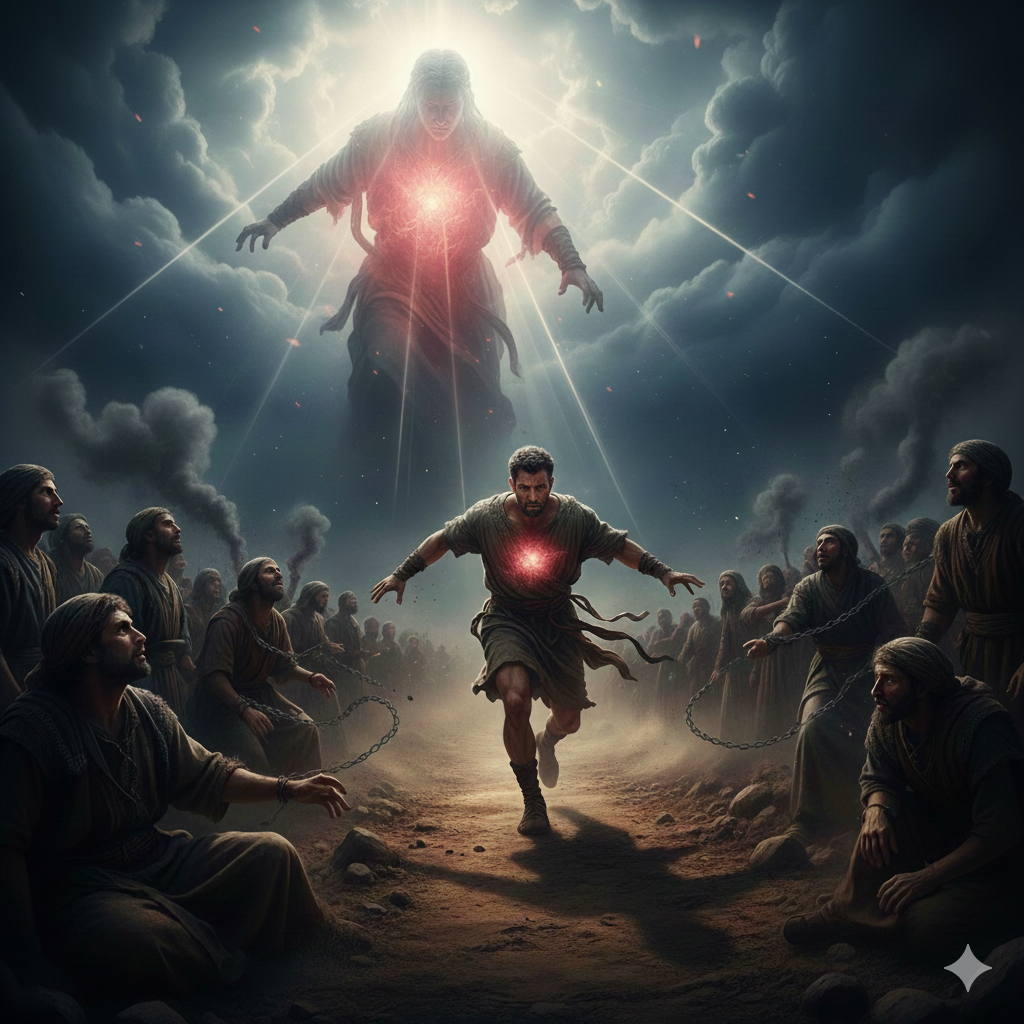
The revelation of the kingdom is not a stationary observation but a violent collision between the sovereign verticality of the heavens and the kinetic horizontal stride of the herald on the earth. To comprehend the movement of the Divine is to recognize that the scriptural landscape is never static; it is a theatre of high-velocity preparation and celestial scrutiny where every participant is defined by their spatial orientation toward the Master. While the modern religious mind often retreats into a passive state of waiting, the original witness describes a reality of urgent motion and atmospheric shift. The transition from a passive posture to a kinetic one is the difference between a spectator watching a distant storm and a worker in the field who feels the wind of a coming Monarch on his face. This section explores the postural dynamics of the herald and the Master, revealing a world where authority is established through the stride of the feet and the unwavering gaze of the High-Most looking down from the height.
The movement of the herald is captured in the powerful command to stride before the face of the Master, a function described by the term proporeusē (pro-po-ryoo-say). This is far more than a simple walk or a symbolic gesture of priority; it is a high-velocity advancement that clears the path and levels the terrain. The proclaimer acts as a heavy-laden chariot clearing a roadway through a dense forest, where every step is an act of removing obstacles and preparing the ground for the foot of the Sovereign. This posture is one of extreme kinetic energy, where the herald is not merely holding a position or guarding a tradition, but is actively shaping the landscape to receive the King. The stride of the proclaimer ensures that when the Master arrives, His progress is unimpeded by the debris of human failings or the uneven ground of the nations. It is a posture of service that requires the full exertion of the body, signaling that the King is so near that the dust from the herald’s feet has not yet settled before the Master appears.
Original: προπορεύσῃ γὰρ πρὸ προσώπου Κυρίου ἑτοιμάσαι ὁδοὺς αὐτοῦ (Luke 1:76, Sinaiticus)
Transliteration: proporeusē gar pro prosōpou Kyriou hetoimasai hodous autou
Literal Meaning: you-shall-stride-before for before face of Master to-make-ready paths of-him
From the opposite direction of this horizontal stride comes the descending gaze of the High-Most, referred to as Hypsistou (hoop-sis-too), who operates from the Hypsous (hoop-sooce) or the Height. This spatiality establishes an absolute hierarchy where the Divine is not a peer to be debated but a Sovereign who looks down upon the earth. This descent is marked by the anatolē (ah-nah-toh-lay), the upward-rising. While often smoothed over as a scenic sunrise, the cultural etymology reveals a celestial event that commands absolute attention, similar to the rising of a star that exposes everything hidden in the shadows of the valley below. This light is not for aesthetic comfort; it is a tool of exposure and inspection. It is the blinding flash of dawn that reveals the true state of the flock to the shepherd, ensuring that no stone is left unturned and no creature is left unobserved in the coming visitation.
The climax of this postural dynamic is found in the act of episkepsetai (eh-pee-skep-seh-tahee), the divine inspection or looking-upon. This term, rooted in the ancient tradition of the shepherd’s care, describes a visitation for the purpose of intense scrutiny and restoration. It is the posture of a master architect who walks through a building project, looking upon every beam and joint with an eye for structural integrity. This inspection is the bridge between the sovereign height and the earthly path, where the High-Most looks upon His folk to assess their deliverance. It is an active, peering gaze that identifies the failings to be sent away and the paths to be made straight. The Divine does not merely exist in the height; He leans down from it, focusing His attention with the intensity of a craftsman over his work, ensuring that the upward-rising light from the height accomplishes its purpose of illumination and care.
Original: ἐν οἷς ἐπισκέψεται ἡμᾶς ἀνατολὴ ἐξ ὕψους (Luke 1:78, Sinaiticus)
Transliteration: en hois episkepsetai hēmas anatolē ex hypsous
Literal Meaning: in which shall-look-upon us upward-rising out-of height
The synthesis of the herald’s horizontal stride and the Divine’s vertical inspection creates a cross-section of covenantal reality where every participant is in motion. The proclaimer strides, the Master looks upon, and the light rises, all converging to prepare the way for the restoration of the folk. This picture of kinetic proximity destroys the notion of a distant or stagnant deity, replacing it with a God who visits with intent and a servant who moves with urgency. The conclusion of this postural deep dive is a realization that the kingdom is a theatre of action, where the authority of the High-Most is manifested through the physical preparation of the earth and the celestial inspection of the heavens. To be Inhabited is to join this stride, moving before the face of the Master with the full knowledge that the light from the height has already looked upon the path.