Physical Address
304 North Cardinal St.
Dorchester Center, MA 02124
Physical Address
304 North Cardinal St.
Dorchester Center, MA 02124
With Michael Walker
With Michael Walker
VII. Descriptive Synthesis: The Overall Picture.
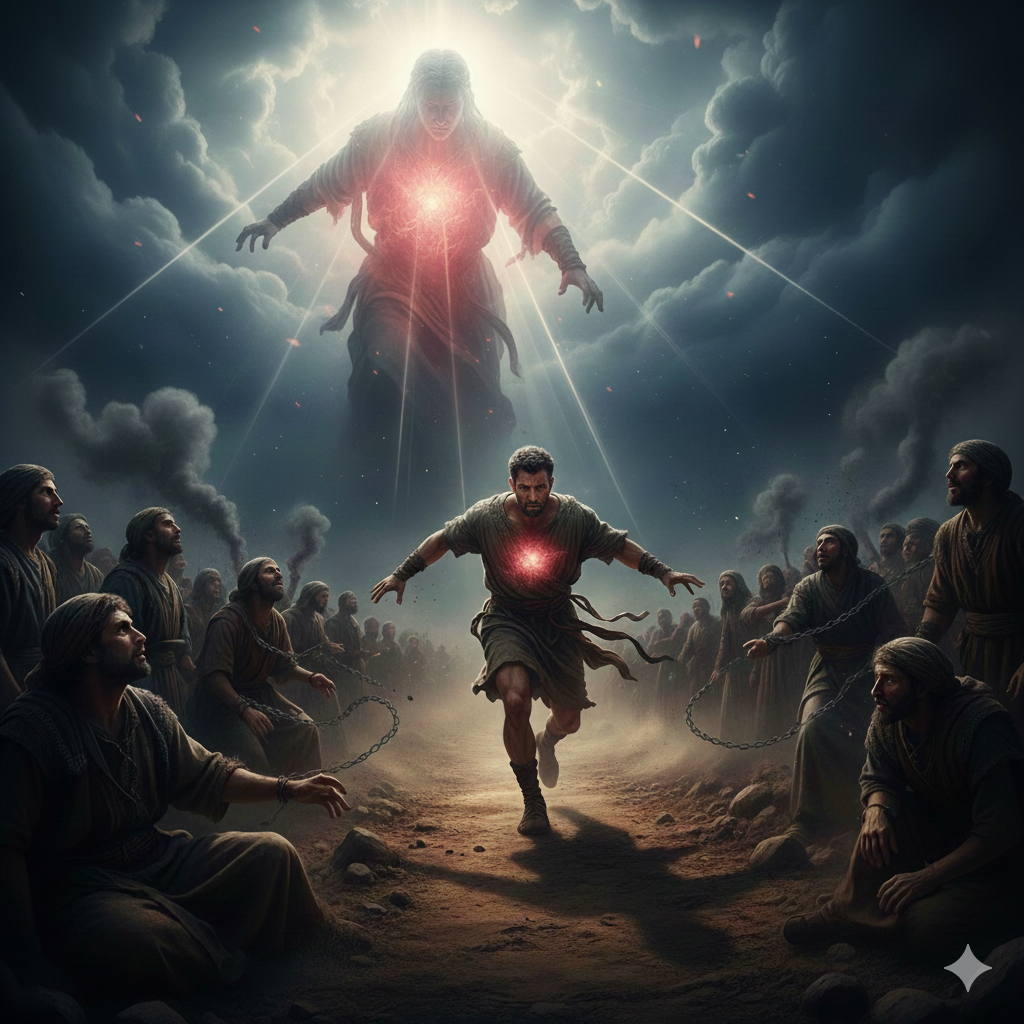
The forensic reconstruction of this covenantal moment culminates in a high-contrast, kinetic landscape of visceral rescue, a masterpiece of functional sovereignty that shatters the static portraits of traditional religious thought. This overall picture is defined by extreme verticality, gut-wrenching proximity, and the blinding light of a celestial dawn that refuses to remain distant. At the summit of this landscape stands the High-Most, referred to as Hypsistou (hoop-sis-too), positioned at a geographical and ontological height that establishes an immense scale between the heavens and the earth. From this height, the upward-rising light of the anatolē (ah-nah-toh-lay) does not gently shimmer with aesthetic grace but aggressively looks upon and inspects the valley below. This is the eye of the Master, a piercing gaze that scans the terrain of His folk with the precision of an architect, ensuring that every shadow is exposed and every structural failing is identified for the coming visitation.
Original: ἐπισκέψεται ἡμᾶς ἀνατολὴ ἐξ ὕψους (Luke 1:78, Sinaiticus)
Transliteration: episkepsetai hēmas anatolē ex hypsous
Literal Meaning: shall-look-upon us upward-rising out-of height
Moving through the mid-ground of this landscape is the young-offspring, the paidion (pa-ee-dee-on), postured not in the quiet repose of a temple but in the intense movement of a proclaimer. The visual reality of this herald is captured in jagged, fast brushstrokes that depict a path-clearer in the act of striding, or proporeusē (pro-po-ryoo-say). This is an Inhabited operative working with hands and feet to level the ground and remove the debris of the nations before the face of the Master. The proclaimer is the kinetic bridge, a servant whose high-velocity preparation ensures that the path is made ready for the King’s descent. This is not the work of scrolls and debates, but the work of a laborer in the field whose stride is driven by the urgent proximity of the Sovereign’s arrival and by sheer demonstration.
The centerpiece of this canvas, providing its emotional and relational heart, is the visceral anatomy of compassion found in the splanchna (splank-na), the inner-bowels. The color here is deep, saturated, and heavy, representing the aching weight of kind-pity. This is not a detached, golden light of mercy granted from a throne; it is a raw, crimson-toned pity that churns within the Divine core. The posture of the High-Most is shown here as a Father who is leaning down so far from the height that His own gut is moved by the plight of His young-offspring. This is the God who suffers-with the Inhabited, a deity whose compassion is physically felt within His being. This proximity is the anchor for all agency, proving that the Master does not merely act upon the folk but is pulled toward them by the gravity of His own shared anguish.
Original: διὰ σπλάγχνα ἐλέους Θεοῦ ἡμῶν (Luke 1:78, Sinaiticus)
Transliteration: dia splanchna eleous Theou hēmōn
Literal Meaning: through inner-bowels of-kind-pity of-Elohim of-us
The atmosphere of the background is defined by the letting-go of failings, the aphesei hamartiōn (ah-fay-say ha-mar-tee-on). This is not depicted as the simple wiping of a slate, but as a physical release, the cutting away of tethers and weights that have long kept the folk bound. The visuals are those of captives suddenly realizing their chains have been sent away, looking up to catch the blinding light of the upward-rising. This discernment of deliverance is the moment the folk realize they are no longer tethered to their misses and deviations. They are physically sent away from their debts into the safety of the Master’s presence. The light from the height catches their widening eyes, illuminating a freedom that is as legal as it is bodily.
Original: ἐν ἀφέσει ἁμαρτιῶν αὐτῶν (Luke 1:77, Sinaiticus)
Transliteration: en aphesei hamartiōn autōn
Literal Meaning: in letting-go of-failings of-them
The final synthesis of this deep dive presents the high priest in the field, a priestly field operation acting as the ultimate bridge between the height and the valley. Anchored in the authority of the High-Most and the illumination of the upward-rising, the Inhabited high priest remains neck-deep in the folk, driven by the churning inner-bowels of kind-pity. This is a portrait of power that refuses to stay in the height, choosing instead to visit the darkness through the visceral, aching compassion of those who carry the Spirit-breath. It is a masterpiece of functional sovereignty and relational agency, where the proclamation is found in the stride and the rescue is found in the proximity. The Word of God is validated by this kinetic and gut-level reality, reminding the folk of Yisra’el (Yees-rah-el) that their Elohim (El-o-heem) is not a distant judge, but a kinsman-redeemer who has looked upon them from the height and leaned in to set them free.