Physical Address
304 North Cardinal St.
Dorchester Center, MA 02124
Physical Address
304 North Cardinal St.
Dorchester Center, MA 02124
With Michael Walker
With Michael Walker
IV. The Path of the Appointed Time
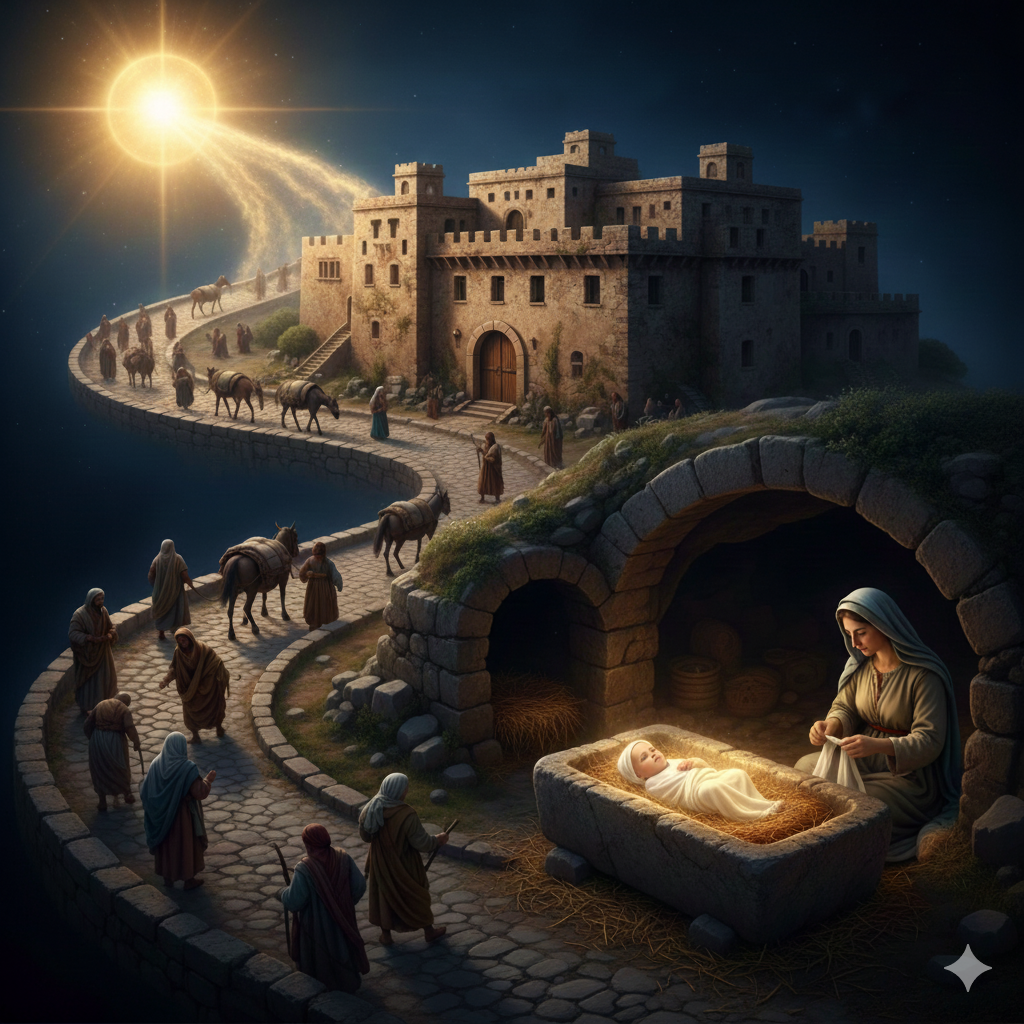
The movement of divine revelation through the corridors of time is governed by a precise and unyielding chronological cycle that ensures the promise is never released prematurely nor delivered to an unprepared vessel. This architecture of manifestation functions as a master blueprint for every abundant provision and spiritual breakthrough that crosses the threshold into the physical realm. The first stage of this inescapable progression is the incubation of fullness, where the appointed time is saturated with the weight of the decree. This is not the idle passing of seconds but the active gathering of density, much like the atmospheric pressure that builds before a cataclysmic rain. The etymological witness of the term eplēsthēsan (eh-PLAY-sthay-san) indicates a vessel reaching its absolute capacity, signaling that the periods of light are no longer vacant but are pregnant with the looming reality of the Creator’s intent. During this phase, the promise is hidden, protected by the dark walls of the womb or the silence of the desert, while it acquires the mass necessary to survive the transition into the light. It is a period of gathering strength where the word is being structured in the unseen, awaiting the final drop that will cause the overflow of manifestation.
Once the saturation of time is achieved, the cycle moves into the phase of alignment, which is the arrival at the specific coordinate of ekei (eh-KAY) — in that place. Divine revelation is not a homeless vapor; it requires a geographic anchor and a physical witness to confirm its presence. This is the moment where sovereignty and geography collide, forcing the traveler and the decree into a precise intersection. The path to this coordinate is often paved with the friction of human events, such as a census or a decree of taxation, which serve as the invisible hands of the covenant moving the pieces into position. Alignment is the realization that the promise cannot be birthed just anywhere; it must find the exact soil that corresponds to its ancient etymological roots. Just as a lock requires the precise teeth of a key to release the bolt, the birth of the male offspring required the specific atmosphere of Beth-Lechem (Bayt-Leh-khem) — Bethlehem to unlock the next stage of the cycle. This alignment ensures that when the rupture occurs, it happens at the altar of prophecy, validating the word through the accuracy of its arrival.
Following alignment, the seeker must undergo the transition of loosening, characterized by the katalyma (kah-TAH-loo-mah) — the loosening-down place. This is the critical juncture where the old labors and the heavy burdens of the journey must be set aside to make room for the new. The etymology of this stage suggests an intentional unyoking, a deliberate act of stripping away the harnesses that have served their purpose during the travel but would only hinder the birth. It is a functional rest that serves as a purge of the previous season. One cannot carry the weight of the road into the chamber of the revelation. This unburdening is often painful, as it requires the traveler to cast off the familiar sandals and the predictable routines of the institution. If the seeker refuses to loose the burdens of the old way, they remain trapped in the noise of the journey, unable to descend into the quietude where the provision is waiting to be reclined. The loosening is the bridge between the effort of the man and the gift of the Creator, proving that the provision is not earned through labor but received in the absence of it.
The cycle then moves into the stage of refinement, which is marked by the absence of space or topos (TOH-pos) within the established human structures. This lack of room in the guest lodging is the great separator of the covenantal from the institutional. Human commerce and religious bureaucracy are perpetually overcrowded with their own agendas, leaving no space for the weight of a fresh decree. This refinement process forces the revelation into the margins, ensuring it is birthed in a space of purity rather than one of compromise. The rejection of the inn is a refining fire that burns away the expectations of worldly recognition. By being denied a place in the crowded lodging, the revelation is preserved from being absorbed into the commercial noise of the age. This displacement is the divine safeguard that protects the first-born from being treated as just another guest among many. It guarantees that the revelation will be birthed in a place where it is the singular and undisputed focus, free from the contamination of man-made systems.
Upon finding the appropriate space, the cycle shifts into the stage of authority, where the provision is caused to recline or aneklinen (ah-NEH-klee-nen). This is the elevation of the revelation from a mere event to a presiding presence. To recline is to take the seat of the master at the banquet, assuming a posture of rest and sovereignty even in the most humble of surroundings. This posture is a proclamation that the male offspring is not a victim of his environment but the ruler of it. He is positioned for a feast, signaling that the long journey and the unburdening have led to a moment of celebration and honor. The authority of the revelation is not dependent on the luxury of its setting but on the inherent weight of its origin. This reclining is the posture of a free man who has no master and no burden, standing as an invitation to all who have loosed their own burdens to join him in the rest of the covenant. It is the moment where the struggle of the birth is replaced by the peace of the presence.
The final and most vital stage of the cycle is sustenance, occurring in the phatnē (PHAT-nay) — the feeding trough. This is the ultimate destination of the revelation, the place where it is laid out to be eaten and internalized by the hungry. The sustenance phase transforms the abstract decree into a consumable reality. The feeding trough is the functional vessel of survival, reminding the seeker that the provision was not birthed for observation but for ingestion. Just as an animal approaches the trough to be filled so it may continue to live, the seeker must approach the reclining first-born to consume the truth that has been brought forth. This is the internalization of the word, where the external promise becomes the internal energy of the spirit. The cycle that began with the filling of the light ends with the filling of the man. The bread of life is reclined in the place of consuming, ensuring that the manifestation results in the total nourishment of those who have found their way to the trough.
Then it came to pass within their existing in that place, the periods of light were filled for her to bring forth offspring. And she brought forth the male offspring of her, the first-born; and she bound Him in binding strips and caused Him to recline in a feeding trough, because no space was existing for them within the loosening-down place. (Codex Vaticanus – Loukas – 2 – 6 through 7, Literal Interlinear Etymological Translation, Covenantally Faithful, Minimal Copular, SVO Format).
The totality of this chronological cycle serves as a witness against the fragmented and chaotic interpretations of the institutional mind. By following the path from the filling of the light to the sustenance of the trough, the seeker enters into the rhythm of the Creator. This is the validation of the word through its own internal logic and its historical etymology. The standard of truth is not found in the opinions of men but in the rigorous sequence of the covenantal manifestation. Every stage—incubation, alignment, transition, refinement, authority, and sustenance—is a necessary pillar in the temple of revelation. To bypass any part of this cycle is to risk a premature birth or a hollow manifestation. The Word of God remains the singular authority, revealing that the first-born, Yehoshua is the master of this cycle, leading all who follow him through the same path of unburdening and consumption.
In the conclusion of this section, we proclaim that the path of the appointed time is the only path to true abundant provision. The institutional inn will always be full, but the feeding trough will always be waiting for those who are hungry enough to descend. The cycle of the covenant is a cycle of movement toward the humble stone basin where the King of the Covenant is reclined. We are called to leave the crowded noise of the world’s lodging and to enter the loosening-down place, where we can finally untie our burdens and receive the nourishment that has been prepared in the fullness of light. The revelation is birthed, the first-born is bound in the truth, and the sustenance is laid out for the taking. This is the final word of the ancient witnesses: that the decree of the Most High results in a feast for the soul, provided we follow the chronological path that he has carved through the history of the world.