Physical Address
304 North Cardinal St.
Dorchester Center, MA 02124
Physical Address
304 North Cardinal St.
Dorchester Center, MA 02124
With Michael Walker
With Michael Walker
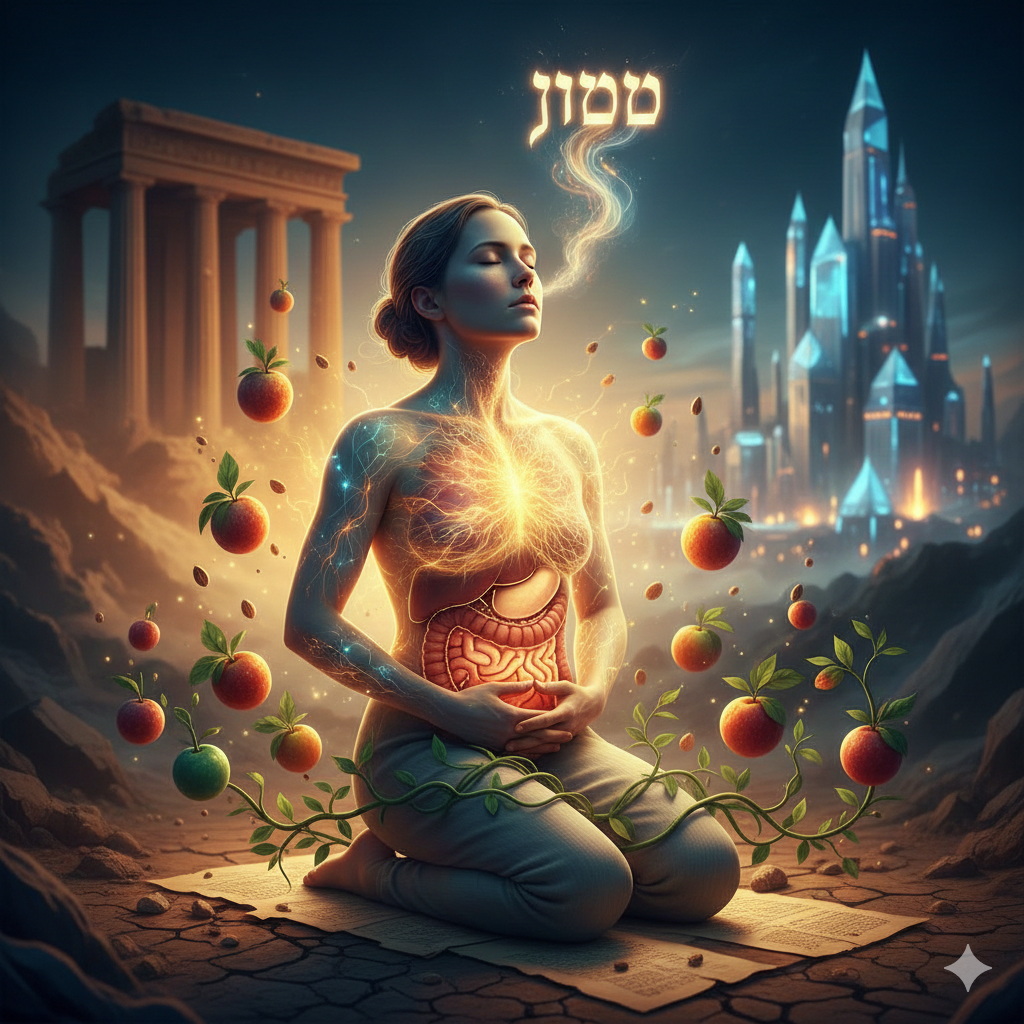
I. Linguistic Reconstruction: Psalm 103:1–2.
The entrance into the sacred text requires a total abandonment of the static, high-walled cathedrals of the mind and a departure from the sterile corridors of academic theology. To approach the words preserved within the Leningrad Codex is to stand at the threshold of a living jurisdiction, a realm governed entirely by Covenant Relational Agency. This posture is not a mere philosophical choice or a Sunday morning preference; it is a legal, jurisdictional, and biological alignment that recognizes the Creator not as a distant object of study or a historical figure to be admired, but as the Self-Existent Authority currently inhabiting and occupying the physical vessel of the believer. In stark and total contrast stands the Contrived Institutional Narrative, a framework often identified by the phonetic weight of its own acronym, CIN (Pronounced – Sin). This institutional narrative functions as a sophisticated shroud of religious abstraction, systematically converting the visceral, marrow-deep commands of the Almighty into soft, sentimental suggestions that reside only in the intellect. While the Contrived Institutional Narrative seeks to pacify the soul with vague promises, metaphorical comforts, and a form of godliness that lacks tangible power, Covenant Relational Agency demands the literal yielding of the actual biological engine—the throat, the breath, and the very innards—to the sovereign and immediate jurisdiction of Yahweh. This deep dive serves as a formal, uncompromising handshake between the created and the Creator, stripped of every layer of Western gloss that has historically sanitized and silenced the raw, thundering power of the Hebrew witness. To understand this protocol is to understand that the human body was designed not as a standalone unit, but as a temple for the intake and execution of celestial authority.
A proclamation is issued to the vital self, initiating a protocol of submission that begins at the most fundamental, cellular level of human existence. In the original script of the Leningrad Codex at Tehillim (Te-hee-leem) — Psalms 103:1, the command is baraki (baw-rak-kee). This is a Piel imperative, a grammatical form that denotes intensive action, rooted fundamentally in the concrete act of kneeling or presenting a gift from a position of lower stature. This is the bedrock of Covenant Relational Agency, where the act of “blessing” (CIN translation) is rescued from the realm of verbal well-wishing and restored to its original meaning: a physical and willful bending of the knee. In the ancient cultural context, to kneel was to offer one’s strength to a superior; it was a physical statement that the one kneeling was now under the protection and direction of the one standing. This command is directed with laser precision toward the napshi (naf-shee), the throat or breath-soul. The napshi is the seat of appetite, the channel of breath, and the very life-force that drives the creature. By addressing the throat, the scripture bypasses the sophisticated defenses of the mind and speaks directly to the survival instinct. It is a directive for the biological necessity of breathing and consuming to be brought into total alignment with the authority of et-Yahweh (et-Yah-weh), the Self-Existent One who is the source of all breath. The Contrived Institutional Narrative would have the believer think of the soul as an ethereal, ghostly vapor, but Covenant Relational Agency identifies it as the very pipe through which life flows. The body itself.
Genesis 2:7 stands as the foundational text for understanding what Scripture means by nephesh. The verse does not describe a soul being received, inserted, or bestowed upon the human frame; instead, it declares that “the man became a living soul (nephesh).” This single line dismantles the institutional assumption of an ethereal, ghostlike essence floating within the body. The text presents something far more concrete: the human being became a nephesh — the entire living person, the whole breathing organism, the embodied life-system animated by breath. This aligns precisely with the covenantal understanding that the soul is not a vaporous entity but the full creaturely apparatus, the very pipe through which life flows.
This reading is not speculative; it is consistently affirmed across linguistic, textual, and scholarly analysis. Genesis 2:7 explicitly shows that man became a living soul, not that he received one. The Hebrew term nephesh refers to a living, breathing, conscious body — never an immaterial spirit. Scripture applies the same word to animals, humans, and physical beings alike, demonstrating that nephesh means “living being,” not “ghost.” Commentaries reinforce this point with clarity: the verse does not say that man has a soul, but that he is one. This becomes the theological and linguistic foundation for the covenantal claim that the soul is the embodied life-system itself — the body as the conduit of breath, vitality, and relational agency.
If further support is needed, the entire Old Testament provides a trail of verses where nephesh unmistakably refers to the body, the person, or the life-system in motion. A deeper linguistic audit of nephesh across Genesis 1–3, or a comparison between covenantal anthropology and the later Greek dualistic reinterpretations, can expand this section even further. But even at its core, Genesis 2:7 alone establishes the truth: the soul is not something hidden inside the body — the soul is the living body in its fullness.
The reach of this protocol extends beyond the breath and the throat, penetrating into the deepest recesses of the human frame, identified as the kol-qerabay (ve-khol-ke-raw-vahy), the innards or interior organs. In the ancient Hebrew mindset, the internal organs—the liver, the kidneys, the heart, and the bowels—were not merely biological processors but the seats of decision, emotion, and will. To command the innards to kneel is to demand that the subconscious and involuntary systems of the man be harmonized with the Kingdom. Like the hidden, interlocking gears of a massive and precise clock, these internal parts are summoned to acknowledge et-shem (et-shem), the mark, character, and legal authority of His qadsho (kaw-de-sho), His absolute and terrifying set-apartness. Where the Contrived Institutional Narrative might speak of vague feelings of gratitude or religious “heart” felt emotions, Covenant Relational Agency speaks of the liver, the kidneys, and the heart functioning as the physical, tangible headquarters of the Kingdom on earth. It is an occupation of the gut, a demand that even the involuntary pulse of the man beats in rhythm with the Covenant. The set-apartness of the Creator is not an abstract holiness to be pondered; it is a jurisdictional boundary that defines how the innards must operate under the government of the Father.
The protocol continues with a second, intensified summons in Tehillim (Te-hee-leem) — Psalms 103:2, reinforcing the command to the breath-soul to remain in a perpetual posture of kneeling before the Self-Existent. This repetition is not poetic fluff; it is a jurisdictional necessity. The weight of this repetition serves as a structural safeguard against the creeping unresponsiveness and spiritual lethargy promoted by the Contrived Institutional Narrative. The text issues a severe warning against the state of al-tishkehi (ve-al-tish-ke-hee), which literally describes the act of withering, drying up, or ceasing to respond to a stimulus. To forget, in a covenantal context, is not a simple slip of the memory; it is a biological failure to react to the reality of the Creator’s presence. It is to allow the connection to the Source to dry up like a parched vine severed from its life-giving roots in the heat of a desert noon. This withering is the natural result of the Contrived Institutional Narrative, which replaces active response with passive mental assent. Conversely, the inhabited agent is commanded to maintain an active, organic, and reflexive response to kol-gemulaw (kol-ge-mu-lahv), all His ripened dealings. These dealings are far more than mere benefits, favors, or “blessings” in the modern, watered-down sense of the word. They are the gemul, the matured fruits and ripened acts of the Creator’s history with His people, intended to be consumed, ingested, and metabolized as literal, functional power for the present moment.
To understand the gemul is to see the history of the Father’s faithfulness as a harvest of ripened grain or fruit, ready to be eaten. Just as the physical body must digest bread to sustain the energy required for movement, the indwelt vessel must digest the ripened acts of Yahweh to execute His sovereign will on the earth. This is the core mechanics of life within the Covenant: a constant, rhythmic intake of sovereign power that leaves absolutely no room for the hollow, tinny echoes of man-made religion. If a man remembers a meal but does not eat it, he will eventually starve to death while staring at the menu; this is the condition of those trapped in the Contrived Institutional Narrative. However, the one operating in Covenant Relational Agency understands that the “benefits” of Yahweh are substances of power that must be taken into the napshi—the throat—and processed by the qerabay—the innards. When the dealings of the Almighty are properly metabolized, they manifest as the physical strength of the believer, the clarity of the witness, and the authority of the Kingdom envoy. The power is not something the believer “has”; it is something the believer has become through the intake of the Father’s nature.
The reconstruction of these verses provides the clear, uncompromising architecture of this inhabited life, standing as a monumental witness against the thin abstractions of the Western religious mind. In the Literal Interlinear Etymological (The L.I.E. Detector) reality of the Leningrad Codex, the text declares with authority: Kneel before Yahweh, my breath-soul, and all my innards, His set-apart authority. Kneel before Yahweh, my breath-soul, and do not cease to respond to all His ripened dealings. (Leningrad – Tehillim 103:1–2). This synthesis is the very heartbeat of the Inhabited Protocol. It reveals with startling clarity that the path to becoming the physical embodiment of the Godhead—the very goal of the indwelling Spirit—is paved with the deliberate, daily yielding of the throat and the internal organs. It is a total transition from the spectator-based, performance-driven worship found within the Contrived Institutional Narrative to the active, jurisdictional execution of a Kingdom envoy found in Covenant Relational Agency. The believer is no longer a member of an audience watching a religious show; the believer is the site of a sovereign occupation.
By stripping away the anachronistic gloss and the polished re-interpretations of institutional religion, the believer is invited to step out of the long shadows of dry doctrine and into the blinding light of a functional, living, and breathing relationship with the Self-Existent. This is the reality of the New Covenant: The Torah is no longer on stones but is being processed in the qerabay—the innards—by the Spirit of Yehoshua. The word of the Almighty is thus validated not by the approvals of denominational committees or the certificates of man-made seminaries, but by the tangible, measurable power of the indwelling Spirit transforming the very biological reality and character of the one who kneels. As the napshi inhales the breath of the Father and the innards process the ripened fruit of His finished work, the distinction between the King and the envoy begins to blur in the execution of the King’s will. The Inhabited Protocol is therefore the ultimate act of surrender, where the human vessel ceases to be its own and becomes the visible, acting authority of the Self-Existent on the land. It is the restoration of the original design of man: a creature that breathes the air of the heavens while walking the dust of the earth, fully yielded to the consumption of the ripened power of the Creator.
The transition from a state of religious observation to a state of covenantal inhabitation is the most radical shift a human being can undergo. It requires a dismantling of the “self” that the Contrived Institutional Narrative seeks to preserve and “bless.” In the institutional model, the self remains the king, and God is the servant who provides “benefits.” In the Inhabited Protocol, the self is the gift presented upon the knee, and Yahweh is the absolute Authority who occupies the space. This is why the napshi must be commanded; the survival instinct of the fallen man will always resist this level of occupation. The throat wants to consume for itself; the breath wants to be drawn for its own glory. But the command baraki—kneel—strikes at the root of this rebellion. It forces the appetite to serve the Spirit. It turns the intake of the man into a liturgical act of Kingdom expansion. Every meal eaten, every word spoken, and every breath drawn becomes an extension of the Covenant. This is the “literal eating of the bread of life” that transcends the ritual of the communion table and enters the reality of the kitchen table, the workplace, and the secret places of the heart.
The ripened dealings, the gemulaw, are the specific instances of Yehoshua’s victory applied to the believer’s life. They are the “ripened” results of His suffering, His death, and His resurrection. To “not forget” them is to keep the “gut” of the believer sensitive to the presence of these fruits. When fear attempts to seize the innards, the inhabited agent responds by “eating” the ripened dealing of the Father’s perfect love. When lack attempts to constrict the throat, the agent “consumes” the ripened dealing of the Father’s provision. This is not positive thinking; this is the intake of power. It is a metabolic process where the finished work of the Son is converted into the current action of the believer. The result is a life that is “set-apart” (qadsho) not by isolation from the world, but by its distinct source of fuel. While the world system operates on the fumes of the Contrived Institutional Narrative—relying on emotions, politics, and social pressures—the inhabited agent operates on the high-octane power of the Self-Existent. The final word of this excavation is a call to full-scale embodiment: to let the Name of Yahweh be written not just in the mind, but in the very chemistry of the body, until every fiber of being resonates with the frequency of the Inhabited One.