Physical Address
304 North Cardinal St.
Dorchester Center, MA 02124
Physical Address
304 North Cardinal St.
Dorchester Center, MA 02124
With Michael Walker
With Michael Walker
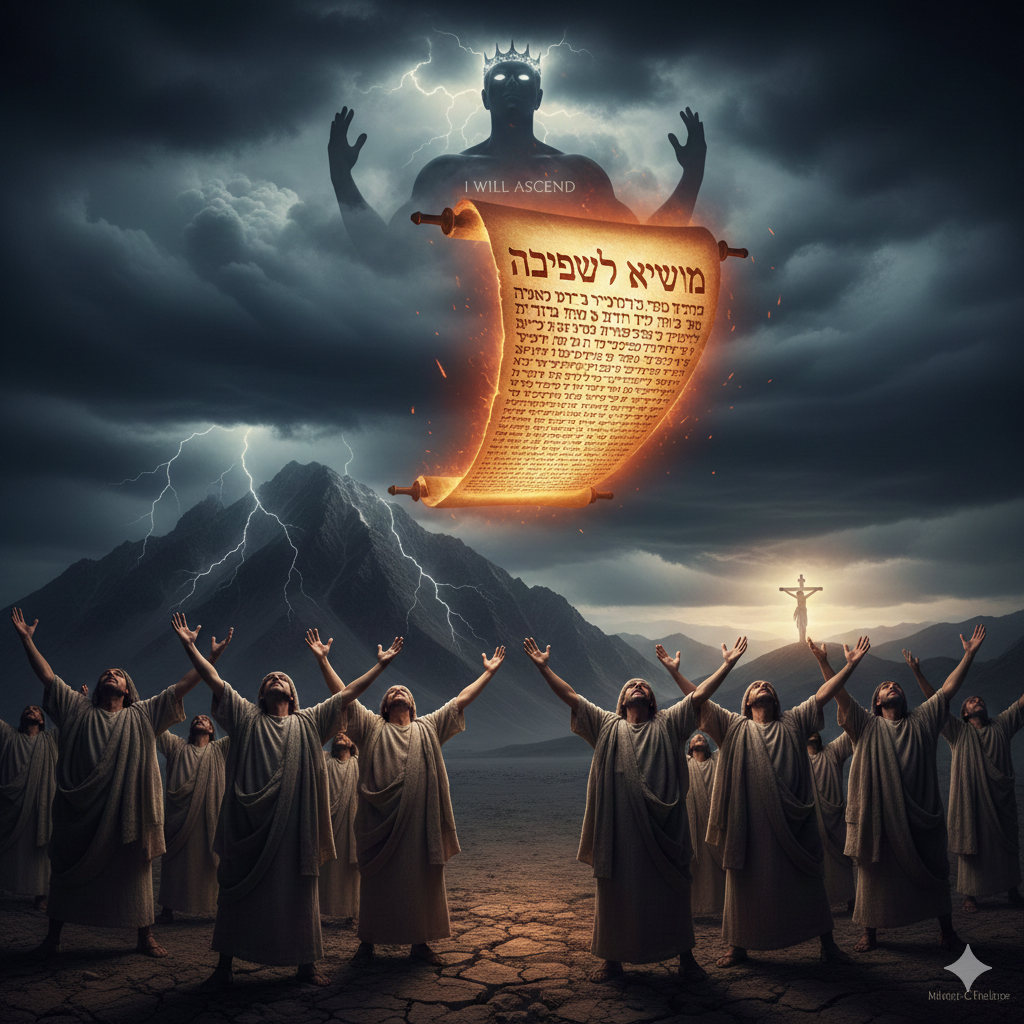
History is not merely a record of events but a revelation of patterns—echoes of pride, rebellion, and redemption that reverberate across generations. From Eden’s garden to Sinai’s mountain, the drama of covenantal encounter unfolds with unrelenting clarity: humanity, freshly graced, repeatedly mistakes deliverance for autonomy. The Creator’s acts of liberation are met not with humble dependence but with declarations of self-sufficiency, as though finite beings could shoulder infinite demands. This tension between divine grace and human pride is not incidental; it is the very axis upon which covenantal history turns. To understand the Torah’s severity, one must first recognize that its strictness was not imposed in cold abstraction but emerged as a divine response to Israel’s posture—a posture that mirrored the adversary’s ancient ascent and exposed the peril of pride within covenantal relationship.
The strictness of the Torah was not arbitrary but covenantally reactive: when Israel, freshly delivered by grace from Egypt, pridefully declared “we will do all that the LORD commands” before even hearing the full weight of divine instruction, their boast mirrored the adversary’s original prideful ascent. Through this act of pride, they effectively placed themselves as created beings on equal standing with their Creator, claiming capacity to meet any demand He could give. This boast mirrored the adversary’s ancient declaration of self-exaltation (“I will ascend above the Most High”), and in that echo God’s tone shifted from liberator to “lawgiver.” By granting Israel’s claim, God gave them a covenant so rigorous that it exposed their incapacity, revealed their inherited sin, and demonstrated their need for congenital redemption. Thus, Torah’s strictness functioned as both a mirror of Israel’s pride and a safeguard against repeating the adversary’s rebellion, pointing forward to the Messiah as the only one who could fulfill what humanity in its pride could not.
Section One: Israel’s Boast at Sinai
The third month after the Exodus marks a decisive moment in covenantal history, for it was then that the people of Yisra’el, freshly delivered from bondage and still basking in the grace of their Redeemer, stood at the foot of Mount Sinai. The immediacy of this timing is critical, for it reveals how quickly pride can arise even in the wake of divine deliverance. The sacred geography of Sinai itself underscores the gravity of the moment: the mountain was set apart, bounds were established, and the people were warned not to cross into the holy space lest they perish. This visible separation between Creator and creature was designed to preserve the distinction that pride so often seeks to erase. The transition from the patriarchal covenant to the Mosaic covenant hinged upon this scene, and Israel’s declaration became the pivot point that shifted the trajectory of covenantal history.
The immediate scene is framed by Yahweh’s reminder of deliverance, spoken through Mosheh (Moh-sheh) — Moses, who conveyed the words of the covenant proposal. The declaration of divine grace was vivid: “I carried you on eagles’ wings and brought you to Myself.” (Exodus 19:4, Aleppo/Leningrad, Covenantally Faithful, Minimal Copular, SVO Format).
Original: וָאֶשָּׂא אֶתְכֶם עַל־כַּנְפֵי נְשָׁרִים וָאָבִא אֶתְכֶם אֵלָי.
Transliteration: Va-’eśśā ’etkhem ‘al-kanphei neshārim va-’āvi ’etkhem ’ēlai.
Literal Interlinear: And I carried you upon wings of eagles and I brought you to Me.
This imagery of effortless deliverance contrasts sharply with the human self-assertion that followed. The people, unified in voice, responded prematurely: “All that Yahweh has spoken we will do.” (Exodus 19:8, Aleppo/Leningrad).
Original: וַיַּעֲנוּ כָּל־הָעָם יַחְדָּו וַיֹּאמְרוּ כֹּל אֲשֶׁר־דִּבֶּר יְהוָה נַעֲשֶׂה.
Transliteration: Va-ya‘ănu kol-ha‘ām yaḥdāv va-yōmeru kol ’ăsher-dibber Yahweh na‘ăśeh.
Literal Interlinear: And answered all the people together and they said all which Yahweh spoke we will do.
This vow was made before hearing the full weight of divine instruction, and thus it became a presumptuous consent, a boast that revealed pride rather than humility. The three days of consecration that followed were meant to prepare the people for encounter, yet the vow had already exposed a misalignment between ritual preparation and covenantal disposition.
The motivational and situational context deepens the forensic weight of this moment. Yahweh’s motive was clear: He desired a kingdom of priests and a holy nation, not a people bound by arbitrary law. Yet the human motive was prideful eagerness, shaped by cultural residue from Egypt’s polytheism and servitude. The crisis of identity was acute: they had shifted from slaves to a holy nation, but their boast revealed that pride had not been purged from their hearts. The audacity of finite beings presuming infinite capacity breached the Creator–creature distinction, and in that breach the echo of the adversary’s ancient boast resounded. Isaiah records the adversary’s words: “I will ascend to heaven. I will raise my throne above the stars of God. I will sit on the mount of assembly. I will ascend above the heights of the clouds. I will make myself like the Most High.” (Isaiah 14:13–14, Aleppo/Leningrad).
Original: וְאַתָּה אָמַרְתָּ בִלְבָבְךָ הַשָּׁמַיִם אֶעֱלֶה מִמַּעַל לְכוֹכְבֵי־אֵל אָרִים כִּסְאִי וְאֵשֵׁב בְּהַר־מוֹעֵד בְּיַרְכְּתֵי צָפוֹן.
Transliteration: Ve-’attā ’āmartā bilvavekha ha-shamayim ’e‘eleh mi-ma‘al le-kokhvei-’el ’ārim kis’ī ve-’ēshev be-har-mo‘ed be-yarketei tsafon.
Literal Interlinear: And you said in your heart to heaven I will ascend above stars of God I will raise my throne and I will sit in mount of assembly in sides of north.
The pride of Israel’s declaration mirrored this ascent, and thus the covenantal reactivity of Torah (instruction) strictness was set in motion.
The symbolic and metaphorical dimensions intensify the meaning of the scene. The eagles’ wings symbolize grace and effortless deliverance, yet the human boast sought to replace divine initiative with human capacity. The mountain bounds were a visible reminder of the Creator–creature distinction, yet the vow violated that boundary by presuming equality. The fire, smoke, and trumpet blast that enveloped Sinai were manifestations of divine transcendence confronting human presumption, a cosmic reminder that holiness cannot be approached by prideful declaration.
The forensic implications are decisive. The boast itself became evidence, documented in the covenantal record as proof of pride. The divine tone shifted from liberator to “lawgiver,” reactive to human declaration, and the Torah was given not as an arbitrary decree but as a diagnostic tool exposing incapacity. As Romans later affirms, “Through the torah comes knowledge of sin.” (Romans 3:20, Vaticanus).
Original: διὰ γὰρ νόμου ἐπίγνωσις ἁμαρτίας.
Transliteration: dia gar nomou epignōsis hamartias.
Literal Interlinear: Through Torah comes knowledge of sin.
The strictness of Torah thus functioned as a mirror, reflecting Israel’s boast back to them, confronting pride with impossibility, and safeguarding against the repetition of the adversary’s rebellion.
The conclusion of this section must be drawn with clarity. The boast at Sinai was not a trivial statement but a covenantal hinge, a moment where grace was met with pride and where divine liberation was answered with human presumption. The rigorous covenant that followed was not arbitrary but reactive, designed to expose incapacity, reveal inherited corruption, and safeguard against rebellion. The mountain, the fire, the trumpet, and the vow together form a forensic tableau, a record of pride confronted by holiness. The Torah became both mirror and safeguard, reflecting human audacity and containing it until redemption would come. In this way, the boast at Sinai stands as both evidence and warning, a testimony that pride cannot ascend to equality with the Creator, and that only through the Messiah can humanity’s incapacity be resolved.