Physical Address
304 North Cardinal St.
Dorchester Center, MA 02124
Physical Address
304 North Cardinal St.
Dorchester Center, MA 02124
With Michael Walker
With Michael Walker
Section Three: Rigorous Covenant as Exposure
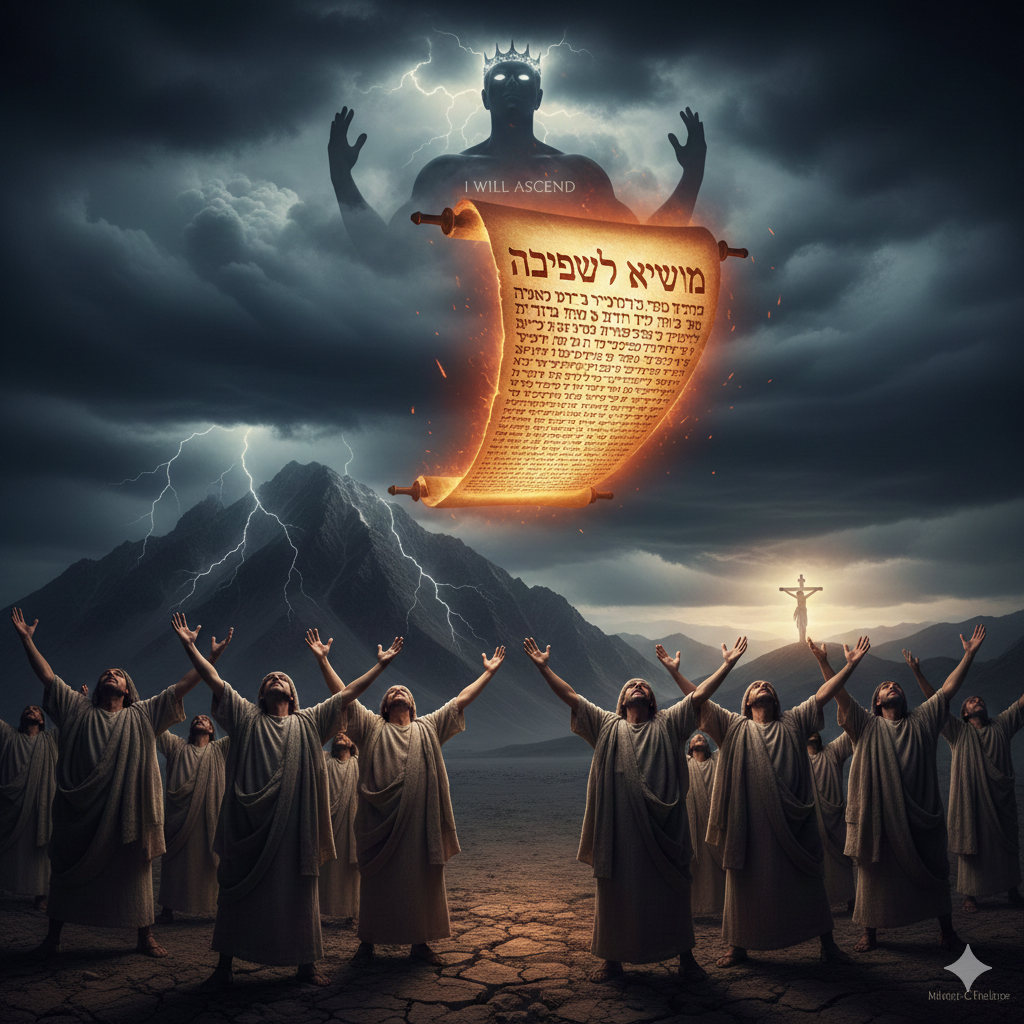
The covenant delivered at Sinai stands as a monumental turning point in the unfolding narrative of divine-human interaction, for it was here that the Creator responded to the audacious boast of Israel with a covenant of uncompromising rigor. The people, freshly delivered from Egypt by grace and sustained by provision, declared with unmeasured confidence, “All that Yahweh has spoken we will do.” This vow, uttered before the full weight of divine instruction had been revealed, became the catalyst for a covenantal recalibration. The mountain itself became the proving ground where human incapacity was tested against divine holiness, and the transition from liberation by grace to obligation under Torah (instruction) was sealed. The covenant was not arbitrary; it was reactive, a direct response to human pride, and it exposed the frailty of finite beings who presumed infinite capacity. Sinai thus became the stage where the Creator’s liberating tone shifted into the voice of lawgiver, and the covenant was transformed into a mirror reflecting the boast of humanity back upon itself.
The immediate scene at Sinai underscores the rigorousness of this covenant. The Ten Words, statutes, and ordinances were delivered in comprehensive form, demanding not partial obedience but total fidelity. Israel’s presumption was confronted by the consuming holiness of Yahweh, and their vow was measured against the impossibility of sustained obedience. The consecration of the people, the washing of garments, and the bounds set around the mountain all testified to the separation between Creator and creature. Fire and smoke enveloped the mountain, a consuming holiness that symbolized the unattainable standard. The bounds of Sinai served as visible reminders that ascent was forbidden, that humanity could not cross into the realm of divine perfection by its own strength. The scene was one of awe and terror, a consecration that revealed impossibility rather than capacity.
The motivational and situational context of this covenantal strictness reveals the divine motive: to expose human incapacity and safeguard against unchecked pride. The human condition, marked by inherited corruption and the Adamic legacy of congenital inability, was laid bare. Israel stood as representative humanity, a microcosm of all nations under Torah, and their failure would testify universally to the incapacity of mankind. Just as Adam’s transgression revealed the congenital fracture of humanity, so Israel’s inability to sustain obedience revealed the same legacy in covenantal form. The covenant was not given to destroy but to diagnose, not to crush but to expose, and in its exposure it safeguarded against the repetition of the adversary’s rebellion.
The symbolic and metaphorical dimensions of Sinai deepen this exposure. The Torah functioned as a mirror, reflecting Israel’s boast back as impossibility. Fire and smoke consumed the mountain, symbols of holiness that no flesh could endure. The bounds around Sinai were not arbitrary restrictions but visible reminders of separation, incapacity, and the impossibility of ascent. Just as a mirror reveals blemishes unseen until confronted by reflection, so the Torah revealed the corruption inherited from Adam. The consuming fire was not merely spectacle but symbol, declaring that holiness is unattainable by human effort. The mountain itself became a metaphor of separation, its bounds declaring that ascent was forbidden, that humanity could not rise to divine heights by its own declaration.
Scriptural anchors confirm this forensic reality. “Through the Torah comes knowledge of sin” (Romans 3:20, Vaticanus, Covenantally Faithful, SVO Format).
Original: διὰ γὰρ νόμου ἐπίγνωσις ἁμαρτίας.
Transliteration: dia gar nomou epignōsis hamartias.
Literal Interlinear: Through Torah comes knowledge sin.
The apostolic witness confirms that the Torah was not given as a path to righteousness but as a diagnostic tool revealing corruption. Likewise, “The Torah has become our pedagogue leading to Messiah” (Galatians 3:24, Vaticanus, Covenantally Faithful, SVO Format).
Original: ὁ νόμος παιδαγωγὸς ἡμῶν γέγονεν εἰς Χριστόν.
Transliteration: ho nomos paidagōgos hēmōn gegonen eis Christon.
Literal Interlinear: The Torah pedagogue our has become into Messiah.
The pedagogue was not savior but guardian, restraining pride and exposing incapacity until redemption arrived. Exodus itself confirms the immediacy of strict demands: “God spoke all these words, saying” (Exodus 20:1, Aleppo/Leningrad, Covenantally Faithful, SVO Format).
Original: וַיְדַבֵּ֣ר אֱלֹהִ֔ים אֵ֛ת כָּל־הַדְּבָרִ֥ים הָאֵ֖לֶּה לֵאמֹֽר.
Transliteration: vay’dabber Elohim et kol-had’varim ha’eleh le’emor.
Literal Interlinear: Spoke God all words these saying.
The strict demands were codified immediately after Israel’s boast, confirming the covenantal reactivity of divine legislation.
The forensic implications of this covenant are profound. The Torah became an evidence log, documenting incapacity and corruption. Every statute broken, every ordinance transgressed, every command unmet became evidence of inherited sin. The Torah exposed congenital need for redemption, revealing that humanity could not fulfill divine demand. The covenant functioned as safeguard, preventing unchecked pride from ascending into rebellion. Just as a courtroom record preserves evidence for judgment, so the Torah preserved evidence of human incapacity for covenantal resolution. The Torah was diagnostic clarity, a forensic audit of human pride and incapacity, and its strictness was not arbitrary but covenantally reactive.
The conclusion of this section must be proclaimed with clarity: the rigorous covenant at Sinai was not a burden imposed without cause but a mirror held up to human pride, a safeguard against rebellion, and a forensic audit exposing corruption. Israel’s boast became the catalyst for divine legislation, and the Torah revealed what humanity could not fulfill. The consuming fire, the bounds of the mountain, the Ten Words, and the statutes all testified to incapacity. The Torah became the pedagogue, restraining pride and pointing forward to Messiah. In this exposure, humanity was confronted with its need for congenital redemption, and the covenant became the stage upon which incapacity was revealed and the promise of fulfillment was anticipated. The strictness of Torah was covenantally reactive, forensic in function, and prophetic in witness, declaring that only Messiah could fulfill what humanity in its pride could not.