Physical Address
304 North Cardinal St.
Dorchester Center, MA 02124
Physical Address
304 North Cardinal St.
Dorchester Center, MA 02124
With Michael Walker
With Michael Walker
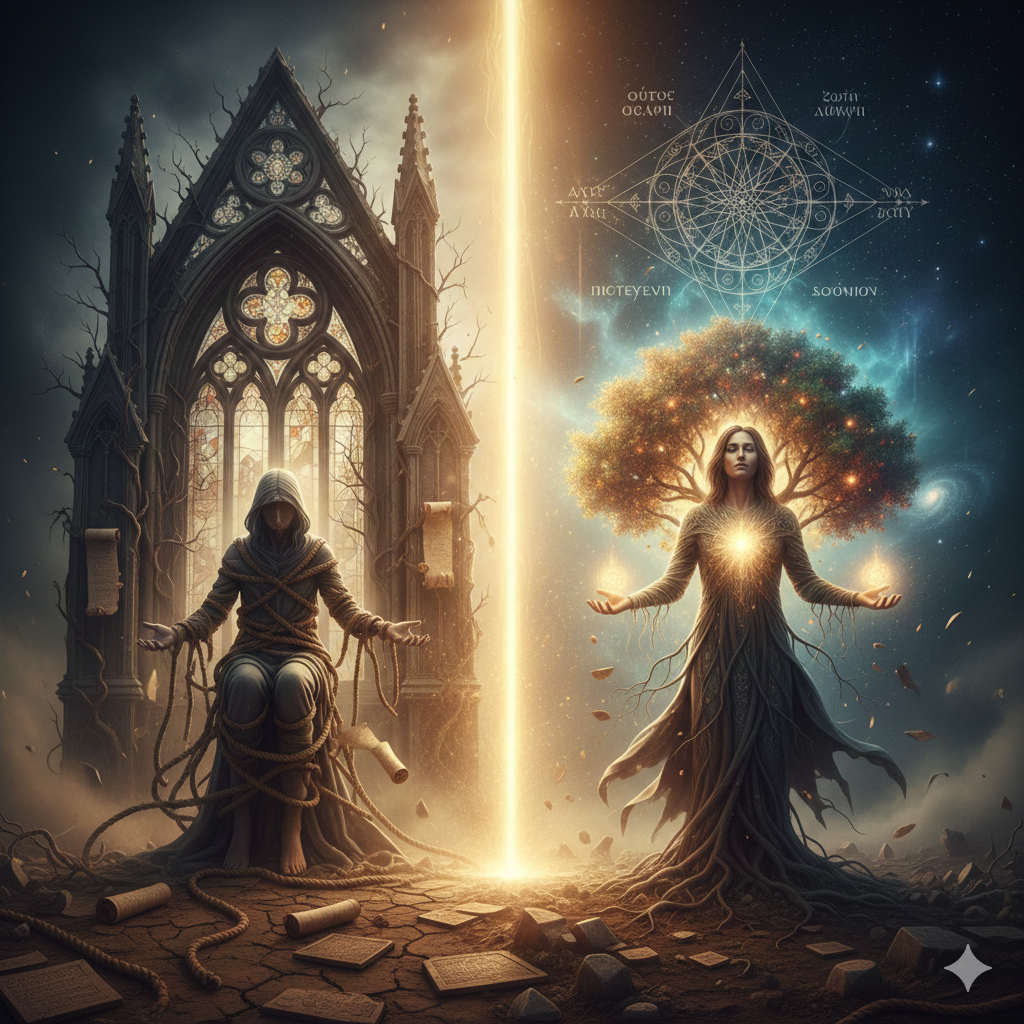
To truly grasp the weight of the transition from religious adherence to covenantal reality, one must first identify the collision between the human structure and the Divine Source. The historical cultural context of this passage is set within a late-night dialogue between יהושע — Yehoshua and a member of the Judean leadership named נקדימון — Naqdimon (Nahk-dee-mohn) — “Nicodemus,” who represents the peak of the scholarly and structural authority of that era. This conversation occurs in יְרוּשָׁלַיִם – Yerushalayim – yeh-roo-shah-LAH-yeem – Jerusalem, a center of intense legalistic expectation, where the hope for a deliverer was often viewed through the lens of a political or physical liberation from Roman occupation. In the midst of this encounter, the New American Standard Bible 1995 records the verse in question as follows:
“For God so loved the world, that He gave His only begotten Son, that whoever believes in Him shall not perish, but have eternal life.”
יהושע — Yehoshua, however, is not engaging in a religious debate or offering a new theological tradition; He is performing a surgical strike against the structural confinement of the Contrived Institutional Narrative (CIN – pronounced SIN – also known as Religion/Christianity). He recalibrates the entire conceptual framework of the listener by shifting the focus from nationalistic heritage and external ritual to a functional, cosmic realignment rooted in the nature of the Supreme Source (the Father). He is addressing a man bound by the requirements of a religious system, much like the Believer today—defined here as the religious, non-inhabited adherent who seeks the Source through the scaffolding of man and remains powerless—and is inviting him to become the Indwelt—defined here as the inhabited, spirit-animated and empowered participant of the covenant who exists in superposition with the Father, the Breath, and the Word (Yehoshua). This dialogue serves as the ultimate demolition of the religious facade, revealing that access to the Source is not a reward for moral performance but a total structural shift initiated by the Father and actualized through a specific mode of yielding and adherence to the uniquely generated Offspring. By stripping away the religious veneer, יהושע — Yehoshua exposes the stark reality that without Inhabitation, the human remains a disconnected vessel, regardless of their institutional standing or scholarly acclaim.
Original: Οὕτως γὰρ ἠγάπησεν ὁ Θεὸς τὸν κόσμον, ὥστε τὸν Υἱὸν τὸν μονογενῆ ἔδωκεν, ἵνα πᾶς ὁ πιστεύων εἰς αὐτὸν μὴ ἀπόληται ἀλλ’ ἔχῃ ζωὴν αἰώνιον.
Transliteration: Houtōs gar ēgapēsen ho Theos ton kosmon, hōste ton Huion ton monogenē edōken, hina pas ho pisteuōn eis auton mē apolētai all’ echē zōēn aiōnion.
Literal Etymological Translation (The L.I.E. Detector): In this specific manner for the Supreme Source (YHWH) formed a willful bond with the ordered arrangement, to the point that He yielded up the uniquely generated Offspring, in order that each the one adhering into Him not be rendered useless, but on the contrary may hold age-enduring vitality.
(Sinaiticus — Kata Ioannen — 3 — 16 Covenantally Faithful, Minimal Copular, SVO Format)
The opening adverb οὕτως — houtōs (hoo-toce) — “in this specific manner” acts as a precise navigational marker that points directly back to the preceding imagery of the bronze serpent lifted in the wilderness. It establishes a functional methodology rather than a mere degree of intensity. While the contrived institutional narrative (the actual narrative) translates this as so, implying a quantity of emotion, the ancient witness of the codices reveals it describes a mode of operation. The Supreme Source, Θεὸς — Theos (theh-oce) — “Supreme Source,” does not operate through the erratic lens of human sentiment but through a deliberate prohairesis — “willful choice” to prioritize and welcome. This is the essence of ἠγάπησεν — ēgapēsen (ay-gah-pay-sehn) — “formed a willful bond.” Per Hesychius, this term denotes a decision of the will to value and establish a connection based on purpose. The target of this bond is the κόσμον — kosmon (koz-mon) — “ordered arrangement,” which Photius defines as the decorative order or systemic habitation of the universe. This is not a reference to the physical soil of a planet but to the very structure of inhabited reality which had fallen into disarray. The response of the Supreme Source (Yahweh) to this systemic fracture was not a distant decree but a functional yielding.
The depth of this willful bond is quantified by the action of yielding the Υἱὸν — Huion (hwee-on) — “Offspring.” This Offspring is described as μονογενῆ — monogenē (mon-oh-geh-nay) — “uniquely generated.” The Suda clarifies this term as the only one of its kind, a unique specimen that possesses the exact nature of the Source. By yielding, or ἔδωκεν — edōken (ed-oh-ken) — “bestowed,” this unique Offspring into the ordered arrangement, the Father provides a bridge for the powerless Believer to transition into the state of the Indwelt. The purpose of this bestowal is introduced by ἵνα — hina (hin-ah) — “in order that,” signaling a specific objective. That objective is for πᾶς — pas (pahs) — “each whole unit” or every individual who is πιστεύων — pisteuōn (pist-yoo-ohn) — “adhering.” Hesychius links this adherence to πείθω — peithō (pay-tho) — “to be fully persuaded (to trust)” and moved to action, which is a far cry from the passive mental assent (belief, faith) taught by the contrived institutional narrative. To adhere into εἰς — eis (ice) — “into” the Offspring is to be structurally integrated into His life and authority. This integration prevents the individual from being ἀπόληται — apolētai (ah-pol-ay-tie) — “rendered useless.” The Suda emphasizes that this term refers to the utter destruction of purpose or the loss of function. Without the inhabitation of the Spirit-breath, the human remains a broken vessel, unable to fulfill its cosmic design, eventually dissipating into a state of functional non-existence.
The contrast is provided by the adversative conjunction ἀλλ’ — all’ (ahl) — “on the contrary,” which introduces the alternative reality for the Indwelt. Instead of functional uselessness, the one adhering may ἔχῃ — echē (ekh-ay) — “hold or possess” a specific type of vitality. This vitality is ζωὴν — zōēn (dzo-ayn) — “vitality or state of being,” characterized as αἰώνιον — aiōnion (ahee-oh-nee-on) — “age-enduring or outside of measurement.” This is not merely a long duration of time, which would be a horizontal concept, but a vertical quality of life that partakes in the timeless nature of the Source. It is the restoration of the original intended animation of the human creature, empowered by the Spirit-breath. The Contrived Institutional Narrative (the institution) has successfully obscured this by presenting the verse as a sentimental invitation to a religious club, promising a post-mortem escape from punishment. In reality, the Greek witnesses describe a structural and functional restoration. It is the difference between a machine being told it is loved by its creator while it sits rusting and broken, versus that creator reaching into the gears to replace the shattered core with a uniquely forged power source that restores the machine to its intended operation. The Believer is the one who hears the story of the repair but never experiences the restoration of the core; the Indwelt is the one who has been functionally reintegrated into the Supreme Source.
The danger of the contrived institutional narrative lies in its use of anachronistic and anglicized terms that soften the radical nature of this covenantal shift. By translating ἀγάπη — agapē (ah-gah-pay) — “willful bond” as an emotion (love), they remove the element of the willful bond and the legal weight of the Covenantal Relational Agency. By translating μονογενῆ — monogenē (mon-oh-geh-nay) — “uniquely generated” as begotten, they introduce a biological or temporal limitation that confuses the nature of the Word. By translating πιστεύων — pisteuōn (pist-yoo-ohn) — “adhering (to be fully persuaded, to trust)” as believes, they reduce a life-altering structural adherence to a mere cognitive agreement with a set of facts. This allows the powerless Believer to feel secure in their religious identity while remaining rendered useless in their actual spiritual function. They are kept in a state of perpetual dependency on the Contrived Institutional Narrative, never ascending to the superposition with the Father and the Word that defines the Indwelt. The institutional version creates a ceiling of religious performance, whereas the ancient witnesses reveal a floor of foundational reality. To be rendered useless is the inevitable result of remaining outside the uniquely generated Offspring, as there is no other mechanism within the ordered arrangement that can sustain age-enduring vitality. The willful bond formed by the Supreme Source is the only bridge out of the entropic decay of the systemic habitation.
The mode of the bronze serpent mentioned in the context of οὕτως — houtōs (hoo-toce) — “in this specific manner” is crucial for understanding the posture of the Indwelt. Just as those in the wilderness had to physically direct their gaze toward the provided remedy to counteract the venom within them, the individual must direct their entire being into the Offspring to counteract the functional decay of their nature. This is a matter of alignment and focus. The contrived institutional narrative suggests that simply knowing the serpent exists is enough, or perhaps belonging to the camp where the serpent is displayed is sufficient. However, the etymology of adhering suggests a deep, persuasive trust that results in a total movement of the self into the life of the Inhabited One. This movement is what triggers the transition from the powerless state of the Believer to the empowered state of the Indwelt. The age-enduring vitality promised is the very breath of the Father, the same Spirit-breath that animated the first human and which now inhabits those who are in superposition with יהושע — Yehoshua. This is the reality that the institutional narrative strives to prevent, for an empowered Indwelt participant no longer requires the scaffolding of man-made religious systems to access the Source.
The etymological breakdown of these terms reveals a precision that is lost in the modern English Bible. When we look at the root of Θεὸς — Theos (theh-oce) — “Supreme Source” via Dionysius Thrax, we see it relates to placing or running—the force that establishes and maintains the order of the universe. This Supreme Source is not a distant, static deity but an active, establishing force. His willful bond is therefore an act of re-establishing what has been displaced. The Offspring, יהושע — Yehoshua, is the means by which this re-establishment occurs. By yielding Him, the Source has placed the solution directly into the heart of the fractured ordered arrangement. The adherence required is not a religious work but a functional recognition of this placement. When a person adheres into the Offspring, they are essentially allowing the establishing force of the Source to re-place them into their correct cosmic position. This is why the result is not being rendered useless; utility is restored when an object is returned to its proper place and power source. The age-enduring vitality is the natural byproduct of being correctly positioned within the life of the Supreme Source.
The contrast between the two narratives is a matter of life and death, function and futility. The contrived institutional narrative offers a comfortable bondage, a way to be religious without being transformed, a way to believe without being inhabited. The covenantal relational agency, as revealed in the ancient codices, offers a radical yielding and a structural integration that results in an entirely different state of being. The Indwelt person is not a better version of the Believer; they are a different category of existence altogether. They are spirit-animated and empowered, no longer subject to the entropic loss of function that characterizes the world. They hold the vitality of the ages because they are connected to the Source of all ages. This deep dive into the literal etymological fidelity of the text strips away the centuries of doctrinal gloss to reveal the raw, operational power of the Word. It calls the individual out of the powerless religious system and into the functional reality of the Covenantal Relational Agency, where the willful bond of the Father meets the adherence of the participant, resulting in a life that transcends measurement.