Physical Address
304 North Cardinal St.
Dorchester Center, MA 02124
Physical Address
304 North Cardinal St.
Dorchester Center, MA 02124
With Michael Walker
With Michael Walker
IV. Chapter Context:
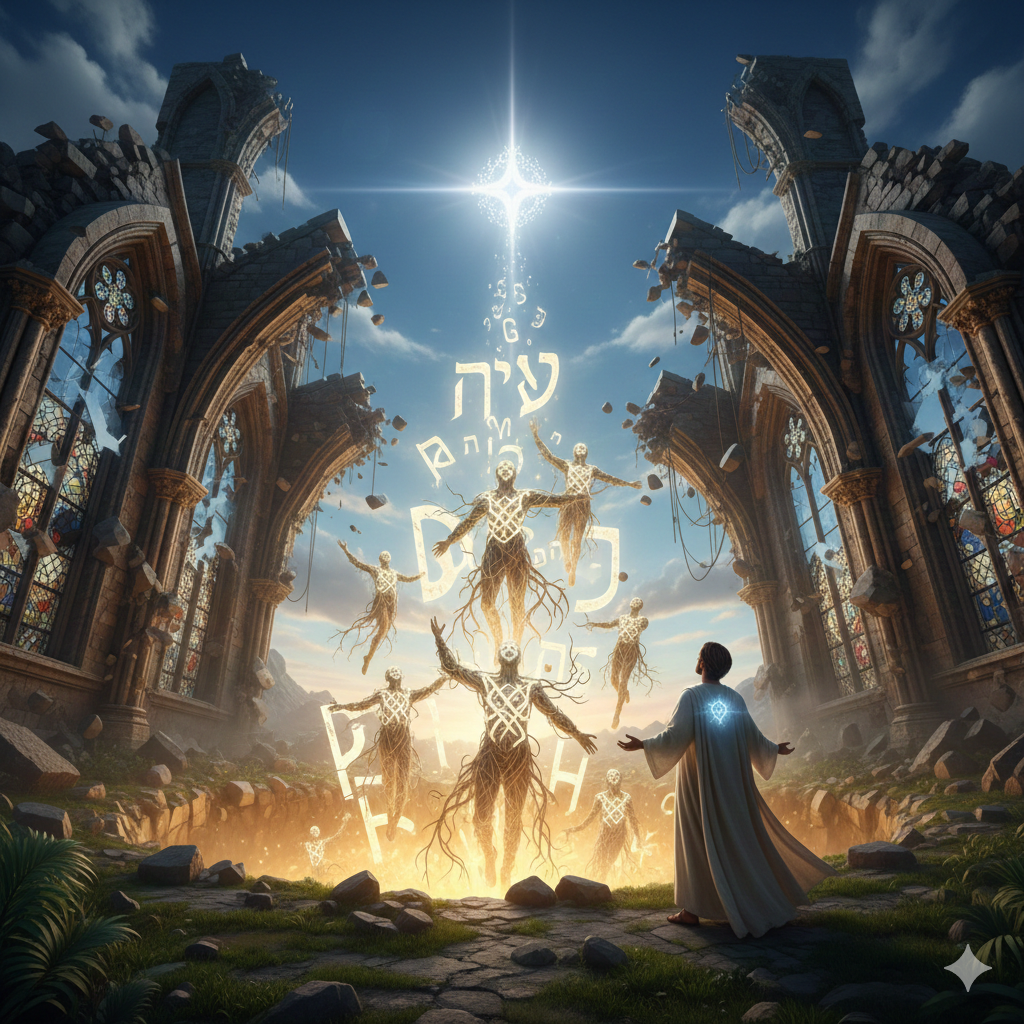
The architectural layout of the eighth chapter of the record according to יוֹחָנָן — Yochanan (Yoh-khah-nahn) — John reveals a profound structural tension between the contrived institutional narrative and the covenantal relational agency. To grasp the message for the Indwelt (covenantal, spirit-animated), one must look through the lens of the oldest codices to see a legal and ontological confrontation. The chapter functions like a courtroom where the jurisdiction of the Supreme Source is challenged by the local ordinances of a human power structure. The conflict is initiated through a dispute over μαρτυρία – martyria (mar-too-ree-ah) – “legal testimony,” which establishes the specific mode of validation being debated. The Contrived Institutional Narrative attempts to invalidate the Son by utilizing its own internal, circular rules of evidence, a closed system where testimony is only valid if it conforms to the protocols of the institution. This is countered by the Ἰησοῦς – Iesous (Yehoshua), who establishes a different source of validity entirely. This reality is introduced through the origin of His movement, shifting the focus from the earthly to the primordial.
Original: Ἐὰν ἐγὼ μαρτυρῶ περὶ ἐμαυτοῦ, ἡ μαρτυρία μου οὐκ ἔστιν ἀληθής· ἄλλος ἐστὶν ὁ μαρτυρῶν περὶ ἐμοῦ
Transliteration: ean egō martyrō peri emautou, hē martyria mou ouk estin alēthēs; allos estin ho martyrōn peri emou
Literal Interlinear Etymological Translation (The L.I.E. Detector): If I witness concerning myself the witness of-me not exists non-concealed; another exists the-one witnessing concerning me. (Vaticanus – Ioannes – 8 – 13-18 Covenantally Faithful, Minimal Copular, SVO Format)
The Contrived Institutional Narrative relies upon the seen, the external, and the regulated, which the Son describes as judging according to the flesh. This reliance is the hallmark of a system that lacks the spirit-breath, operating instead through the accumulation of linear data. For the Believer (religious, not indwelt), identity is validated through earthly genealogy and physical geography—factors that can be managed and recorded by an institution. This is challenged by the Son’s recurring statement regarding his origin and destination: “whence I came and where I go.” In the Vaticanus text, this is a direct confrontation with the horizontal logic of the institution. The Covenantal Relational Agency operates from the ἀλήθεια – alētheia (al-ay-thi-ah) – “non-concealment,” of the Father’s presence, which does not require the permission or validation of human structures. It is a vertical authority that descends from the Supreme Source, bypassing the gatekeepers of the Contrived Institutional Narrative entirely.
The middle section of the chapter establishes a vertical dichotomy that is essential to understanding the later promise of freedom. This architecture is defined by two distinct domains: ἐκ τῶν κάτω – ek tōn katō (ek tone kah-to) – “from the things below,” and ἐκ τῶν ἄνω – ek tōn anō (ek tone ah-no) – “from the things above.” The domain of the things below is the operational sphere of the Contrived Institutional Narrative, a closed system characterized by death, sin, and the concealment of reality. It is a subterranean existence where the participants are blinded by the low-hanging fog of religious tradition. Conversely, the origin of the Covenantal Relational Agency is found in the things above. This is not a geographical location but a different frequency of existence. The text reveals that unless the individual is persuaded of the identity of the Son, they remain locked in the structural limitations of the things below. This sifting process prepares the ground for the specific address to the יְהוּדִים — Yehudim (Ye-hoo-deem) — Judeans who were currently in a state of transition.
As the discourse moves past the promise of unbinding, the chapter shifts into a deep excavation of heritage. The Judeans appeal to their descent from אַבְרָהָם — Avraham (Ahv-rah-hahm), attempting to use biological and religious lineage as a shield against the Son’s critique. This is the ultimate deception of the Contrived Institutional Narrative: the belief that institutional affiliation or genetic history equals relational reality. It is an analogy of a man standing in a palace believing he is the king because his grandfather built the walls, even though he does not know the king’s voice. The institution teaches the Believer that they are free by default because they belong to the correct group. However, the Son exposes their functional reality by pointing out that they seek to kill His λόγος – logos (log-os) – “systematic discourse.” He notes that this discourse does not “have place” or find a dwelling within them. Because the systematic discourse of the Father is absent, they are functionally slaves to a different “father”—a source that is characterized by concealment rather than light.
Original: ὁ λόγος ὁ ἐμὸς οὐ χωρεῖ ἐν ὑμῖν
Transliteration: ho logos ho emos ou chōrei en hymin
Literal Interlinear Etymological Translation (The L.I.E. Detector): The discourse the mine not makes-room within you-all. (Sinaiticus – Ioannes – 8 – 37 Covenantally Faithful, Minimal Copular, SVO Format)
The climax of this ontological confrontation is reached when the Son identifies Himself through the statement of existence: ἐγὼ εἰμί – egō eimi (eg-o ay-mee) – “I am.” Within the Hebrew context of the Aleppo/Leningrad codices, this points directly back to the revelation of YHWH in שְׁמוֹת — Shemot (She-mote) — Exodus 3:14. It is the declaration of הָיָה — Hayah (hah-yah) — I Am Who I Will Be. By using this designation, the Son is asserting that the Covenantal Relational Agency is not a recent religious invention or a subset of the Contrived Institutional Narrative. Instead, it is the primordial reality that predates every institutional structure. He is the original architecture from which all things were laid forth. This existence is introduced through the preposition πρὶν – prin (preen) – “before,” which establishes the specific temporal priority of the Son over the institutional patriarchs. For the Indwelt, this means their identity is rooted in a source that is older and more stable than the traditions of men. The Contrived Institutional Narrative can only calculate time and age based on linear, horizontal constraints, asking, “You are not yet fifty years old?” while the Son operates from the timeless verticality of the Father.
The chapter ends with the most violent expression of the Contrived Institutional Narrative. When the logic of the institution fails and its concealment is exposed by the non-concealment of reality, it resorts to the destruction of the One who speaks the systematic discourse. The attempt to stone the Son is the final admission of institutional bankruptcy. A system that must kill the voice of reality to maintain its own existence is a system that has already collapsed. For the learner, this realization is the final unbinding. The fear of the institution’s power is replaced by the recognition of its fragility. The Indwelt sees that the Contrived Institutional Narrative is a paper tiger, held together only by the shared agreement to remain in concealment. The departure of the Son from the temple at the end of the chapter symbolizes the withdrawal of the Supreme Source from the institutionalized structures of men.
The architecture of chapter eight serves as a comprehensive map for the transition from the Believer to the Indwelt. It shows that the struggle is not over religious opinions but over the source of one’s animation. One is either animated by the rules and genealogy of the things below or by the systematic discourse and presence of the things above. The Covenantal Relational Agency is the act of stepping out of the circular testimony of the institution and into the direct, non-concealed witness of the Father. It is a movement from judging according to the flesh to perceived existence according to the spirit-breath. The Indwelt is the one who has recognized that their heritage is not found in the catalogs of a Contrived Institutional Narrative but in the eternal “I Am” of the Son.
In conclusion, the eighth chapter of Yochanan provides the structural justification for the unbinding mentioned in verses 31-32. It reveals that freedom is not a moral accomplishment but a jurisdictional shift. To be set free is to be removed from the authority of the things below and placed within the order of the things above. The systematic discourse of the Son is the vehicle for this movement. It sifts, it challenges, it exposes, and finally, it unbinds. The collapse of religion is not a quiet event; it is a confrontation that ends in the departure of the Spirit-Breath from the temple of the institution. The rise of the covenantal learner occurs in the wake of this departure, as the individual follows the Son out of the temple and into the reality of the Father’s presence. The deep dive into this context ensures that no reader ever confuses the cultural heritage of the Judeans with the covenantal reality of the Indwelt. We are looking for the origin that predates the institution, and in chapter eight, we have found it.