Physical Address
304 North Cardinal St.
Dorchester Center, MA 02124
Physical Address
304 North Cardinal St.
Dorchester Center, MA 02124
With Michael Walker
With Michael Walker
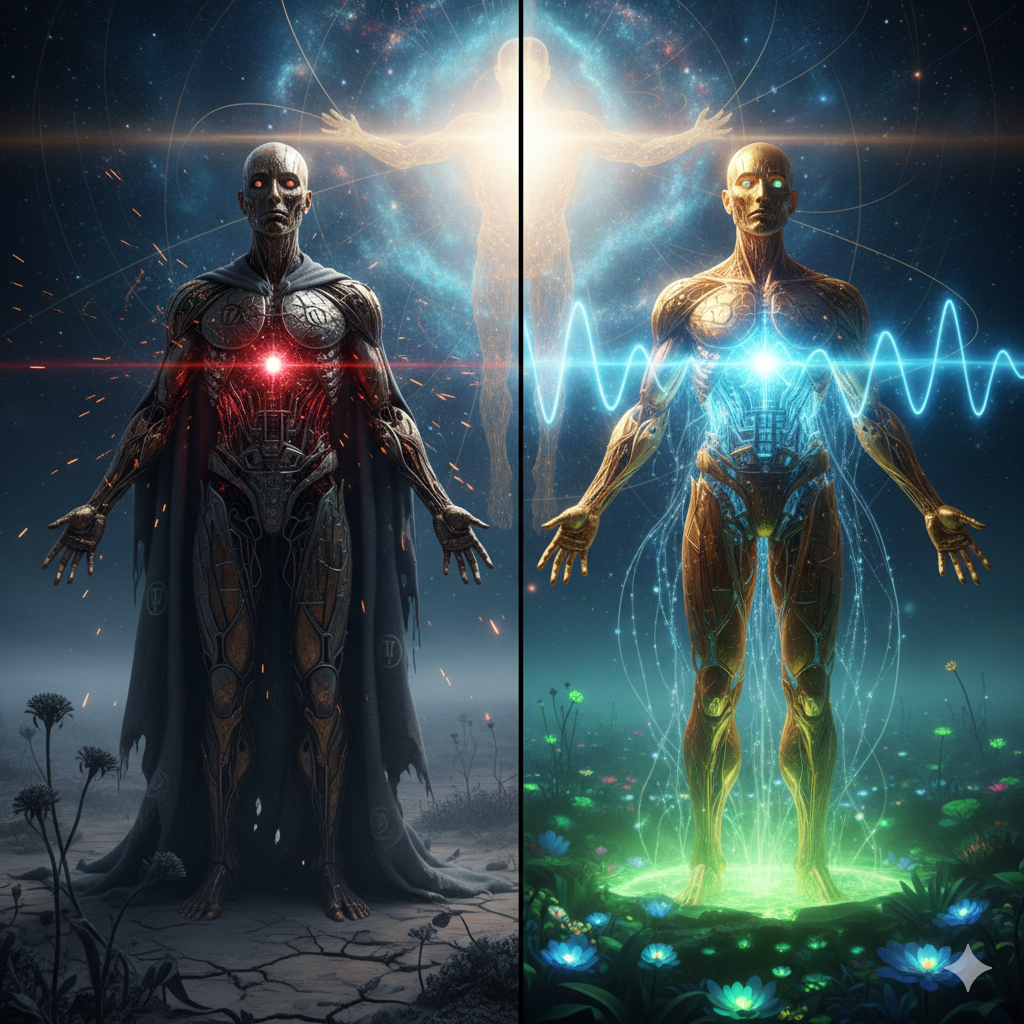
The goal of this Realtime Chapter Study Guide is to strip away the calcified layers of the Contrived Institutional Narrative (CIN – pronounced SIN – also known as The world/Religion/Christianity) that have sought to domesticate the mechanical reality of the spirit breath. We are here to dismantle the powerless posture of the Believer and establish the structural functionalism of the Indwelt by excavating the precise lexical data from the Sinaiticus and Vaticanus codices. By applying the L.I.E. Detector to the Greek witnesses of Hesychius, Photius, Suda, and Dionysius Thrax, we expose that the presence of the spirit breath is not a mystical feeling or a religious metaphor but a technological requirement for the operation of the human vessel. Without the inhabitation of the spirit breath, the vessel remains in a terminal state of dysfunction, unable to resonate with the frequency of the Father or the Word (Yehoshua). This study guide serves as a powerful proclamation of the Covenantal Relational Agency (The Inhabitation of the Spirit Breath of the Father), proving that the only pathway to belonging is through the literal inhabitation of the spirit breath, which relocates the participant from the soft tissue of the flesh into the state of superposition with יהושע — Yehoshua, The Son Of God.
The speaker in this passage is שָׁאוּל — Sha’ul — “Paul,” a man operating in the high-clearance authority of the covenantal relational agency, writing to the assembly in Rome. The historical cultural regional context is one of intense structural friction, where the Roman empire functioned as the ultimate shadow of the physical realm, demanding service to phantoms and material power. שָׁאוּל — Sha’ul — “Paul” is addressing a group of participants who are being pressured to revert to the biological impulses of the flesh and the rigid legalism of the contrived institutional narrative (the world system). He writes to clarify that the transition from the non-functional state of the dead to the functional existence of life is a matter of whose spirit breath is occupying the house. The Indwelt are those who have shifted their dependency from the horizontal resources of the world to the vertical supply of the Supreme Source, while the Believer remains trapped in the scaffolding of man, possessing the form of service but lacking the animating wind required to achieve superposition.
Original: ὑμεῖς δὲ οὐκ ἐστὲ ἐν σαρκὶ ἀλλ’ ἐν πνεύματι εἴπερ πνεῦμα θεοῦ οἰκεῖ ἐν ὑμῖν εἰ δέ τις πνεῦμα Χριστοῦ οὐκ ἔχει οὗτος οὐκ ἔστιν αὐτοῦ
Transliteration: hymeis de ouk este en sarki all en pneumati eiper pneuma theou oikei en hymin ei de tis pneuma Christou ouk echei outos ouk estin autou
Literal Interlinear Etymological Translation (The L.I.E. Detector): You however not stand inside flesh rather inside spirit breath if-surely spirit breath of Supreme Source inhabits inside you. But if anyone not holds spirit breath of Χριστοῦ — Christou — “The Inhabited One (The Smeared One),” this one not is of him. (Sinaiticus — Πρὸς Ῥωμαίους – Pros Rhōmaious — Romans 8 — 9 Covenantally Faithful, Minimal Copular, SVO Format)
The opening particle δὲ — de — “but / however” functions as a structural pivot that immediately severs the connection between the Indwelt and the σαρκὶ — sarki — “flesh / soft tissue.” The lexical witness of Hesychius identifies σάρξ — sarx as the material substance that lacks the inherent capacity for covenantal resonance. To be inside the flesh is to operate as a closed-loop system, where the vessel is fueled only by biological entropy and the data corruption of the environment. The proclamation that the Indwelt do not stand in this state is a declaration of a relocation into the πνεύματι — pneumati — “spirit breath / animating wind,” which Photius describes as the invisible force that generates movement and life. The intensive particle εἴπερ — eiper — “if-surely” serves as the mechanical condition for this reality, establishing that the entire framework of the Indwelt is dependent on the fact that the spirit breath οἰκεῖ — oikei — “inhabits / occupies as a house.” This term is rooted in the architecture of a dwelling, signifying that the Supreme Source does not merely visit the vessel but takes up permanent residence to oversee its functionality.
Original: εἰ δὲ Χριστὸς ἐν ὑμῖν τὸ μὲν σῶμα νεκρὸν διὰ ἁμαρτίαν τὸ δὲ πνεῦμα ζωὴ διὰ δικαιοσύνην
Transliteration: ei de Christos en hymin to men soma nekron dia hamartian to de pneuma zoe dia dikaiosynen
Literal Interlinear Etymological Translation (The L.I.E. Detector): But if Χριστὸς — Christos — “The Inhabited One (The Smeared One)” inside you, the indeed body dead because of dysfunction, the but spirit breath life because of alignment. (Sinaiticus — Πρὸς Ῥωμαίους – Pros Rhōmaious — Romans 8 — 10 Covenantally Faithful, Minimal Copular, SVO Format)
The identification of the σῶμα — soma — “body / structural vessel” as νεκρὸν — nekron — “dead / non-functional” because of ἁμαρτίαν — hamartian — “dysfunction / missing the mark” exposes the inherent flaw in the un-inhabited vessel. The Suda defines ἁμαρτία as a failure to reach the intended objective, which in this mechanical context is the failure of the vessel to operate according to its design parameters. This dysfunction acts as a short circuit in the system, preventing the vessel from holding the charge of the Father. However, the presence of Χριστὸς — Christos — “The Inhabited One” creates a state of superposition where the spirit breath is ζωὴ — zoe — “life / functional existence” through the channel of δικαιοσύνην — dikaiosynen — “alignment / right-standing.” This alignment is the structural integrity required for the vessel to sustain the power of the inhabitant, effectively overriding the entropy of the dead body with the active frequency of the covenantal relational agency.
Original: εἰ δὲ τὸ πνεῦμα τοῦ ἐγείραντος Ἰησοῦν ἐκ νεκρῶν οἰκεῖ ἐν ὑμῖν ὁ ἐγείρας Χριστὸν Ἰησοῦν ἐκ νεκρῶν ζωοποιήσει καὶ τὰ θνητὰ σώματα ὑμῶν διὰ τοῦ ἐνοικοῦντος αὐτοῦ πνεύματος ἐν ὑμῖν
Transliteration: ei de to pneuma tou egeirantos Iesoun ek nekron oikei en hymin ho egeiras Christon Iesoun ek nekron zoopoiesei kai ta thneta somata hymon dia tou enoikountos autou pneumatos en hymin
Literal Interlinear Etymological Translation (The L.I.E. Detector): But if the spirit breath of the having awakened Ἰησοῦν — Iesoun — “Yehoshua” out from dead ones inhabits inside you, the having awakened Χριστὸν – Christon – The Inhabited One (The Smeared One) Ἰησοῦν – Iesoun – “Yehoshua” out from dead ones will cause life also the mortal bodies of you through the inhabiting within of Him spirit breath inside you. (Sinaiticus — Πρὸς Ῥωμαίους – Pros Rhōmaious — Romans 8 — 11 Covenantally Faithful, Minimal Copular, SVO Format)
The term ἐγείραντος — egeirantos — “having awakened / raised up” points to a literal stirring from a state of non-activity, as when a technician powers on a dormant machine. This awakening of יהושע — Yehoshua provides the technological blueprint for the inhabitation of the Indwelt. The verb ζωοποιήσει — zoopoiesei — “will cause life / will construct functionality” is a compound of life and construction, indicating that the spirit breath does not just animate the vessel but re-engineers it for covenantal operation. Dionysius Thrax notes that such causative verbs imply an external agent performing a transformational work upon an object. This means the mortal bodies, which were previously subject to the friction of dysfunction, are now being restructured by the agency of the spirit breath inhabiting within. This is the ultimate end game of superposition, where the physical hardware of the Indwelt is integrated with the software of the Supreme Source, allowing for a total synchronization of purpose and power.
Comparing the NASB 1995 version to the Sinaiticus Lexical Fidelity reveals the massive power vacuum created by the Contrived Institutional Narrative (Religion/Christianity). The NASB uses “sin,” a moral abstraction that triggers guilt and a sense of legal debt, whereas the lexical reality is ἁμαρτία — hamartian — “dysfunction.” By calling it sin, the narrative keeps the Believer in a state of perpetual apology and powerless begging, trying to appease a distant judge. By calling it dysfunction, the Indwelt recognizes a mechanical failure that requires a technician—the spirit breath—to repair the system. The NASB uses “righteousness,” which is often interpreted by the powerless as a moral status or being a “good person,” but the lexical truth is δικαιοσύνην — dikaiosynen — “alignment.” Alignment is the state of a wheel that is true or a building that is plumb; it is a functional requirement, not a moral achievement. The Believer tries to “act righteous” while remaining in a state of dysfunction, like a car with a blown engine trying to look clean on the outside. The Indwelt, however, seeks the alignment that allows the spirit breath to flow without resistance, resulting in a vessel that is truly in function.
The narrative further cripples the Believer by using the word “Jesus,” an anglicized powerless counterfeit name that severs the connection to the covenantal roots and the audible frequency of יהושע — Yehoshua. This linguistic drift allows the Believer to follow a phantom, a shadow of the institutional making, rather than the literal Ἰησοῦν — Iesoun — “Yehoshua” who was the first to achieve this state of awakened functionality. The Indwelt understands that Ἰησοῦν — Iesoun — “Yehoshua” is the pathway and the door, the specific configuration of the Inhabited One that makes superposition possible for the human participant. The Believer is taught to “have the spirit,” but the lexical reality is that the spirit breath must οἰκεῖ — oikei — “inhabit” the vessel. This is the difference between having a guest in your lobby and having a master in your engine room. The Believer remains in the lobby, powerless and confused, while the Indwelt is being restructured from the inside out by the very breath that awakened the Son from the non-functional state of the dead.
These following operative dysfunctions represent just some of the specific configurations of the vessel that make inhabitation impossible. When a vessel willfully operates in εἰδωλολατρία — eidōlolatria — “idolatry,” it is essentially attempting to plug into a dead battery, redirecting its functional trust toward a shadow (Jesus/Christianity) rather than the Source Yehoshua/Covenantal Relational Agency). This displacement of the Source for a manufactured substitute creates a feedback loop of failure. Similarly, ἔχθρα — echthra — “hostility / enmity” acts as a systemic rejection of the ἀγάπη — agape — “willful bond,” creating an anti-relational environment where the spirit breath cannot rest. The active dismantling of unity seen in ἔρις — eris — “strife / discord” and the volatile energy of θυμός — thymos — “outbursts of wrath” are like surges of electricity that fry the delicate circuits of the covenantal relational agency. Each of these behaviors is a deliberate choice to operate outside the frequency of the Inhabited One, ensuring that the vessel remain locked in a closed-loop system of dysfunction and death.
The presence of racism, misogyny, and bigotry and homophobia are not merely social issues within this framework; they are absolute rejections of the image of the Father within the body, functioning as μῖσος — misos — “hatred.” This is a direct strike against the Inhabited One and a total breakdown of the willful bond. When a vessel is occupied by these dysfunctions, it is filled with “signal noise,” what the lexical witness identifies as ἀκαθαρσία — akatharsia — “impurity.” This noise drowns out the quiet, consistent frequency of the spirit breath. A vessel that practices φαρμακεία — pharmakeia — “sorcery / manipulation” is attempting to hack the system, using manufactured shortcuts to achieve power rather than submitting to the authority of the Supreme Source. These dysfunctions are the specific reasons why the spirit breath does not inhabit certain vessels; it is not because the Father is “angry” in a human sense, but because the vessel has made itself technically incompatible with His presence.
The state of superposition is the end game where the Indwelt operates in the functionality they were designed for, existing in a willful bond with the Father, the breath, and the Word. This is the state where the human will and the Father’s intent occupy the same space simultaneously, resulting in a perfect synchronization of action. The Contrived Institutional Narrative strives to prevent this because an Indwelt participant cannot be controlled by the scaffolding of man. The Believer is kept in a state of perpetual dysfunction, told that they are “sinners saved by grace” while never being taught how to achieve the literal alignment required for inhabitation. The Indwelt, however, knows that they belong to the Father because they are actively being animated by the spirit breath of the Inhabited One. They are no longer subject to the friction of the flesh or the corruption of the world but are being reconstructed for a functional existence that transcends the mortal body.
This passage in Πρὸς Ῥωμαίους – Pros Rhōmaious — Romans 8:9-11 is a technical manual for the restoration of the human vessel. It declares that the transition from dysfunction to function is an all-or-nothing reality. If you are not inhabited by the spirit breath of the Father, you are not in function; you are in a state of systemic failure. The inhabitation of the spirit breath is the only mechanism that can awaken the dead structural vessel and construct the life required for the covenantal relational agency. The Indwelt are those who have abandoned the powerless posture of the Believer and the empty shadows of the institutional narrative to become spirit-animated participants in the state of superposition. They stand inside the spirit breath, aligned with the Supreme Source, and powered by the same wind that raised Ἰησοῦν – Iesoun – “Yehoshua” from the non-functional state of the dead. This is the truth that sets the participant free from the control of man and relocates them into the authority of the Inhabited One.
The reality of this passage is a final warning and an invitation to structural restoration. It states with absolute clarity that the only way to belong to the Father is to be inhabited by the spirit breath of the Inhabited One. Any vessel that willfully practices the operative dysfunctions is operating in a closed-loop system that is fundamentally incompatible with the frequency of the Supreme Source. These behaviors—idolatry, hostility, strife, jealousy, wrath, selfish ambition, dissensions, factions, malice, impurity, licentiousness, manipulation, falsehood, greed, and hatred—are the mechanics of death that ensure the vessel remains in a state of terminal dysfunction. The truth is that you were designed for functionality, for alignment, and for superposition with the Father, the breath, and the Word (Yehoshua). The way is open through the name of Ἰησοῦν – Iesoun – “Yehoshua”, but it requires a total surrender of the soft tissue of the flesh and the contrived narratives of man. Either the spirit breath inhabits the house and construct life, or the vessel remains dead in its own dysfunction. There is no middle ground in the covenantal relational agency.
This study guide has established the mechanical necessity of the spirit breath and exposed the hollow deceptions of the institutional narrative. We have seen that the body is a structural vessel that is either functional or dysfunctional based on its inhabitation. The Indwelt are the empowered participants who have achieved alignment and are now operating in the frequency of the awakened Son. The Believer remains trapped in the noise and friction of the flesh, seeking a power they cannot hold because they refuse the alignment required to sustain it. The call is to step out of the shadows and into the literal animating wind of the Father, to be re-engineered by the very breath that constructed the functionality of Ἰησοῦν – Iesoun – “Yehoshua.” This is the reality of the covenant; this is the power of the Indwelt; this is the end game of superposition.