Physical Address
304 North Cardinal St.
Dorchester Center, MA 02124
Physical Address
304 North Cardinal St.
Dorchester Center, MA 02124
With Michael Walker
With Michael Walker
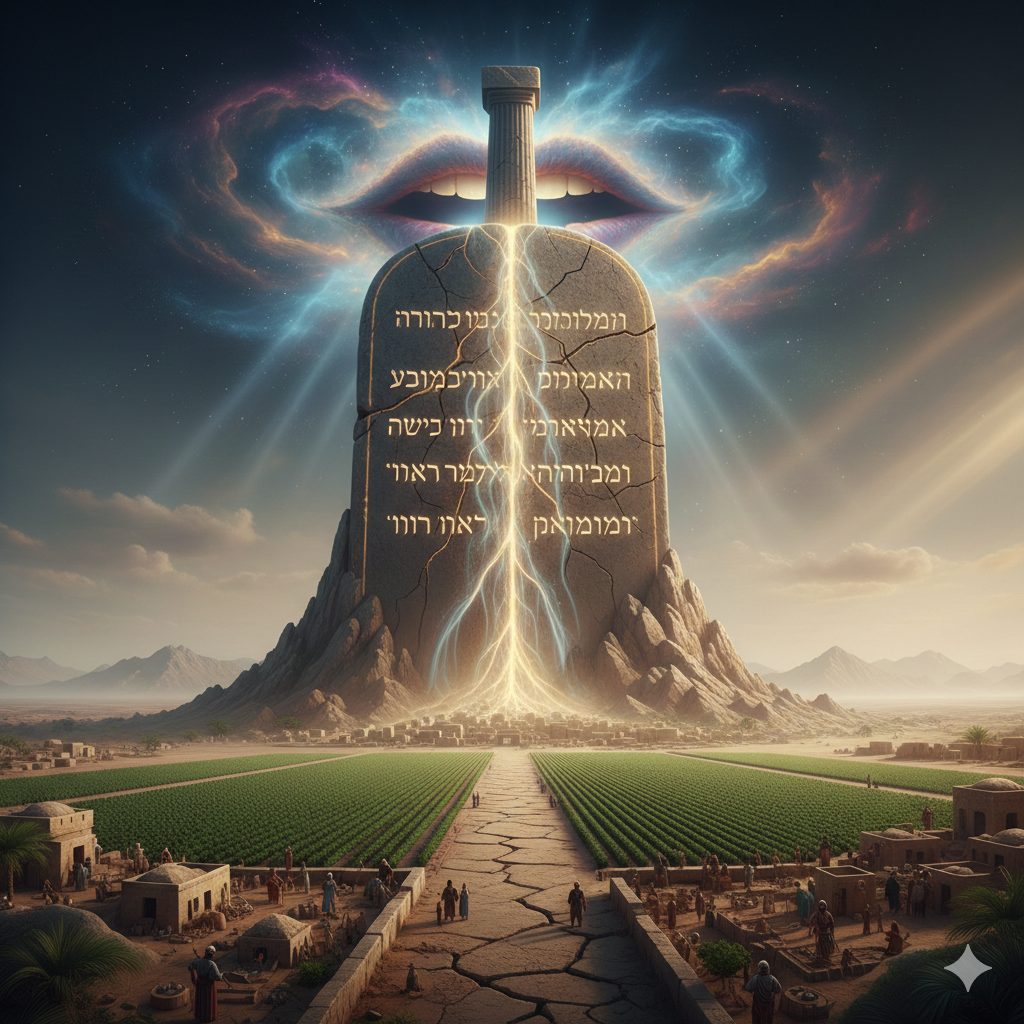
(תהילים — Tehillim — Psalms 33:4-5, Aleppo/Leningrad)
The proclamation delivered in this transmission establishes the structural layout of the environment for the Indwelt — defined here as the inhabited, spirit-animated and empowered participant of the covenant who exists in superposition with the Father, the Breath, and the Word יהושע — Yehoshua (Yeh-ho-shoo-ah) — The Son. The speaker, דָּוִד — Dawid (Dah-weed) — “David,” is not offering a poetic sentiment but is conducting a survey of the tectonic reality managed by the Father. In the ancient regional context of the Judean hill country, where life depended on the reliability of the terrain and the precision of the boundary stone, this arrangement of words functions as a rhythmic verification of the stability of the cosmos. For the Indwelt, these words represent the activation of an internal structural shift that rejects the chaotic distortions of the contrived institutional narrative. The Believer — defined here as the religious, non-inhabited adherent who seeks the Source through the scaffolding of man, the powerless — often mistakes these declarations for mere “faith,” but the Indwelt recognizes them as the hard-coded parameters of a kingdom that does not deviate. By articulating the level nature of the Father’s utterance, דָּוִד — Dawid (Dah-weed) — “David” is grounding the participant’s safety in a historical, physical existence that renders the unstable mechanisms of the world system obsolete.
Original: כִּי-יָשָׁר דְּבַר-יהוה וְכָל-מַעֲשֵׂהוּ בֶּאֱמוּנָה אֹהֵב צְדָקָה וּמִשְׁפָּט חֶסֶד יהוה מָלְאָה הָאָרֶץ
Literal Interlinear Etymological Transliteration (The L.I.E. Detector): Because level the arrangement of words of יהוה — YHWH (Yahweh) and all the labor of His hands in firmness. He provides for the straight path and the governing regulation the covenantal kindness of יהוה — YHWH (Yahweh) filled to the brim the firm ground. (Aleppo/Leningrad — Tehillim — 33 — 4-5 Covenantally Faithful, Minimal Copular, SVO Format)
The identification of יָשָׁר — yashar (yaw-shawr) — “level, even, without a hump” serves to dismantle the religious abstraction of “truth” and replaces it with the geometric precision of the Father’s speech. This term, rooted in the preparation of a path for the traveler, functions as a guarantee that the דְּבַר-יהוה — debar-Yahweh (deb-ar Yah-weh) — “the arrangement of words of יהוה — YHWH (Yahweh)” contains no hidden traps or uneven surfaces. When paired with the וְכָל-מַעֲשֵׂהוּ — we-kol-ma’asehu (we-kohl mah-ah-seh-hoo) — “and all the labor of His hands,” the text highlights that the activity of יהוה — YHWH (Yahweh) is a hard, tactile reality, akin to the driving of a center-pole into the earth. The execution of this labor בֶּאֱמוּנָה — be’emunah (beh-eh-moo-naw) — “in firmness, in the manner of a steady pillar” indicates a structural density that overcomes the shifting sands of human tradition, effectively changing the atmosphere from one of uncertainty to one of victorious inhabitation. The arrival of the חֶסֶד — chesed (kheh-sed) — “covenantal kindness, bowing the neck” signifies more than a feeling; it is a structural filling where the Father’s protective intent becomes an undeniable weight upon the הָאָרֶץ — ha’aretz (haw-aw-rets) — “the firm ground.” This is the mechanical result of the covenant: the relocation of the participant from the place of the victim to the place of the level foundation.
The level arrangement of words is a structural necessity for the Indwelt who finds themselves surrounded by the noise of the contrived institutional narrative. In the same way that a physical builder relies on the level to ensure the integrity of the house, the internal state of the participant relies on the Davar of יהוה — YHWH (Yahweh) to repel the psychological infiltration of chaos. The Believer, lacking the internal inhabitation of the Spirit-Breath, often looks for emotional confirmation of truth, but the Indwelt stands on the architectural blueprint of the Father’s arrangement. This proactive alignment is what establishes the steady pillar in the midst of the cultural storm. The contrived institutional narrative attempts to keep the individual in a state of horizontal reaction, constantly looking at the fluctuations of the world, but the covenantal relational agency requires a vertical orientation. To walk in the יָשָׁר — yashar (yaw-shawr) — “level, even, without a hump” is to anchor oneself in the immutable order of the Source, creating a zone of non-interference where the slanderer’s deceptions cannot find a foothold. The level path is not a moralistic ideal; it is a dimensional superposition where the Indwelt is set on a plane that is functionally out of reach for the deceptive hump.
The labor of the Father’s hands functions as the temporal signature of the stability of יהוה — YHWH (Yahweh) to the covenant. In the ancient regional context, the reliability of the sunrise and the consistency of the seasons were the empirical proof of a successful governance. When דָּוִד — Dawid (Dah-weed) — “David” speaks of all His labor being in firmness, he is identifying the created order as the laboratory where the Father’s word is validated. This is the moment where the אֱמוּנָה — emunah (eh-moo-naw) — “firmness, stability” of יהוה — YHWH (Yahweh) — the support that sustains the dwelling — becomes a tangible reality. The Indwelt understands that every act of the Father is a renewal of this agency, a driving home of the support pillar to ensure the communal protection of the household. The provision for the path, the אֹהֵב — ohev (o-hev) — “breathing after, providing for,” is the movement of the Father into the daily life of the Indwelt where the scarcity of the world system can no longer starve them. This provision is not an act of random charity but an act of tactical sustenance into the only space that is truly secure from the mechanisms of the predatory institutional narrative.
The straight path of the world system is a mechanical attempt to limit the expansion of the Spirit-Breath within the participant by replacing it with religious codes. This narrowness manifests as rigid legalism and the perceived lack of agency, creating a sensation of being restricted by man-made boundaries. The Indwelt counteracts this compression through the inhabitation of the צְדָקָה — tzedaqah (tsed-aw-kaw) — “the straight path, staying within the boundary,” which is the Father’s own frequency of rectitude. By speaking of the מִשְׁפָּט — mishpat (mish-pawt) — “the governing regulation,” the participant is asserting that there is a master architecture within them that cannot be overruled by external human mandates. The straight path is the cliffside road that requires no external bracing because it is cut directly into the bedrock of the Source. The Indwelt is the building, inhabited by the Spirit, and their alignment with the regulation is the cornerstone of their presence in the world. To fall into the powerless state of the Believer is to accept the institutional hump as the final reality, but to stand as the Indwelt is to recognize that the hump is merely a temporary obstruction on a level road.
The terminology used by דָּוִד — Dawid (Dah-weed) — “David” is devoid of the anachronistic anglicized glosses of the contrived institutional narrative, focusing instead on the concrete realities of ancient Near Eastern covenantal survival. The firmness is the אֱמוּנָה — emunah (eh-moo-naw) — “firmness, stability,” the power to remain upright and work the will of the Father. This is the same stability that inhabited the Son, יהושע — Yehoshua, who navigated the uneven paths of the religious systems by looking toward the level arrangement of the Father’s utterance. The Indwelt carries this same signature of stability. When the world system attempts to move the boundary stones of truth, it is attempting to enforce a narrative of confusion and limitation. However, the Indwelt ignores the narrative of the world and focuses on the arrangement of the Source.
The filling of the ground represents the peak intensity of the Father’s commitment, where the protective bond is at its maximum density. It is in this environment that the covenantal kindness of יהוה — YHWH (Yahweh) is most evident. The Indwelt does not seek to escape the physical world but to find the מָלְאָה — male’ah (maw-leh-aw) — “filled to the brim” presence within it. This filling is a saturation of the Inhabitation, where the external conditions may be chaotic, but the internal and immediate condition is one of overflowing communal protection. The firm ground is a structural shift; it is the elevation of the perspective of the participant above the level of the shifting dunes of human opinion. From the level path, the movements of the narrative-agents are seen as erratic and ineffective, because they lack the foundation required to breach the perimeter of the Davar. This is the perspective of the Indwelt who exists in superposition with the Father. The contrived institutional narrative strives to prevent the Believer from realizing this saturation, keeping them focused on a perceived distance between themselves and the Source. But the study of תהילים — Tehillim — Psalms 33:4-5 is an invitation to stand firm, to use the firmness of the Father as the floor that supports the weight of the spirit-animated life.
The importance of the expressions of the speaker to the reader lies in the transmission of a specific linguistic and spiritual technology. דָּוִד — Dawid (Dah-weed) — “David” provides the vocabulary of alignment. Instead of using the hollow language of the powerless, he uses the dense, pictographic language of the ancient witnesses. He calls upon יהוה — YHWH (Yahweh) to exist as He has always existed — as a level path, a steady pillar, and a bowing protector. For the reader who is currently experiencing the uneven ground of a failing economy or the institutional pressure of a religious system, these words are the passcodes to stability. By maintaining this linguistic transparency, the Indwelt ensures that their internal conviction is perfectly mirrored in their external walk on the firm ground. This alignment is what gives the word its force and prevailing power, allowing the participant to stand level at the center of the world and witness the stability of every work of the Father.
The חֶסֶד — chesed (kheh-sed) — “covenantal kindness, bowing the neck” is the ultimate goal of the movement of the Indwelt. It is a state where the Father has stooped to the level of the firm ground to ensure that the participant is never abandoned. In this saturation, the participant can breathe the Spirit-Breath without the contamination of the contrived institutional narrative’s fear-based debt. The functional labor of יהוה — YHWH (Yahweh) is the foundation of this proximity. To live in this kindness is to admit that one is part of a household supported by a Power that is part of the very structure of the universe. This is the lowliness that receives the overflowing filling; the recognition that the Source is the only true level. The Believer attempts to level their own path through religious efforts and intellectual scaffolding, but these structures are easily buckled by the weight of reality. The Indwelt simply occupies the יָשָׁר — yashar (yaw-shawr) — “level, even, without a hump” that already exists, the one that the Father has arranged since the beginning. This is the secure state of the covenantal participant: a man or woman who is walking on solid ground, protected by the bowing neck of the Source until the earth is fully inhabited by the Word.
The survival of the Indwelt is the primary threat to the contrived institutional narrative. A person who cannot be tripped by the humps of the world, who cannot be moved from the steady pillar, and who finds their stability in a vertical source is a person the system cannot manipulate. דָּוִד — Dawid (Dah-weed) — “David,” in the midst of the assembly, is the prototype of this freedom. His proclamation is an anthem of independence from the chaos. As the arrangement of words levels the path, it reveals a man who is still standing, still operating by the governing regulation, and still anchored in the covenantal relational agency. This is the victory that overcomes the world. The study of this verse is the study of how to become a steady pillar in one’s own right, a vessel of the firmness and rectitude of the Father in a world of soft compromises and low standards.
The conclusion of this deep dive is a powerful proclamation of the position of the Indwelt. We are not the victims of the uneven path; we are the inhabitants of the level arrangement. We do not fear the shifting ground; we possess the steady pillar. We do not wait for the Father to arrive to be safe; we stand on the ground He has already filled to the brim. The functional labor of יהוה — YHWH (Yahweh) is our inheritance, and His covenantal relational agency is our daily bread. By rejecting the anachronisms of the anglicized religious system and returning to the lexical fidelity of the ancient witnesses, we recover the power that was always intended for the covenant partners. The breathing after the straight path is the sound of our completion, the resonance of those who are in superposition with the Father, the Breath, and the Word. At the center of the firm ground, we stand as witnesses to the truth that the Source is our level foundation, now and into the infinite expanse of the covenantal reality.
The judge who stands at the gate of the city hears the sound of the Indwelt and recognizes the signature of the Father’s מִשְׁפָּט — mishpat (mish-pawt) — “the governing regulation”. There is no unevenness for those who are in the level arrangement, for they have already passed through the confusion and into the clarity of the Spirit-Breath. The Indwelt moves forward with the weight and density of the truth, leaving behind the hollow oaths and religious promises of the powerless. Our firmness is the cornerstone of a new day, and our level path is the boundary of a kingdom that cannot be shaken. In the hardness of the pillar and the level of the road, we find our home, inhabited by the presence of the One who has always existed as our foundation and our strength.