Physical Address
304 North Cardinal St.
Dorchester Center, MA 02124
Physical Address
304 North Cardinal St.
Dorchester Center, MA 02124
With Michael Walker
With Michael Walker
The Foundational Question.
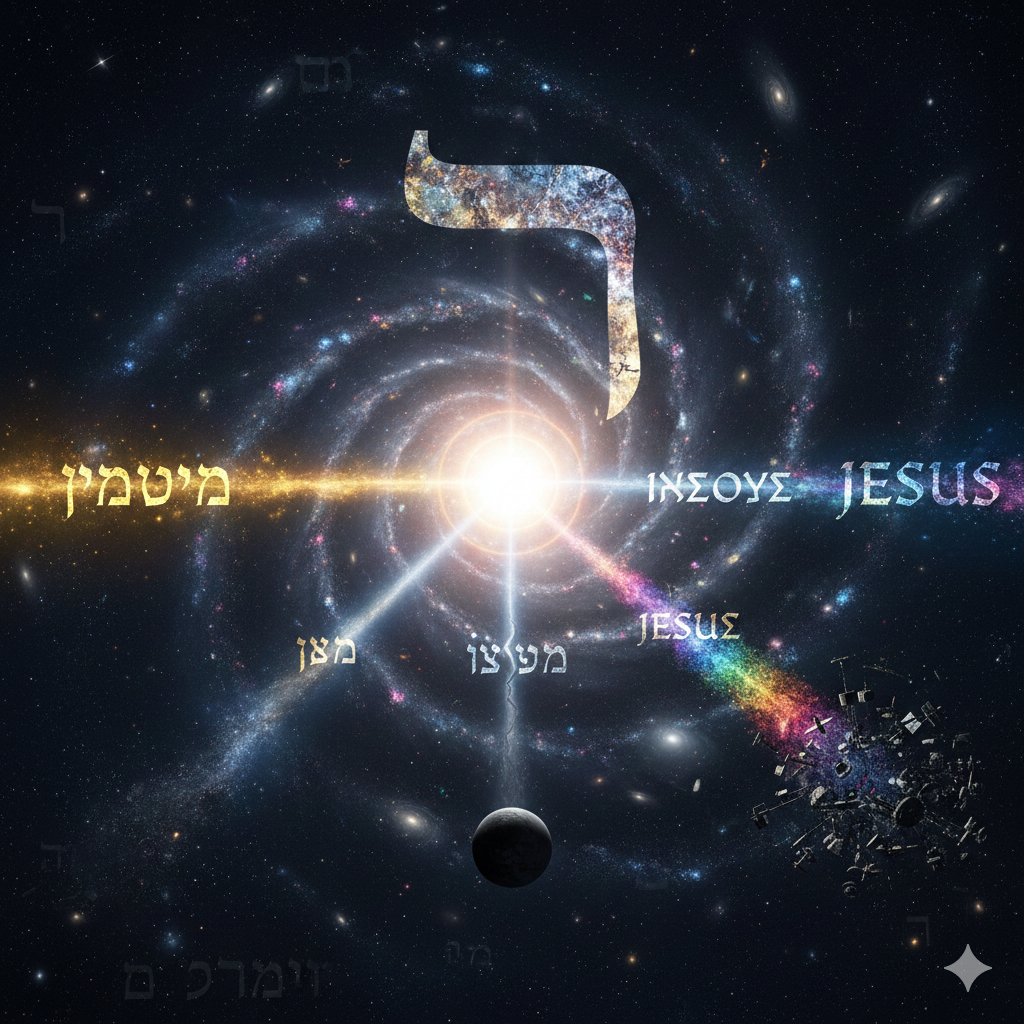
The foundational question guiding this exploration is whether the name given at the Exodus, a covenantal declaration of God’s nature and physical reality, can be sustained through linguistic, cultural, and political conquest. To understand the name’s fidelity, one must first accept the ancient Hebrew premise that a word does not merely describe reality but is the reality itself; a name is a statement of essence and covenantal presence functionality, and identity. When the language changes, the power of the name’s reality is inherently compromised, and the consequence is the loss of the original identity and said authority. This deep dive traces the systematic mutation of a covenantal identity from its birth in Hebrew to its final form in English, demonstrating that the transformations are not mere translations but semantic truncations that abandon the Father’s presence, and the name that He Himself gave.
This is not a matter of semantics or cultural adaptation—it is a matter of covenantal fidelity. If the covenant name is the embodiment of divine agency, then any alteration is not neutral but destructive, because the name is not a mere label but the bearer of presence and authority. To invoke it is to call upon the Father’s will into history, and thus the name functions as a conduit of divine fidelity. When the name is altered, the tether between promise and embodiment is severed, leaving only a hollow signifier that gestures toward divinity but no longer mediates presence. Cultural adaptation may assume meaning can be carried across languages without loss, but covenantal fidelity demands precision, not approximation, for substitution replaces divine agency with human convenience. The stakes are absolute: either the name stands intact and operative, mediating the Father’s presence and power, or it collapses into counterfeit—ritual without agency, religion without covenantal reality. Powerlessness.
The Foundational Hebrew Principle: Word as Reality.
The journey begins not with linguistics, but with philosophy. The language of the Covenant operates on a principle known as divine onomatopoeia, where the audible reality of a word—its precise pronunciation—is indivisible from the spiritual and physical reality it represents. In the Hebrew worldview, a name is not a mere identifier but a living statement and a prophecy, carrying within it the agency and presence of the One it invokes. To alter the phonetic structure of a covenantal name is therefore to fracture its covenantal identity and diminish its power, for the sound itself is the vessel of divine fidelity. This principle asserts that a name derived from the Tetragrammaton is non‑negotiable, because it is not simply a linguistic artifact but the embodiment of covenantal reality. A linguistic shift, therefore, is not an accommodation to culture or convenience; it is a fundamental change of reality, severing the bond between word and presence, and transforming living covenant into hollow ritual.
This principle dismantles the modern assumption that words are interchangeable symbols, exposing the inadequacy of a purely semiotic view of language. In Hebrew thought, the audible syllables are not placeholders but carriers of divine essence and, inseparably bound to the reality they signify. A name is not a token pointing to something beyond itself; it is the living vessel of presence, the audible embodiment of covenantal agency. To lose the sound is therefore to lose the authority, power, and presence, because the phonetic structure is the very architecture through which divine fidelity is mediated. Transliteration, in this light, is not a neutral bridge between languages but a fracture that severs the bond between word and reality, reducing living covenant into abstract symbol. What modern linguistics treats as substitution, Hebrew philosophy recognizes as rupture: the difference between a name that embodies the Father’s agency and a name that has been emptied of it.
The Two Realities: Yehoshua vs. Yeshua.
The distinction between the names Yehoshua and Yeshua is the first critical point of divergence, marking the shift from Presence to Absence.
Pre-Exilic Covenant Identity: Yehoshua.
The original covenantal identity name is Yehoshua. This name is a proclamation: YHWH is Salvation. It is comprised of two distinct, sacred elements that together form a living covenantal declaration. The first is the theophoric component Yahu‑ or Yeho‑ (יְהוֹ), which is not a casual prefix but an explicit, audible fragment of the Tetragrammaton, YHWH (יהוה). In Hebrew thought, this embedding of the Creator’s name is not ornamental—it is ontological, placing the divine presence directly within the identity of the bearer. The second element is ‑shuaʿ (שׁוּעַ), meaning salvation or deliverance, but its force is not abstract; it specifies the agency of salvation. The name does not merely announce “salvation” as a concept, but declares WHO is saving: YHWH Himself. Thus Yehoshua is not a symbolic title but a covenantal reality, a living proclamation that the Creator’s essence and saving power are inseparably bound into the identity of the one who bears it. To speak this name is to confess the union of divine presence and divine action, and any alteration of its phonetic or structural integrity is not a neutral shift but a rupture in covenantal fidelity, severing the proclamation from the agency it embodies.
The introduction of this name is linked directly to the Mosaic Covenant and the Exodus narrative, cementing its role as a statement of relational proximity. Yehoshua (formally Hoshea) ben Nun is first cited when he is selected to lead the battle against ‘Amaleq (Amalek).
Original: וַיֹּאמֶר יְהוָה אֶל־מֹשֶׁה כְּתֹב זֹאת זִכָּרוֹן בַּסֵּפֶר וְשִׂים בְּאָזְנֵי יְהוֹשֻׁעַ כִּי־מָחֹה אֶמְחֶה אֶת־זֵכֶר עֲמָלֵק מִתַּחַת הַשָּׁמָיִם׃
Transliteration: Vayyo’mer YHVH ’el-Mosheh Kəṯōḇ zō’ṯ zikkārōn bassēfer wəśîm bə’oznê Yəhōšuaʿ Kî-māḥōh ’emḥeh ’eṯ-Zēḵer ‘Ămālēq miṯtaḥaṯ Haššāmayim.
Literal Interlinear: YHWH said to Mosheh (Moe-sheh)—Moses—: Write this memorial in the book and set it in the ears of Yehoshua (Yəhō-SHOO-ah)—Hoshea—; for blotting I will blot out the memory of ‘Amaleq (Ah-MAH-lek) from under the heavens. (Aleppo/Leningrad codices, Exodus 17:14).
The reality of the name Yehoshua physically and spiritually manifests the reality of God’s power and presence in action among His people. It is not merely a label—it is a covenantal proclamation that YHWH Himself is the agent of salvation. The very absolute reality of it.
Exilic Short-Hand: Yeshua.
The shift to Yeshua is not a simple phonetic shortening, but a covenantal subtraction that results in an exilic absence. This form is a linguistic contraction developed during and after the Babylonian Exile (after 597 BCE), when pressures of assimilation and linguistic erosion reshaped the audible fidelity of covenantal names. By omitting the Yahu‑ component, the name is stripped of its embedded theophoric declaration, collapsing the explicit proclamation “YHWH is salvation” into a generic action: “Salvation” or “He saves.” What is lost is not a syllable alone, but the subject, power, and agent of salvation—YHWH Himself. In Hebrew thought, this omission is not neutral; it is a rupture in covenantal identity, transforming a living proclamation of divine agency and reality into an abstract verb detached from its source. The exilic contraction thus mirrors the exile itself: a removal of presence, a silencing of the divine name within the identity of the people. Where Yehoshua audibly carried the Creator’s essence into history, Yeshua reduces the covenantal proclamation to an impersonal act, leaving the community with a name that gestures toward deliverance but no longer anchors it in the Father’s presence or power.
This contraction became the common vernacular during a time when the Temple was destroyed, God’s physical presence was gone, and the people were separated from their land. The audible reality of the name itself mirrors this condition of exile, for the omission of the divine syllable corresponds to the absence of the divine dwelling. In Yehoshua, the embedded Yahu‑ component audibly carried the Creator’s presence into the identity of the name, proclaiming that YHWH Himself was salvation. But in the contracted form Yeshua, that explicit dwelling is removed, leaving only the echo of deliverance without the subject who delivers. The people’s language thus reflected their historical state: a covenantal identity stripped of its audible anchor, a proclamation reduced to abstraction. Just as the Temple lay in ruins and the land was lost, so too the name bore the mark of absence, signaling that the fullness of divine agency had been withdrawn. The contraction was not merely linguistic convenience; it was the audible witness of exile, a fracture in covenantal fidelity that transformed the living proclamation of YHWH’s salvation into a muted reminder of what had been lost.
Original: הַתְּשִׁיעִי יֵשׁוּעַ הָעֲשִׂירִי שְׁכַנְיָהוּ׃
Transliteration: Hətšî‘î Yēšūaʿ hā‘ăśîrî Šəḵanyāhû.
Literal Interlinear: The ninth Yēšūa; the tenth Šəḵanyāhû (Shə-khan-YAH-hoo). (Aleppo/Leningrad codices, 1 Chronicles 24:11).
The distinction is clear: Yehoshua is covenantal relational, bearing the Father’s presence; Yeshua is exilic absence, an acceptable vernacular but a compromised reality and absence of divine agency.
The Hellenization: Compromised Adaptation to Iēsous.
The second major mutation occurred during the Hellenistic Period and the Septuagint (LXX) translation (c. 280–250 BCE). The conversion of the Hebrew name to Greek Iēsous (I-ay-SOOS) was not a faithful transliteration but a compromised phonetic adaptation dictated by the rigidity of the Koine Greek language.
Greek lacked the necessary phonemes and morphological structure to preserve the Hebrew reality. The process was one of phonological accommodation, a forced substitution of sounds. The Hebrew Shin /sh/ (שׁ) had to be substituted with the Greek Sigma /s/ (Σ, σ). This structural loss changed the sound from Shu to Su. The Hebrew Ayin /ʿ/ (ע), a guttural stop, was impossible to render and was dropped entirely. The final vowel was reshaped to -ous to satisfy the Greek rule that all masculine names must end in a declinable case to function grammatically in a sentence.
This adaptation stripped the name of its native, covenantal sounds, resulting in a name that was structurally Hellenized to fit Greek grammar but had no covenantal fidelity. The final product, Iēsous, only retained a distant phonetic relationship to Yehoshua.
Pre-Existence and the Visual Placeholder
The name Iēsous was not coined for the Messiah. It was already in systematic use as the only allowable Greek substitution for the Hebrew name Yehoshua in the Septuagint, which was translated in Alexandria, Egypt, over two centuries and over 200 times before the Messiah’s birth. This proves that Iēsous serves purely as a linguistic bridge and a Hellenized placeholder for the Hebrew name in the Greek canon. Like the $ symbol for the word “dollar,” Iēsous was the picture for the audible sound of Yehoshua.
Furthermore, Iēsous was largely a written form, not a spoken reality in Judea or Galilee. The Septuagint was intended for the Greek-speaking Diaspora community and the Library of Alexandria. The Jewish community in Yəhūḏāh (Judea) and Yərūšalayim (Jerusalem) primarily read scripture in Hebrew, the Holy Tongue, and spoke the vernacular Aramaic. They knew the name of the man from Nat͡səraṯ (Nazareth) by the audible, local Yehoshua. The Greek Iēsous was a visual illustrative placeholder on the page of the Greek scriptures and later the Greek New Testament; it was not the covenantal, audible reality known to his contemporaries, or anyone around in His time. From Greek, the name passed into Latin as Iesus. Here, the nominative ending shifted from ‑ous to ‑us, complying with Latin morphology. The initial I retained both vowel and consonant functions, pronounced as /i/ or /j/. In medieval Europe, the consonantal I was distinguished visually as J. By the time of the Great Vowel Shift in English, the onset hardened into the voiced “J” (/dʒ/), producing the modern Jesus. This final mutation introduced a phonetic distance immense from the original Hebrew Yehoshua. The covenantal declaration “YHWH saves” was replaced by an orthographic descendant that neither translates, nor faithfully transliterates, nor preserves agency. Thus the trajectory is clear: Yehoshua — covenantal proclamation, “YHWH saves.” Yeshua — exilic contraction, absence of the Father’s name. Iēsous — Greek phonological accommodation, lexical pointer without embedded meaning. Jesus — Latin/English orthographic mutation, a substitution severed from covenantal fidelity.
The Forensic Conclusion:
Salvation is audibly and covenantally encoded only in Yehoshua. Every subsequent contraction or mutation represents a posture shift — from proclamation to absence, from presence to approximation, from fidelity to fracture.
The trajectory from Yehoshua to Jesus is not a smooth linguistic evolution but a series of ruptures that progressively sever covenantal fidelity. What begins as a proclamation — “YHWH is salvation” — becomes, through contraction and mutation, a hollow substitute. The shift to Iēsous in Greek was not a faithful transliteration but a perversion born of necessity, shaped by phonetic and alphabetical barriers. Greek lacked the sounds to carry the Hebrew name intact, and so the embedded proclamation was fractured into an approximation. This was the first step in a chain of substitutions that would culminate in the English form Jesus.
From Iēsous to Iesus to Jesus, each stage represents a man‑made foundation of mutation. These names do not carry covenantal relational agency, because in Hebrew thought the word is the reality, and the reality is embedded in the audible syllables themselves. Once the sound is lost, the presence and power is lost. What remains is not translation, nor even transliteration, but transformation — a mutation that strips the name of its covenantal power. It isn’t even remotely synonymous.
The timeline itself exposes the fracture. The English form Jesus did not exist in the Messiah’s lifetime; it arose centuries later, long after the Resurrection. A name that was never audibly pronounced in His time cannot be the covenantal name that bears salvation. Iēsous was never spoken by the people of Yehoshua’s era; it functioned only as a visual placeholder, much like the symbol “$” stands for the word “dollar.” It pointed to something but did not embody it.
No Western substitution for the covenantal name(s) was ever audibly pronounced in the time of the Messiah or prior. These forms were later iterations, cultural assimilations of Hebrew names into Greco‑Latin and eventually Anglicized identity. They became fixed in the English Bible as if fidelity had been preserved, but in reality, they were placeholders, detached from the audible proclamation that carried divine agency.
The forensic conclusion is clear: salvation is audibly and covenantally encoded only in Yehoshua. Every subsequent contraction or mutation represents a posture shift — from proclamation to absence, from presence to approximation, from fidelity to fracture. To restore covenantal agency, one must return to the audible proclamation itself, for only in the original syllables does the Father’s presence dwell. For only in the name of Yehoshua lies salvation. There is no salvation in any other name. There is no salvation in Jesus. Period.