Physical Address
304 North Cardinal St.
Dorchester Center, MA 02124
Physical Address
304 North Cardinal St.
Dorchester Center, MA 02124
With Michael Walker
With Michael Walker
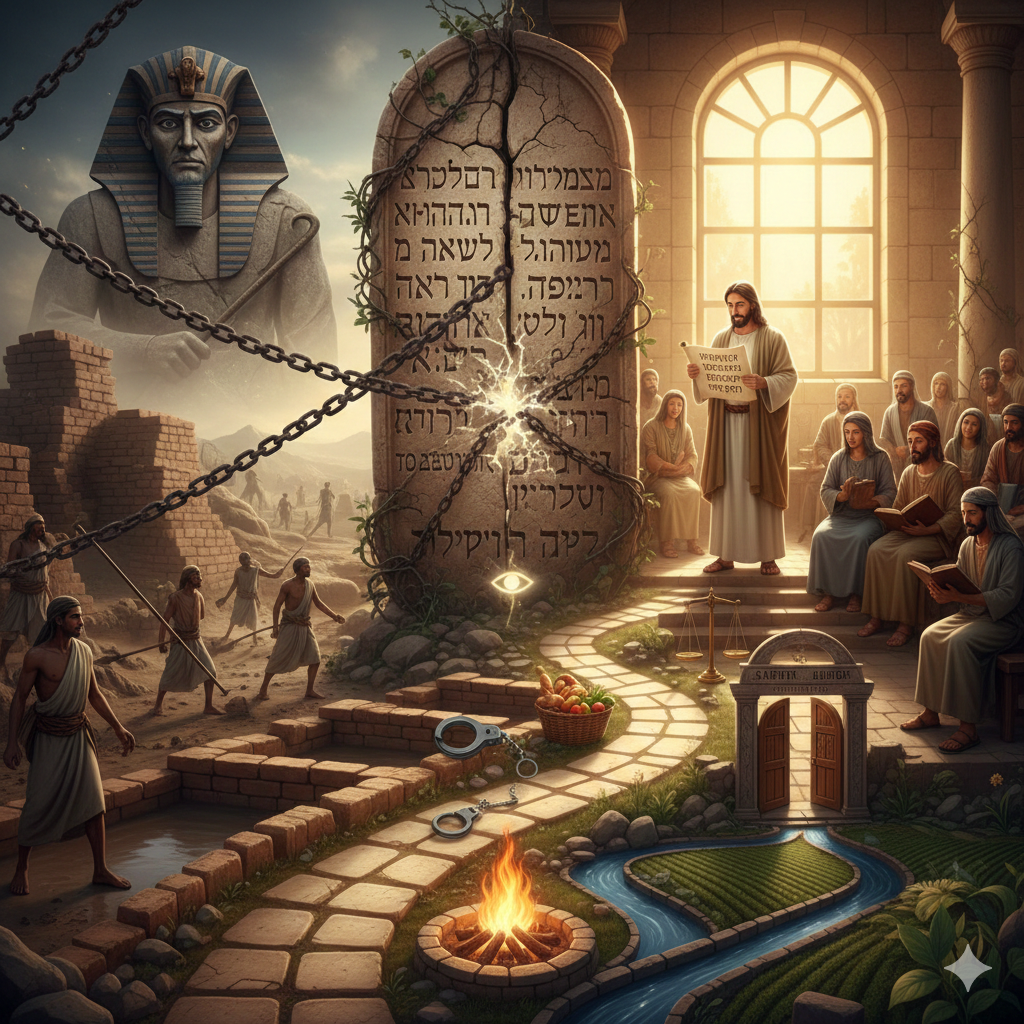
The conclusion must gather every thread into a tapestry that reveals the covenant’s heart and the gospel’s trajectory. The spoils of war remind that even in the chaos of battle, when appetite and victory tempt the strong to treat captives as trophies, the covenant instruction interrupts with dignity and restraint. The command to call for peace before siege, the ritual of mourning and transition for a captive woman, and the prohibition against selling her as merchandise all stand as counterweights to the empire’s instinct to convert bodies into spoils. These provisions declare that even in war, the house must remember that persons are not property, and that desire must be bounded by ritual, grief, and release. The geography of battle is thus reshaped into a space where covenant ethics restrain exploitation and press toward humane treatment, refusing to let violence become commerce.
Original: וְהָיָה אִם־לֹא חָפַצְתָּ בָּהּ וְשִׁלַּחְתָּהּ לְנַפְשָׁהּ וּמָכֹר לֹא תִמְכְּרֶנָּה בְּכֶסֶף לֹא תִתְעַמֵּר בָּהּ
Transliteration: wəhāyāh ’im-lō ḥāpaṣtā ḇāh; wəšillaḥtāh lenapšāh; ūmāḵōr lō timkərennāh bəḵeseph; lō tit‘ammer ḇāh
Literal Interlinear Etymological Translation in English (Aleppo/Leningrad, SVO):
And it shall be: if you do not desire: in her; you shall send her: to herself; and sale: you shall not sell her: with silver; you shall not oppress: in her.
(Leningrad – Deuteronomy – 21 – 14)
Israel’s disobedience cycles reveal the fragility of memory and the persistence of appetite. The assembly once cut a covenant to free their kin, obeyed, and released them, but then recoiled and re-enslaved them, treating covenant as negotiable and freedom as temporary. Prophets rose to condemn this betrayal, declaring that the Lord who redeemed from Mitsrayim will not tolerate the re-enslavement of His people. Nehemiah rebuked leaders who sold kin into debt bondage, exposing the shame of treating brothers as collateral. Amos thundered against the sale of the righteous for silver and the poor for sandals, exposing the corruption of value that converts persons into consumables. These cycles teach that disobedience is not theoretical; it is historical, and it reveals the gap between divine will and human exploitation. The prophetic voice stands as guardian, condemning the relapse into bondage and commanding return to mercy and justice.
Original: וַיָּשֻׁבוּ אַחֲרֵי־כֵן וַיַּשִׁיבוּ אֶת־הָעֲבָדִים וְאֶת־הַשְּׁפָחוֹת אֲשֶׁר שִׁלְּחוּ חָפְשִׁים וַיַּכְבִּשׁוּם לַעֲבָדִים וְלִשְׁפָחוֹת
Transliteration: wayyāšubū ’aḥărē-ḵēn; wayyāšībū ’eṯ-hā‘ăḇāḏīm wə’ēṯ-haššəfāḥōṯ ’ăšer šilləḥū ḥopšīm; wayyakbišūm la‘ăḇāḏīm wəlišəfāḥōṯ
Literal Interlinear Etymological Translation in English (Aleppo/Leningrad, SVO):
And they returned: afterward; and they brought back: the male servants and the female servants: whom they had sent: free; and they subdued them: to male servants: and to female servants.
(Leningrad – Jeremiah – 34 – 11)
The conclusion must therefore bind together in Torah, narrative, prophecy, wisdom, and gospel into a single proclamation. Slavery is man-made, born of appetite and fear, and Scripture confronts it at every turn. The Torah forbids trafficking, installs release clocks, dignifies labor with sabbath, and commands asylum. The narrative remembers Egypt’s oppression and commands compassion. The prophets indict exploitation and condemn re-enslavement. Wisdom confesses shared creation in the womb. The gospel announces release to captives, reframes status as brotherhood, and commands justice and equality under one Master. Even in war, covenant law restrains appetite; even in disobedience, prophets call the people back to mercy. The trajectory is liberation-in-motion, pressing households and cities toward sanctuary rather than empire.
The conclusion is not a soft word but a sharp one: owning persons as property is ethically untenable within covenant and gospel. The house that remembers exodus, that honors sabbath, that proclaims jubilee, that protects fugitives, that dignifies labor, that reframes status as kinship, and that worships by tearing yokes apart will not become Egypt again. The Word of God is the final witness, and it declares that bondage is human invention, but liberation is divine command. The outro therefore stands as a summons: the people of God must embody memory, mercy, and justice, refusing to baptize exploitation and insisting that every gate, every household, every city become a sanctuary where freedom is guarded and dignity is honored. This is the covenant’s architecture and the gospel’s mission, and it is the conclusion of the deep dive: slavery is confronted, destabilized, and undone by the Word, and liberation is the design of heaven written into the Torah, the prophets, and the gospel.