Physical Address
304 North Cardinal St.
Dorchester Center, MA 02124
Physical Address
304 North Cardinal St.
Dorchester Center, MA 02124
With Michael Walker
With Michael Walker
II. The Breakdown:
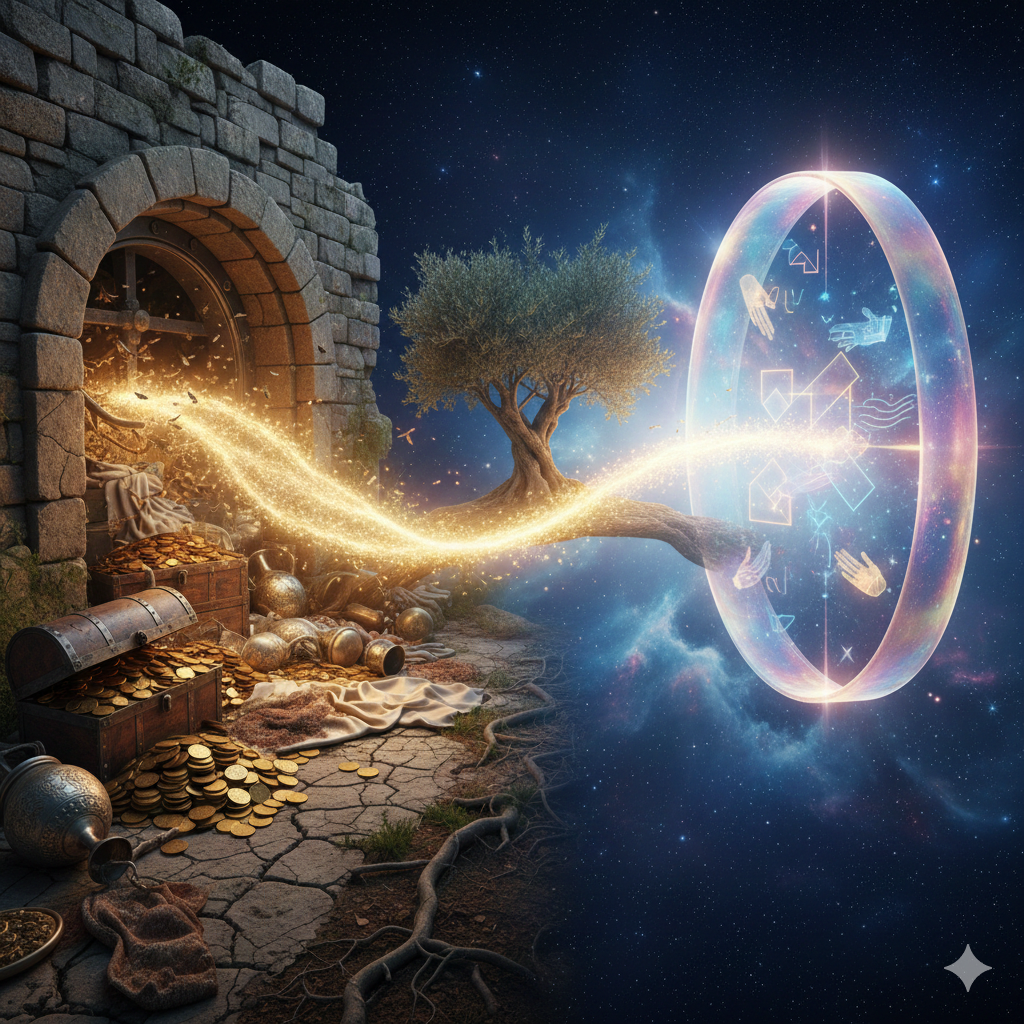
The excavation of the ancestral record begins with a descent into the raw, functional mechanics of the instructions preserved in the ancient codices, moving past the polished veneer of the contrived institutional narrative to encounter the architectural reality of the kingdom. To speak of the instruction of Yehoshua as recorded by מתתיהו – Mattityahu (Maht-tee-yah-hoo) — Matthew is to engage with a manual of survival and a blueprint for the indwelt, stripped of sentimental abstraction. The lexical witnesses of Hesychius, Photius, and the Suda do not provide us with religious concepts but with tangible, cultural descriptors that ground this discourse in the grit of the ancient world. When the record commands one to avoid the stacking of valuables upon the soil, it is not an ethereal suggestion of moral preference but a mechanical warning regarding the physics of entropy and the vulnerability of the material plane. The architecture of the instruction is built upon a contrast between the perishable terrestrial surface and the impenetrable loft of the sky-vault, demanding that the listener recognize the inherent instability of any store-collection that is anchored in visibility.
The breakdown of the Greek witness commences with the imperative θησαυρίζετε – thēsaurizete (thay-sow-rid-ze-te), which must be understood through the lens of Hesychius as the act of heap-storing or stack-collecting. This is the labor of an architect or a builder, one who deliberately piles up resources with the intent of creating a permanent reserve. It is a word of heavy, physical agency, describing a person who is actively curating their existence through the accumulation of high-value stores. This stacking is directed toward θησαυροὺς – thēsaurous (thay-sow-roos), which Dionysius Thrax and the Suda identify as curated wealth or store-collections. These are not merely belongings but the concentrated essence of one’s labor and security, the vaulted valuables that a person believes will serve as their foundation. The instruction is to not execute this stacking epi (ep-ee) tēs (tace) gēs – gēs (gace), which literally translates as upon the soil. The term gēs refers to the land-earth, the agricultural and physical ground beneath the feet, the realm of the visible and the tangible. It is the plane of existence defined by the cycle of life and death, the very substrate of human striving that is perpetually subject to the forces of the atmosphere.
Within this soil-realm, the instruction identifies specific agents of dissolution that the contrived institutional narrative often obscures with religious metaphor. The first agent is σὴς – sēs (sace), which the cultural witnesses identify as the cloth-eating-larva. This is not a symbolic moth but a biological reality that tunnels through the most expensive silken garments, rendering the wealth of the rich into useless rags from the inside out. It represents the quiet, internal consumption of value. Coupled with this is βρῶσις – brōsis (bro-sis), the eating-away or corrosion-rust. According to Photius, this refers to the gnawing away of substance, the slow oxidation of metal and the rot of grain. These two forces work in tandem to perform the action of ἀφανίζει – aphanizei (af-an-id-zee), which signifies causing-to-disappear or destroying visibility. The soil-realm is a place where value is fundamentally unstable because the environment itself is designed to erase the evidence of human accumulation. The wealth is literally eaten by the earth until it vanishes from sight, proving that any security built upon the land is a hallucination of permanence.
The second threat in the soil-realm is the κλέπται – kleptai (klep-tahee), the stealers who operate through the mechanical action of διορύσσουσιν – dioryssousin (dee-or-oos-soo-sin). The lexical witnesses define this specifically as digging-through or tunneling-through-walls. In the ancient cultural context, houses were often constructed of mud-brick or sun-dried clay; a thief did not simply open a door but literally excavated a hole through the wall of the structure to reach the store-collection. This imagery highlights the futility of physical fortifications. No matter how thick the clay or how high the stone, the stealer can dig through the very substance of the home to extract the treasure. This is the ultimate vulnerability of the soil: it can be bypassed by the agency of another. The act of κλέπτουσιν – kleptousin (klep-too-sin), or stealing, is the inevitable conclusion of a system where wealth is stored in a location that is accessible to the digging of the adversary. The instruction is a cold, clinical assessment of the risk inherent in earthly stacking.
The pivot of the instruction offers the alternative of stacking store-collections en (en) οὐρανῷ – ouranō (oo-ran-o), which the etymological witnesses define as the loft or the abode-of-the-sky. This is the unreachable region above the land, the vaulted expanse that is outside the reach of the cloth-eating-larva and the corroding-rust. It is not a religious destination but a category of existence that is immune to the atmospheric entropy of the soil. In this loft, the stealers cannot dig through because there is no mud-brick wall to penetrate; the vault of the sky-abode has no substrate for the thief’s shovel. The loft represents a dimension of reality where value is preserved because it is no longer physical. This is the repository for the irreversible outcomes of enacted righteousness, the vault for actions that have been performed and therefore cannot be un-performed. By moving the store-collection from the soil to the loft, the Indwelt person is moving their security from a realm of visibility and decay to a realm of invisibility and permanence.
The structural integrity of this entire discourse is anchored in the final revelation regarding the καρδία – kardia (kar-dee-ah), the inner-seat-of-will. The Suda and Hesychius do not define the kardia as a place of emotion or sentiment, but as the executive center of the human being, the place where decisions are made and where the fundamental allegiance is seated. The instruction declares that where the store-collection is, there the inner-seat-of-will will be also. This is a law of spiritual physics. The human will is naturally gravitating toward the place where its value is stored. If the value is in the soil, the will is anchored in the soil, making the person a slave to the anxiety of the moth and the thief. If the value is in the loft, the will is anchored in the loft, making the person immovable and immune to the pressures of the terrestrial system. The location of the treasure dictates the posture of the person.
To see the instruction in its pure interlinear form is to see the starkness of the choice presented to the Indwelt:
Original: Μὴ θησαυρίζετε ὑμῖν θησαυροὺς ἐπὶ τῆς γῆς ὅπου σὴς καὶ βρῶσις ἀφανίζει καὶ ὅπου κλέπται διορύσσουσιν καὶ κλέπτουσιν
Transliteration: mē thēsaurizete hymin thēsaurous epi tēs gēs hopou sēs kai brōsis aphanizei kai hopou kleptai dioryssousin kai kleptousin
Literal Interlinear Etymological Transliteration (The L.I.E. Detector): Not stack‑collect for‑yourselves store‑collections upon the soil where cloth‑eating‑larva and eating‑away cause‑to‑disappear and where stealers dig‑through and steal. (Vaticanus – Matthaios – 6 – 19 Covenantally Faithful, Minimal Copular, SVO Format)
The reconstruction of this first movement reveals a warning about the physics of visibility. The soil-energy is being constantly converted into nothingness by the very nature of the land.
The second movement provides the solution:
Original: θησαυρίζετε δὲ ὑμῖν θησαυροὺς ἐν οὐρανῷ ὅπου οὔτε σὴς οὔτε βρῶσις ἀφανίζει καὶ ὅπου κλέπται οὐ διορύσσουσιν οὐδὲ κλέπτουσιν
Transliteration: thēsaurizete de hymin thēsaurous en ouranō hopou oute sēs oute brōsis aphanizei kai hopou kleptai ou dioryssousin oude kleptousin
Literal Interlinear Etymological Transliteration (The L.I.E. Detector): But stack-collect for-yourselves store-collections in loft where neither cloth-eating-larva nor eating-away causes-to-disappear and where stealers not dig-through nor steal. (Vaticanus – מתתיהו – Mattityahu (Maht-tee-yah-hoo) — Matthew – 6 – 20 Covenantally Faithful, Minimal Copular, SVO Format)
This is the call to build a legacy in the dimension of the Father, where the forces of decay have no jurisdiction. It is a command to convert the labor of the body into the wealth of the spirit through enacted allegiance.
The conclusion of the breakdown reveals the mechanism of human devotion:
Original: ὅπου γάρ ἐστιν ὁ θησαυρός σου ἐκεῖ ἔσται καὶ ἡ καρδία σου
Transliteration: hopou gar estin ho thēsauros sou ekei estai kai hē kardia sou
Literal Interlinear Etymological Transliteration (The L.I.E. Detector): For where is the store-collection of-you there will-be also the inner-seat-of-will of-you. (Vaticanus – מתתיהו – Mattityahu (Maht-tee-yah-hoo) — Matthew – 6 – 21 Covenantally Faithful, Minimal Copular, SVO Format)
The inner-seat-of-will is the rudder of the ship, and the store-collection is the magnetic north. One cannot have their will in the loft if their valuables are being stacked upon the soil. The instruction demands a total migration of value.
The deeper cultural etymology of these words exposes the fraud of the contrived institutional narrative, which seeks to spiritualize these terms into metaphors for religious feelings. The ancient witnesses show us that מתתיהו (Maht‑tah‑yahoo) – Matthew recorded Yehoshua speaking about the actual, functional reality of how a human being manages their agency in a hostile world. The cloth-eating-larva and the tunneling-thief are not just threats to money; they are threats to any system of value that relies on the visibility and approval of men. The loft is the secret place, the dimension where only the Father sees, and therefore where only the Father can preserve. This is the incorruptible vault. When an act of mercy is performed in secret, it is stacked in the loft. It is removed from the soil where the larva can eat the credit or the thief can steal the glory. It is locked into the ledger of the eternal.
This breakdown serves as a diagnostic for the Indwelt, forcing a confrontation with the current location of the store-collection. It is an invitation to examine the walls of one’s own house to see if the mud-bricks are being dug through by the pressures of the world’s systems. The revelation is that the only way to protect one’s value is to make it invisible to the soil-realm. The Indwelt do not store things; they store actions. They do not build monuments of stone; they build monuments of allegiance. This is the functional meaning of the kingdom: a system where the currency is obedience and the vault is the very presence of YHWH.
The conclusion of this lexical descent is a standing stone of clarity. We have moved from the palace of sentiment into the laboratory of the covenant. We have seen that the soil is a realm of erasure and the loft is a realm of preservation. The inner-seat-of-will is the stake that must be driven into the ground of the loft, anchoring the entire being in the incorruptible reality of the kingdom. The instructions are clear, the physics are absolute, and the choice remains with the individual agent. The path of the indwelt is the path of the stack-collector who has realized that the only thing worth stacking is that which the moth cannot reach and the thief cannot find.