Physical Address
304 North Cardinal St.
Dorchester Center, MA 02124
Physical Address
304 North Cardinal St.
Dorchester Center, MA 02124
With Michael Walker
With Michael Walker
VI. Critical Implications and Potential Damages.
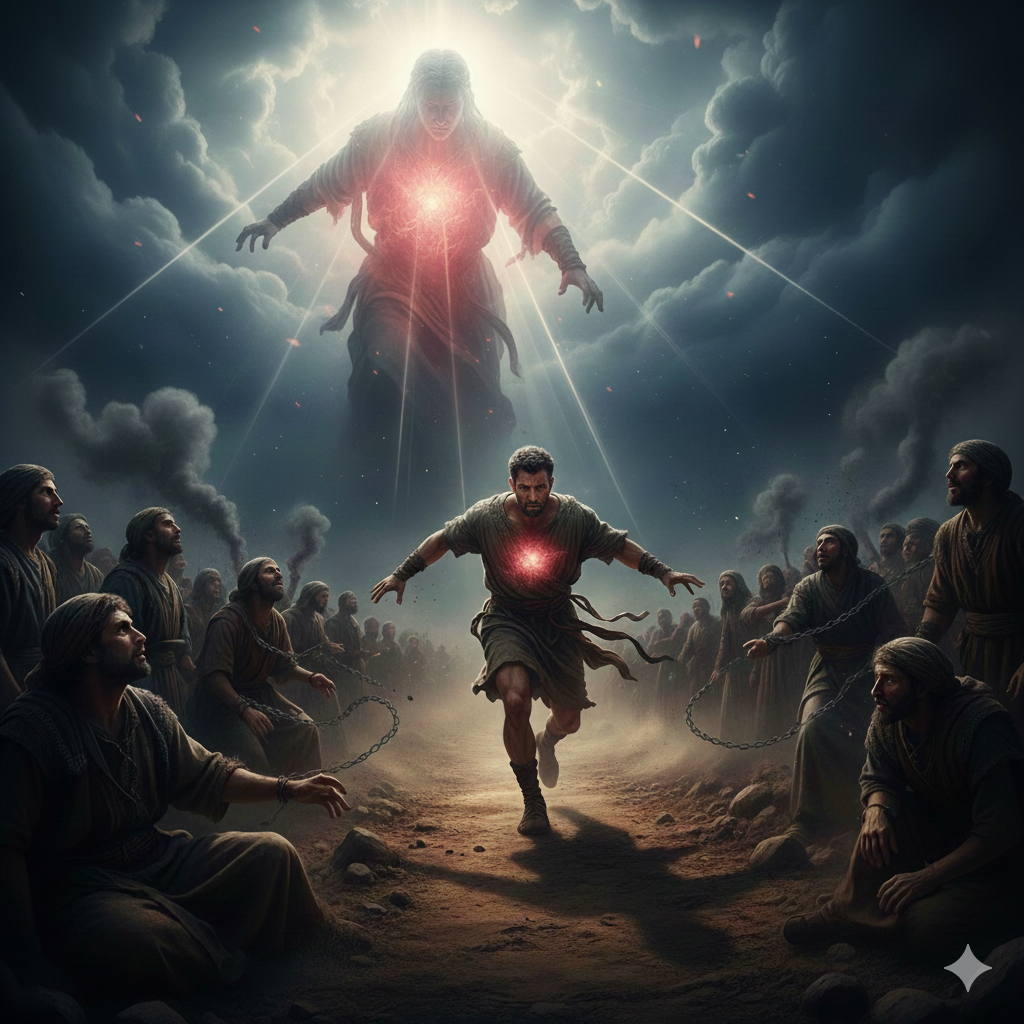
The stewardship of the word necessitates a sober assessment of the interpretive scaffolds that either illuminate the covenantal path or obscure it through layers of institutional sediment. Every choice in translation is an act of architectural consequence, determining whether the hearer encounters a living, visceral declaration or a sterilized, distant liturgy. The danger of linguistic drift is not merely academic; it is a matter of postural distortion that alters the perceived nature of the High-Most and the required response of the folk. When the raw, kinetic vocabulary of the first-century announcement is exchanged for anachronistic abstractions, the structural integrity of the message is compromised, leading to a profound loss of proximity and power. This section evaluates the critical implications of institutionalized translation and the jarring realism of literal reconstruction, revealing how the very words we use dictate whether we stand as distant observers of a royal pardon or as Inhabited participants in a visceral rescue.
The risk of institutionalization is most visible in the adoption of standard variations that prioritize modern religious comfort over ancient etymological fidelity. Terms such as prophet, lord, and mercy have become so heavily glazed with centuries of church tradition that they no longer transmit the original heraldic urgency. These words create a religious distance, acting as a soundproof barrier that mufflers the thunder of the Sovereign’s arrival. The shift from the visceral inner-bowels of kind-pity to the general concept of mercy is particularly damaging to the covenantal posture. It moves the Divine from the position of a Father whose physical core is churning for His young-offspring to the position of a detached Sovereign who is simply signing a legal pardon. While this may preserve a sense of God-for-us through agency, it completely sacrifices the reality of God-with-us through proximity. The result is a text that is no longer a shouting, striding force of restoration, but a soft, rhythmic liturgy designed for the pew rather than the field of battle.
Original: καὶ σὺ δέ, παιδίον, προφήτης Ὑψίστου κληθήσῃ (Luke 1:76, Vaticanus)
Transliteration: kai sy de, paidion, prophētēs Hypsistou klēthēsē
Literal Meaning: and you moreover, young-offspring, proclaimer of High-Most shall-be-hailed
Conversely, the pursuit of literal etymological reconstruction brings with it the risk of a jarring realism that can alienate the modern mind. By restoring terms such as inner-bowels and young-offspring, the listener is forced into a confrontation with the foreignness of the ancient Near Eastern mindset. This is the anatomical precision of a surgeon who exposes the bone to set it correctly; the process is uncomfortable and lacks the smoothness of the religious gloss, but it is the only way to restore the structural verticality of the High-Most and the visceral depth of the covenant. To speak of the High-Most looking down from the height and being moved in His gut requires a level of intellectual and spiritual honesty that rejects the comfort of the status quo. This realism demands that the Inhabited look upon the folk with the same raw empathy that costs them their own peace, reflecting a God who is as intimate as He is sovereign.
Original: διὰ σπλάγχνα ἐλέους Θεοῦ ἡμῶν (Luke 1:78, Sinaiticus)
Transliteration: dia splanchna eleous Theou hēmōn
Literal Meaning: through inner-bowels of-kind-pity of-Elohim of-us
The potential damage of avoiding this realism is the creation of a faith that has agency without proximity. It produces a powerless counterfeit “high priest” (Christian) who acts upon others without ever suffering with them, mirroring a judge who commuting a sentence without ever visiting the prisoner. This detachment is the hallmark of institutional religion, where the illusion of power (in false modern invented names – Jesus -) is exercised from a standing-above posture rather than a leaning-in one. By choosing the reconstructed path and the walk of ‘The Way’, through the only doorway of the only Name Yehoshua, one can be Inhabited and accept the heaviness of the pity as the necessary weight that anchors the power of the mercy. The jarring nature of the original words serves as a safeguard against the drift into abstraction, ensuring that the proclaimer remains a striding, kinetic bridge between the height and the valley through authentic covenantal fidelity.
The conclusion of this assessment is that the words we choose are the vessels for the Spirit-breath. If the vessel is shaped by institutional tradition, the breath is contained within the walls of a temple; if the vessel is shaped by covenantal fidelity, the breath flows into the streets and the nations. The Word of God is validated by its ability to provoke a response that is as visceral as the compassion that birthed it. The final word on these implications is a call to courageous fidelity, rejecting the soft liturgies of men in favor of the raw, jarring proclamation of the High-Most. We must embrace the foreignness of the ancient witnesses to recover the power of the original stride, ensuring that the deliverance we proclaim is the one that has truly looked upon the folk from the height.