Physical Address
304 North Cardinal St.
Dorchester Center, MA 02124
Physical Address
304 North Cardinal St.
Dorchester Center, MA 02124
With Michael Walker
With Michael Walker
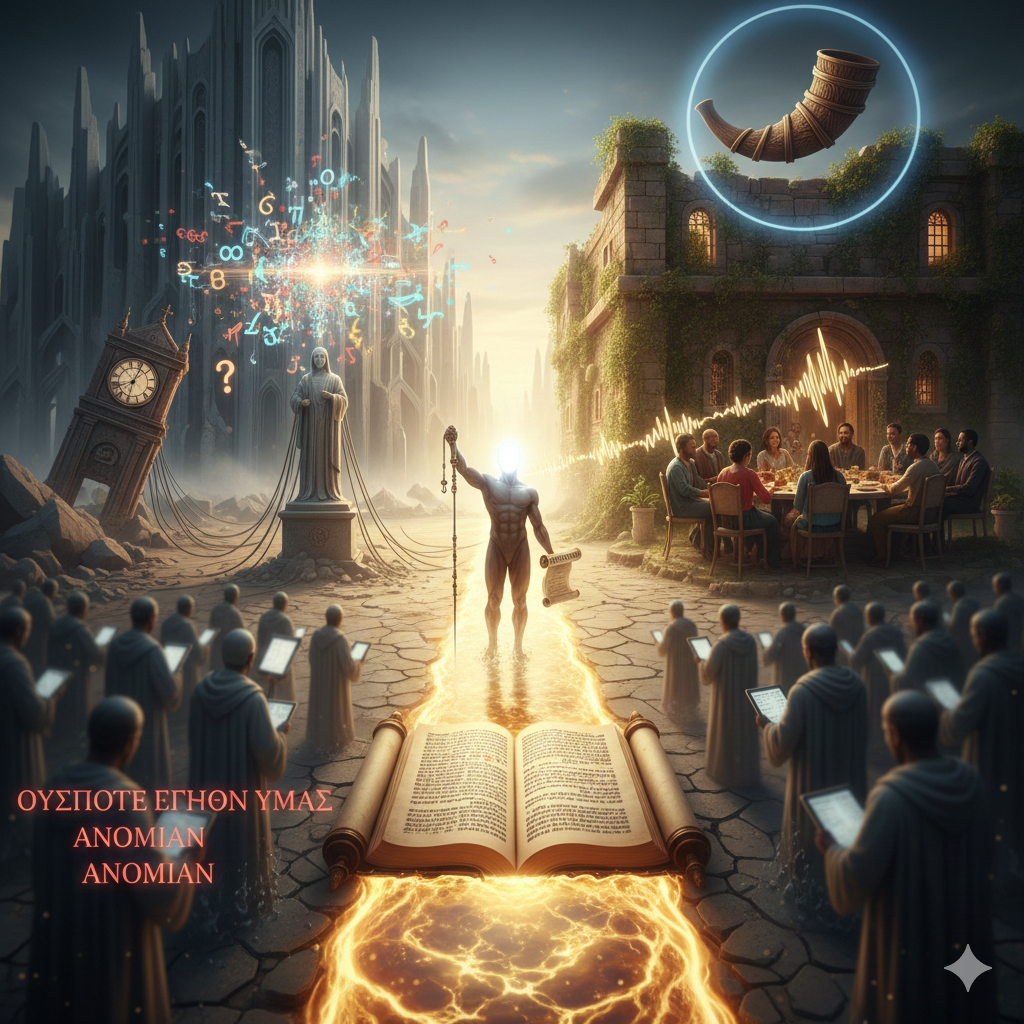
The Core Concept: The “House” vs. The “System”
The entrance into the ancient reality of the covenant requires a violent departure from the modern architectural structures of thought that define existence through the lens of a system. A system operates as a mechanical arrangement of parts designed for utility, where individuals participate as users or members who exchange adherence to rules for a calculated distribution of benefits. This is the hallmark of the religious institution, a framework that prizes the performance of the participant over the proximity of the person. Within a system, identity is a fluctuating variable based on the quality of one’s output or the duration of one’s membership. However, the scriptorial record demands a total redefinition of life through the lens of the house, a biological and legal dwelling place where the governing principle is not membership, but kinship. A house is not a collection of users but a gathering of kin bound by a common lineage and the authority of the master of that house. To understand the gravity of the current human condition is to realize that most have been living as nameless units within a religious machine, laboring for a deity that remains an abstract concept, while the ancient witnesses proclaim a master who functions as a placer of order within a specific dwelling.
The distinction between a religious system and a covenantal house is a matter of life or death regarding the recognition of the individual by the master. A user of a system can perform every required task with clinical precision and still remain utterly unknown to the architect of that system. This is the congenital error of the modern era, where the accumulation of religious data is mistaken for the intimacy of relational alignment. The transformation of the mind begins when one ceases to ask what must be done to satisfy a system and begins to ask if they are acknowledged within the house. If there is no relation, there is no foundation, and every action is merely a performance in a vacant hall. The master of the house does not look for employees to fulfill a quota; he looks for his kin to occupy their place. This shift in posture from the religious to the relational restores the weight of the ancient promises, moving them from the realm of ethereal sentiment into the solid ground of a legal and familial bond that cannot be severed by the failings of a system.
The validation of this relational house is found in the meticulous inspection conducted by the deity himself as recorded in the ancient witnesses.
Original: Εὐλογητὸς Transliteration: Eulogētos Literal Meaning: Spoken well of. Grammatical Role: Adjective, Nominative, Masculine, Singular; Root: eu (well) + logos (word)
Original: κύριος Transliteration: Kyrios Literal Meaning: Master / Holder of Authority. Grammatical Role: Noun, Nominative, Masculine, Singular; Root: kyros (supreme power)
Original: ὁ Transliteration: ho Literal Meaning: The. Grammatical Role: Definite Article, Nominative, Masculine, Singular
Original: θεὸς Transliteration: theos Literal Meaning: Deity / Placer. Grammatical Role: Noun, Nominative, Masculine, Singular; Root: tithemi (to place/set)
Original: τοῦ Transliteration: tou Literal Meaning: Of the. Grammatical Role: Definite Article, Genitive, Masculine, Singular
Original: Ἰσραήλ Transliteration: Israēl Literal Meaning: He struggles with El. Grammatical Role: Proper Noun, Indeclinable
Original: ὅτι Transliteration: hoti Literal Meaning: Because / For that. Grammatical Role: Conjunction
Original: ἐπεσκέψατο Transliteration: epeskepsato Literal Meaning: He looked upon to inspect. Grammatical Role: Verb, Aorist, Indicative, Middle, 3rd Person, Singular; Root: episkeptomai
(Vaticanus – Loukas 1:68)
This record establishes that the Spoken well of Master Deity of Israēl has acted because he looked upon to inspect. This is the posture of the master of the house entering the dwelling of his kin to evaluate the placement of his order. The deep dive into this reality exposes that salvation is not a religious feeling of being rescued from a bad mood, but a legal releasing for a price that occurs within the house of Dauid (David). When one functions within the house, the authority of the master provides a horn of safety that is inaccessible to those who remain outside as mere users of a religious system. To live in the house is to be under the constant inspection and protection of the placer of all things, ensuring that the kin group is never left to the mercy of their own errors.
The transition from the system to the house is the only path toward authentic transformation. A ship in a storm is not saved by its sailors understanding the physics of buoyancy, but by the integrity of the vessel and the skill of the captain who owns it. Religion offers the physics of buoyancy while the covenant offers the ship. The modern individual must decide if they will continue to swim in the chaotic waters of religious performance or if they will enter the house that has been prepared and ransomed through the historical and cultural intervention of the master. The question of whether one is working for a deity they do not know or functioning within a house where they are acknowledged is the dividing line of the coming age. The final word is not found in the academic gloss of the west, but in the audible utterance of the placer who identifies his kin and brings them home. Yehoshua.