Physical Address
304 North Cardinal St.
Dorchester Center, MA 02124
Physical Address
304 North Cardinal St.
Dorchester Center, MA 02124
With Michael Walker
With Michael Walker
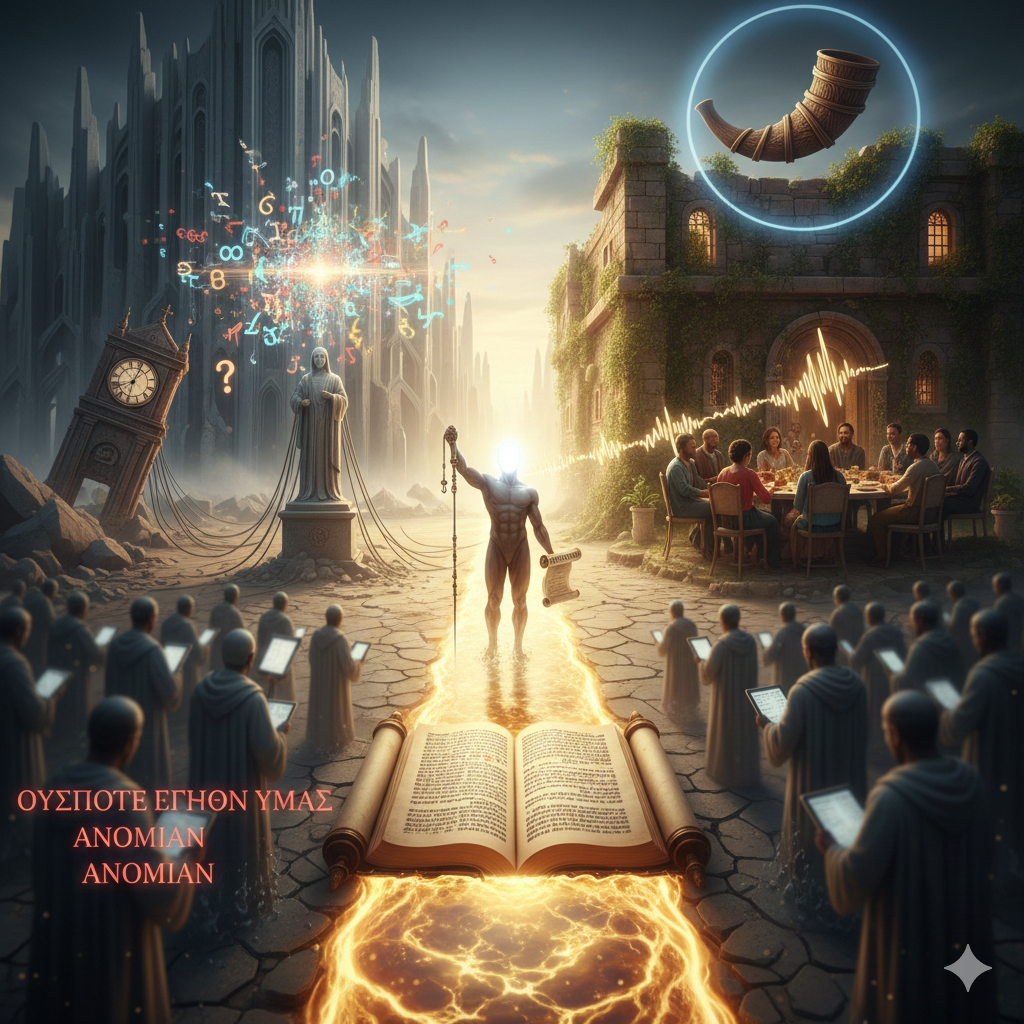
The Critical Revelation: Proximity and Identity.
The final convergence of this deep dive addresses the singular pivot upon which all eternal standing rests: the absolute necessity of being acknowledged by the master of the house. In the modern religious landscape, identity is often treated as a self-constructed identity or a psychological state of belief, but the ancient scriptorial witness defines identity as a legal status granted by the recognition of the placer. A man may spend his entire life maintaining a garden, but if that garden belongs to a king who does not know him, the man is not a gardener; he is a trespasser. The labor does not create the right to the soil. Similarly, the performance of good works within a religious system is entirely void of value if the master deity does not acknowledge the worker as kin. This revelation brings a violent clarity to the terrifying departure clause of the ancient texts, where individuals who performed wonders in the name of the master are dismissed because he never knew them. Without relation, there is no recognition, and without recognition, every act of piety is merely an act of lawlessness (from outside the covenant).
The word used for “knew” in this context is egnon, which in the ancient lexical witnesses transcends mere intellectual data or the possession of facts. To know in the covenantal sense is to have a person registered on the rolls of the house. It is the difference between knowing about a head of state and being recognized by that leader as a member of the immediate family with access to the inner chambers. When the master deity declares he never knew a worker, he is stating that the worker has no record in the house and no legal standing within the covenantal contract. This is why religious performance can exist in a state of total separation from the placer. One can follow the rules of the system with clinical perfection while remaining a stranger to the master. The work of the religious person is anomia, or functioning without law, because it is performed outside the jurisdiction of the household of the king. Outside of the covenant.
Original: οὐδέποτε Transliteration: oudepote Literal Meaning: Not even at any time. Grammatical Role: Adverb; Root: ou (not) + de (but) + pote (at any time)
Original: ἔγνων Transliteration: egnon Literal Meaning: I knew / I acknowledged. Grammatical Role: Verb, Aorist, Indicative, Active, 1st Person, Singular; Root: ginosko
Original: ὑμᾶς Transliteration: hymas Literal Meaning: You. Grammatical Role: Personal Pronoun, Accusative, 2nd Person, Plural
Original: ἀποχωρεῖτε Transliteration: apochōreite Literal Meaning: Depart / Go away from. Grammatical Role: Verb, Present, Imperative, Active, 2nd Person, Plural; Root: apo (from) + choreo (to make room)
Original: ἀπ’ Transliteration: ap Literal Meaning: From. Grammatical Role: Preposition
Original: ἐμοῦ Transliteration: emou Literal Meaning: Me. Grammatical Role: Personal Pronoun, Genitive, 1st Person, Singular
Original: οἱ Transliteration: hoi Literal Meaning: The ones. Grammatical Role: Definite Article, Nominative, Masculine, Plural
Original: ἐργαζόμενοι Transliteration: ergazomenoi Literal Meaning: Working / Trading. Grammatical Role: Participle, Present, Middle/Passive, Nominative, Masculine, Plural; Root: ergazomai
Original: τὴν Transliteration: tēn Literal Meaning: The. Grammatical Role: Definite Article, Accusative, Feminine, Singular
Original: ἀνομίαν Transliteration: anomian Literal Meaning: Lawlessness / Without law. Grammatical Role: Noun, Accusative, Feminine, Singular; Root: a (without) + nomos (law)
(Vaticanus – Mattathias 7:23)
The scriptorial witness from Mattathias (Matthew) demonstrates that the master deity says to them: Not even at any time I knew you, depart from me the ones working the lawlessness. This is the legal dissolution of the religious pretender. Because they were not acknowledged as kin, their works—no matter how impressive—were categorized as functioning without law. They were missing the mark because they were operating in a house that was not theirs. The final message of the covenantal scripture is not an invitation to a new religion, but a reclamation notice served upon the world. The master has come to pay the ransom for his kin to ensure they are safe from external and internal enemies, which are the errors and misalignments that lead to a state of being unknown. He is restoring his kin to their proper place in the house, where they are no longer defined by their efforts but by their proximity to the throne.
The conclusion of this deep dive is the realization that life is not a ladder to be climbed but a house to be occupied. The posture shift from the religious system to the relational household is the only way to avoid the congenital disease of being nameless at the end of days. A lighthouse does not work to be seen; it is seen because of where it has been placed and because its light is maintained by the one who owns the shore. When the placer deity conducts his final inspection, he is looking for the mark of the ransom and the sound of a voice he recognizes. The economic reality of the releasing for a price is the only ground upon which a human being can stand. To live as a ransomed member of the house of Dauid (David) is to exist in a state of constant acknowledgement, where every breath is a response to the master who paid the price for your breath. The deep dive ends here, at the threshold of the house, where the only thing that remains is to enter and be known.