Physical Address
304 North Cardinal St.
Dorchester Center, MA 02124
Physical Address
304 North Cardinal St.
Dorchester Center, MA 02124
With Michael Walker
With Michael Walker
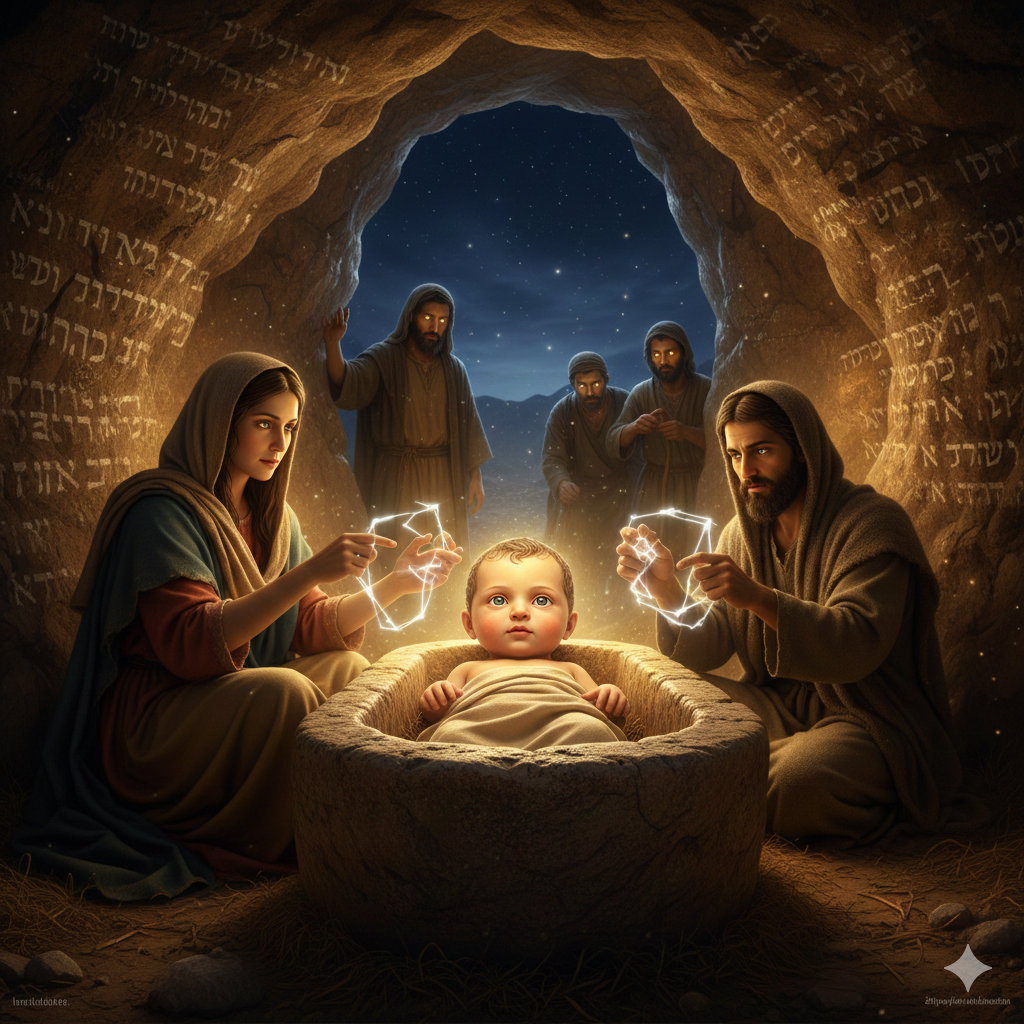
I. The Dialectic of the Two Witnesses: Preservation vs. Revelation.
The entrance into the sacred record requires a total shedding of the synthetic garments woven by centuries of institutional oversight. There exists a profound dialectic between two witnesses that serves as the foundation for all spiritual excavation. This tension is not an error of history or a failure of preservation on the part of the Father, but an intentional friction designed as a divinely woven filter for the indwelt. To the casual observer, the standard narrative provides a smooth, polished surface that satisfies the requirement for religious sentiment. However, for those who carry the spirit of the resurrected Yehoshua, the rougher texture of the ancient codex witness offers the necessary resistance to sharpen discernment. This friction acts as a key in a lock, where only the mind aligned with the original frequency of the uttered word can turn the mechanism. The physical archive has functioned for nearly two millennia as a massive stone sarcophagus, heavy and imposing, which served the singular purpose of carrying the shards of the transmission across time. While the external structure of religion often appears rigid and lifeless, it performed a custodial function of immense importance, preserving the physical letters as a protective shell while simultaneously burying the truth beneath layers of distortion. This shell ensured that the physical materials remained accessible until the arrival of the post-resurrection moment where the indwelt could finally perform the act of bringing the pieces together.
The custodial function of religion acts much like a heavy ceramic vessel buried beneath the desert sands. To the passerby, the vessel is merely an artifact of clay, a utilitarian object of a bygone era. Yet, for the one who knows what lies within, the clay is secondary to the scrolls it protects from the corrosive elements of time and cultural decay. However, the vessel itself is not the treasure; it is a distraction that the blind gatekeeper offers as a substitute for the reality inside. Institutional systems, with their rigid dogmas and formalized hierarchies, provided the structural integrity required to move the text across centuries of linguistic drift and political upheaval. They held the phonetic boundaries in place, even when they did not fully grasp the living resonance of the sounds they transcribed. This preservation of the shell allowed the letters to survive in a state of suspended animation while the actual frequency was obscured. The spirit reserved the life for a specific generation of seekers who would no longer be satisfied with the external glaze of the vessel but would seek to shatter the clay to reach the internal fire. This is the transition into the Mariam (Mar-ee-ahm) — Mary moment, a state of being where the believer moves from the role of a passive recipient to that of a cognitive constructor of the divine puzzle.
Moving beyond the standard posture of an outside observer watching a sentimental scene toward the codex posture of an active participant is the defining shift of the indwelt. The standard religious narrative positions the individual in a gallery, viewing the arrival of the Son of God as a static painting on a wall. It is a scene to be admired, a story to be told, but it remains fundamentally separate from the observer’s present reality. Religion takes a living, covenantal, and legal event and re-packages it as a passive, manageable, and soft tradition. In contrast, the codex witness demands inhabitation. It is not an invitation to look, but an invitation to occupy the space. When the text is stripped of its anachronistic glosses and Western smoothing, it reveals a landscape that is rugged, immediate, and demanding. The indwelt do not observe a manger; they inhabit the feeding trough. They do not watch a baby; they witness the entry of an heir into a covenantal inheritance. This transition represents the movement from a cerebral acknowledgment of history to a visceral participation in the living rhema. The word ceases to be a report of what happened to others and becomes the blueprint for what is currently occurring within the temple of the believer.
This shift in posture is validated by the meticulous handling of the messengers’ arrival as documented in one of the earliest witnesses. In the record of those who sought the sign, the priority remains on the literal transmission of what was uttered from the heavens. The messenger said to them: do not fear, for behold, I bring good news to you of great joy which will be to all the people. (Codex Vaticanus – Loukas 2:10, Covenantally Faithful, Minimal Copular, SVO Format).
Original (full Greek sequence): μὴ φοβεῖσθε ἰδοὺ γὰρ εὐαγγελίζομαι ὑμῖν χαρὰν μεγάλην ἥτις ἔσται παντὶ τῷ λαῷ
Transliteration: mē phobeisthe idou gar euangelizomai hymin charan megalēn hētis estai panti tō laō
Literal Translation: not you‑all‑be‑caused‑to‑flee behold for I‑announce‑good‑message to‑you‑all joy great which it‑will‑be to‑all the people
The structural integrity of this announcement is often lost in translation when it is treated as a simple greeting or a religious statement. In the etymological reality, the instruction to not be caused to flee is a command to remain present for the transmission of the good message. The good message itself is not a vague feeling of happiness but a concrete announcement of a legal and covenantal shift in the cosmos. The institutional shell translates this as a mere emotional state, but the codex reveals it as a foundational change for the entire tribe. This distinction is the hallmark of the dialectic. One witness offers a soft landing for the mind, while the other offers a firm foundation for the spirit. The indwelt must learn to discern the difference between the echo and the voice. The voice is found in the grit of the original phonetics, while the echo is found in the polished halls of institutional tradition. Religion does not protect the truth; it protects the shards of the transmission while simultaneously burying the truth beneath layers of distortion. The institution has acted as a blind gatekeeper, holding the physical keys but replacing the actual door with a painted mural that looks like a door—a sentimental narrative which keeps people from ever entering the actual covenant.
To navigate this dialectic is to become a surveyor of ancient foundations. Just as a builder must clear away the topsoil and the debris of later additions to find the original cornerstone, the seeker must clear away the anachronisms of Western religious thought. This is an act of spiritual archaeology. We are not looking for new information; we are looking for the original orientation of the information we have always possessed. The institutional text has served as a cloaking mechanism, protecting the foundation from the erosion of total loss while hiding it from sight. However, the time has come to dig. The standard narrative is a garment that has become too small for the growing spirit of the indwelt. It constrains the movement and stifles the breathing. The codex witness provides the expansive space required for the full stature of the covenant to be realized. By engaging with the text in its literal, historical, and cultural etymology, the seeker removes the synthetic filters and allows the raw frequency of the Word to impact the soul.
Consider the nature of a seed. The hard outer casing of the seed is essential for its survival during the winter months. It protects the delicate life within from freezing and from being consumed by scavengers. This is the custodial function of the physical letters held by religious systems. It kept the seed of the text intact through the winter of the dark ages and the cold rationalism of the Enlightenment. But a seed that remains in its shell forever is a failure. The purpose of the shell is to be broken when the conditions of the soil are right. For the indwelt, the conditions of the heart have been prepared by the spirit of Yehoshua. The shell must now give way so that the life can emerge and take root. This deep dive is the process of cracking that shell. It is the recognition that the friction between what we were taught by institutions and what we find in the ancient witnesses is the very thing that signals the beginning of growth. Religion is the veil, not the guardian, of the truth. The Father allowed the physical material to be carried by these systems, but the systems themselves have distorted the frequency. The only reason we can see the truth now is that the Spirit of Yehoshua allows us to look past the religious mural and see the actual, rugged structure of the Codex Witness that the institution was too blind to fully erase.
The profound message for the modern era is that the puzzle is ready to be completed. We are no longer in the phase of merely collecting pieces; we are in the phase of symballousa (soom-bal-loo-sah) — the aggressive fitting together. The pieces are the literal words, the cultural etymologies, and the internal resonance of the spirit. When these are brought together, they reveal a portrait of Yehoshua that is far more potent and sovereign than the one presented by institutional religion. This version of the Son of God is not a figure of stained glass but a figure of fire and frequency, an Inhabited One who moves with authority within the temple of the believer. The dialectic ensures that this revelation is reserved only for those who are willing to do the work of the search. It is a protective mechanism that hides the truth in plain sight, making it invisible to the casual or the religious, while making it blindingly clear to the hungry.
The conclusion of this introductory phase marks the end of the observer’s status. There is no longer a way to be found that is paved by others; there is only the finding by seeking that characterizes the true covenantal relation. As we transition into the meticulous breakdown of the rhemata, the posture must be one of intense alertness. We are not merely reading a document; we are listening to a living utterance that was intended to vibrate across the ages. The dialectic has done its work to separate the religious observer from the covenantal participant. Now, the work of the symballousa begins in earnest, where the shattered pieces of the original living utterance are brought together in the heart of the indwelt to reveal the full stature of the Son of God, Yehoshua, the Inhabited One. This is the moment where the shell is discarded, and the life is fully embraced.