Physical Address
304 North Cardinal St.
Dorchester Center, MA 02124
Physical Address
304 North Cardinal St.
Dorchester Center, MA 02124
With Michael Walker
With Michael Walker
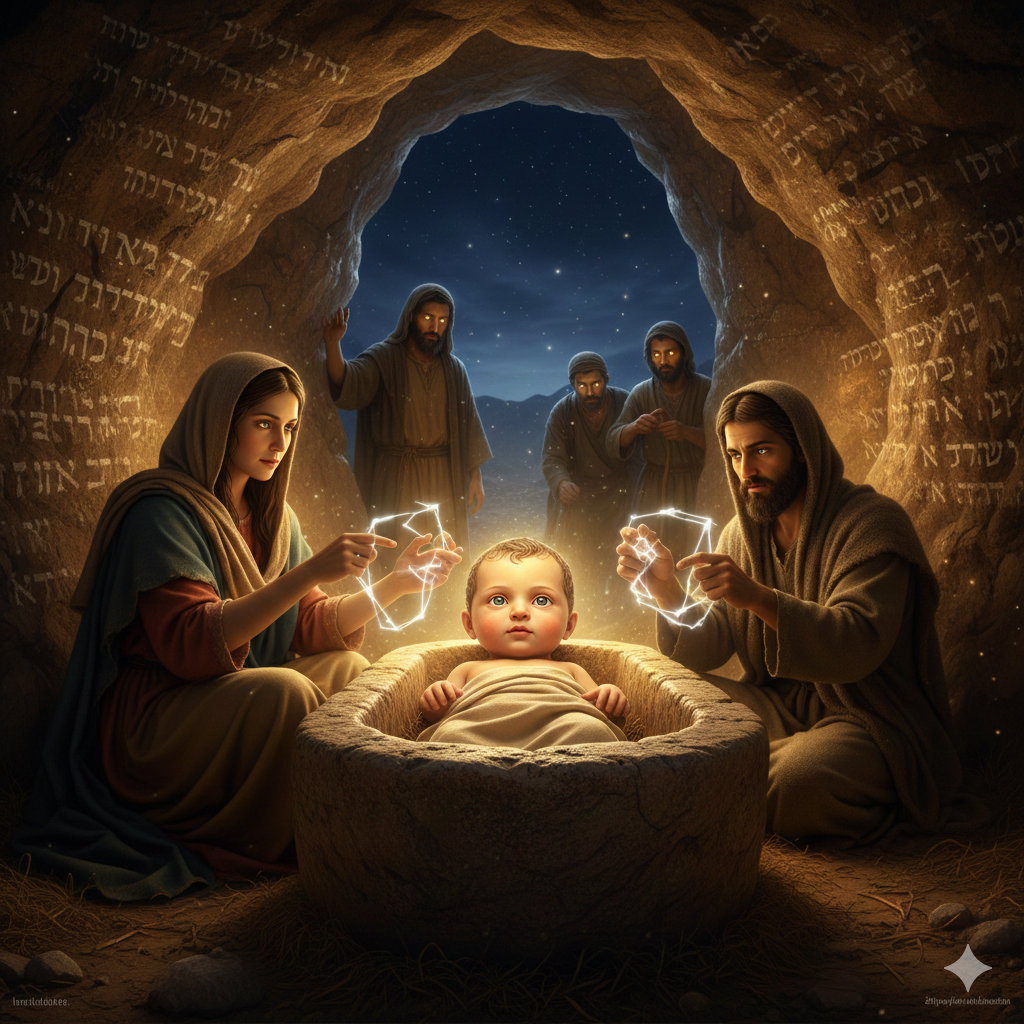
IV. The Mariam Protocol: The Cognitive Construction of the Puzzle.
The cognitive construction of the divine puzzle requires a radical departure from the passive reflection promoted by institutional systems. To witness the emergence of the full image of the Inhabited One, the seeker must adopt the Mariam protocol, a rigorous and aggressive method of intellectual and spiritual assembly. Religious tradition has long reduced the internal processing of the mother to a state of quiet pondering, a word that suggests a dreamlike, sentimental musing devoid of structural intent. This institutional gloss attempts to pacify the mind of the believer, encouraging a vague emotional response rather than a sharp covenantal alignment. However, the codex witness provides the term symballousa (soom-bal-loo-sah), which denotes a literal throwing together or a bringing together of disparate parts. This is the labor of an architect fitting the complex shards of a blueprint into a standing structure, or a strategist assembling fragments of intelligence to perceive the movement of a sovereign power. The indwelt mind is not called to merely feel the weight of the word, but to aggressively fit the ancient etymology, the historical manifestation, and the current internal resonance together until the static noise of tradition is silenced by the clarity of the completed image.
This process of symballousa functions like a master weaver working at a loom where the threads are not merely colors, but frequencies of light and sound. The weaver does not simply look at the threads; they must forcefully cross and lock them into place to create a fabric that can hold weight. Mariam was not a passive recipient of a miracle; she was the first cognitive constructor of the new covenant reality, taking the raw data of the shepherd’s living utterance and locking it into the existing frame of the father’s promises. For the modern indwelt seeker, this protocol is the only means of bypassing the synthetic murals of religion. We are required to take the shards of the Greek and Hebrew witnesses, which have been scattered and obscured by institutional gatekeepers, and bring them together in the heat of the spirit. This is a cognitive mandate where the intellect and the spirit operate in a single, high-intensity state of construction. The result is not a religious feeling, but a solidified understanding of the presence of Yehoshua as a living, reclining authority within the physical temple of the believer.
The preservation of this assembled reality is maintained through the secondary mechanic of suneterei (soon-eh-tay-ray-ee), a term that institutional religion has diluted into treasuring. To treasure something in a religious context often implies an emotional hoarding, a sentimental attachment that keeps the object locked away in a cabinet of the heart for private comfort. This institutional approach allows the truth to become a stagnant artifact, disconnected from the active movement of the covenant. The codex witness, however, reveals suneterei as a protective maintenance or a keeping together of the integrity of the frequency. It is the action of a guardian who prevents the pure water of a spring from being diluted by the surrounding runoff of the earth. This is the maintenance of the word’s integrity against the corrosive noise of religious tradition and human philosophy. Mariam was not hoarding an emotion; she was protecting the structural integrity of the rhemata she had assembled, ensuring that no external influence could warp the frequency of the truth she had brought together.
The validation of this cognitive labor is recorded in the precise description of Mariam’s response to the shepherds’ witness. While the masses wondered at the surface level of the report, she engaged in the deeper work of construction and preservation. But Mariam was keeping together all these spoken words, bringing them together in the heart of her. (Codex Vaticanus – Loukas 2:19, Covenantally Faithful, Minimal Copular, SVO Format).
Original: ἡ δὲ Μαριὰμ πάντα συνετήρει τὰ ῥήματα ταῦτα συμβάλλουσα ἐν τῇ καρδίᾳ αὐτῆς
Transliteration: hē de Mariam panta sunetērei ta rhēmata tauta symballousa en tē kardia autēs
Literal: the but Mariam all‑things she‑was‑keeping‑together the utterances these bringing‑together in the heart of‑her.
The heart (kardia) in this context is not the seat of romantic emotion as defined by Western sentiment, but the core processing center of the individual’s being. It is the workshop of the indwelt. To bring the spoken words together in the heart is to perform a technical alignment of the internal spirit with the external decree. This is an analogy of a high-precision instrument being calibrated to a master frequency. If the instrument is left to itself, it will drift, influenced by the temperature and vibrations of the world. Suneterei is the constant recalibration that keeps the indwelt mind in phase with the father’s intent. Religion offers a pre-calibrated, static setting that requires no effort from the believer, but the covenantal protocol requires an active, ongoing preservation of the frequency. This ensures that the rhema remains a sharp, cutting force rather than a dull, religious platitude.
The contrast between the institutional pondering and the codex fitting together reveals the primary strategy of the gatekeepers: the neutralization of the believer’s mind. By suggesting that Mariam merely mused upon these things, religion implies that the depth of the covenant is beyond the comprehension of the indwelt, relegating them to a state of perpetual mystery and ignorance. The codex, however, empowers the seeker by revealing that the mystery is designed to be solved through the act of symballousa. The indwelt have been given the spirit of Yehoshua specifically to facilitate this construction. We are not meant to stand in awe of a puzzle we cannot solve; we are meant to solve the puzzle and inhabit the reality it reveals. The labor of the heart is the most vital work of the covenantal life, for it is the process by which the word becomes flesh within us. Without this fitting together, the scriptures remain a collection of disconnected shards; with it, they become a living, breathing sovereign presence.
Consider the act of navigating a ship by the stars. To the unlearned observer, the stars are merely points of light in a chaotic sky, something to be wondered at or pondered. To the navigator, these points of light are data markers that must be brought together into a coherent geometric pattern to determine location and direction. This is the Mariam protocol. The living utterances of the prophets and the manifestations of the spirit are the stars. The indwelt navigator does not merely look at them; they lock them together to find the true north of the kingdom. This navigation allows the seeker to move through the dark waters of institutional religion without being shipwrecked on the reefs of tradition. By keeping the frequency of the rhemata together, the navigator maintains a clear heading toward the Inhabited One, regardless of the shifting winds of human doctrine.
The preservation of the word’s integrity is the final barrier against the dilution of the covenant. Suneterei is the act of maintaining the boundary between the sacred utterance and the common noise of the world. Institutional religion thrives on syncretism, blending the original sound of the father with the cultural and political agendas of the day. This creates a muddy, distorted frequency that lacks the power to transform the vessel. The indwelt must be aggressive in their suneterei, refusing to allow the pure etymology of the record to be smoothed over by the needs of the religious system. This preservation is a form of spiritual hygiene, ensuring that the environment of the heart remains a fit habitation for the reclining sovereign. When the rhemata are kept together and fitted together, the result is a resonance that can be felt by all who come into contact with the indwelt.
The conclusion of this cognitive excavation establishes that the mind of the indwelt is the primary theater of covenantal assembly. Mariam provides the blueprint for how we are to handle the shards of the record, moving from wonder to work, and from hoarding to preservation. We have exposed the institutional pondering as a veil that hides the mandate of symballousa. We have identified suneterei as the active guard of the rhema frequency. The construction of the puzzle is nearly complete; the pieces of the search, the architecture of the vessel, and the cognitive assembly have all been brought together. We move now to the final section, where the frequency of this assembly is carried out of the cavern and into the fields, as the shepherds return, not as they were, but as carriers of the Inhabited Glory.