Physical Address
304 North Cardinal St.
Dorchester Center, MA 02124
Physical Address
304 North Cardinal St.
Dorchester Center, MA 02124
With Michael Walker
With Michael Walker
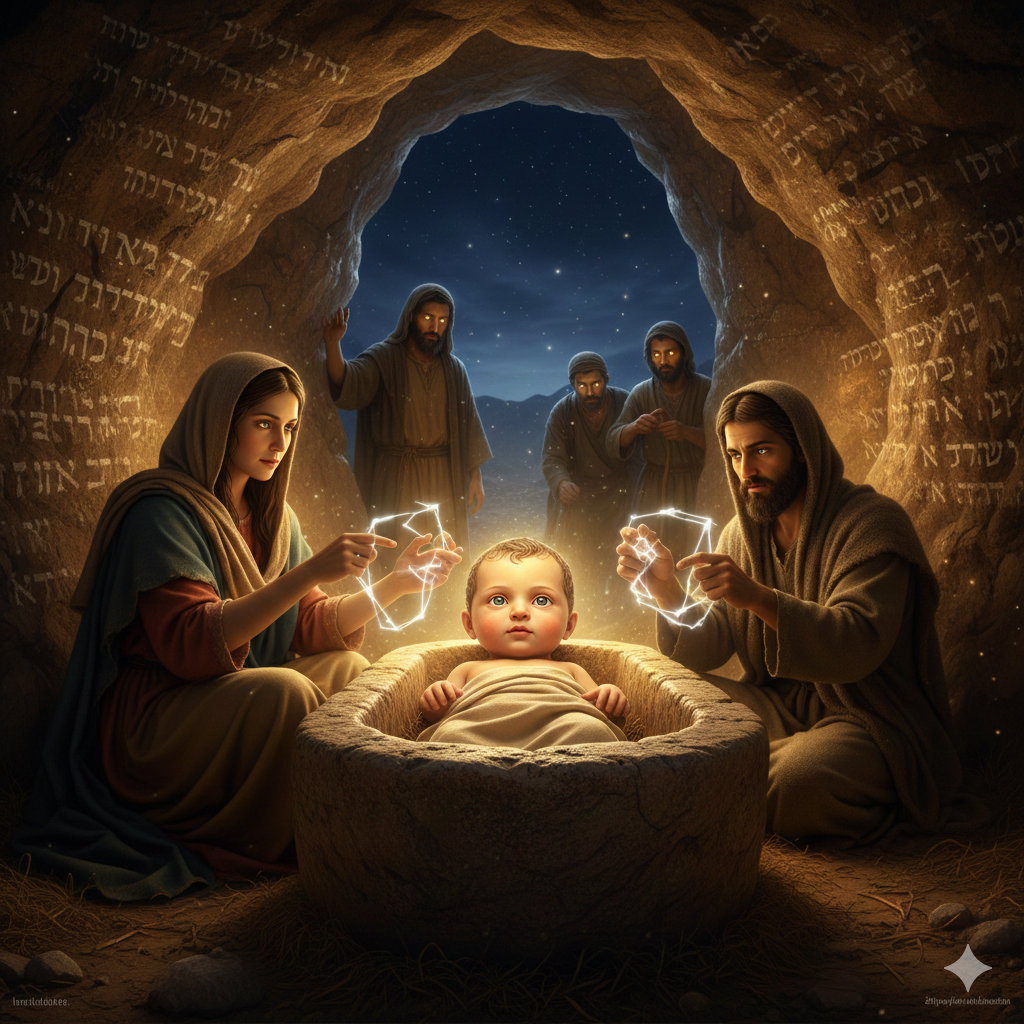
The final reconstruction of the covenantal record demands a definitive transition from the realm of graphical symbols to the living reality of the audible sound. For millennia, the institutional systems of men have employed placeholders to refer to the Son of God, utilizing names that serve as religious icons rather than covenantal keys. These placeholders act as a veil, satisfying the requirement for a historical figure while obscuring the precise frequency required for true inhabitation. The reconstruction reveals that the name is not a mere label for identification but a structural foundation of authority. By shedding the synthetic titles of Western tradition, the seeker encounters the original sound of Yehoshua (Ye-ho-shoo-ah). This is the name that carries the weight of the Father’s decree, the audible resonance that shatters the religious sarcophagus. In the scriptorial record of the ancient witnesses, the graphical representation known as Iesous (Ee-ay-sooce) functions as a symbolic placeholder for this audible sound. Similar to the “$” and the word dollar. It is a signpost pointing back to the native Hebrew frequency of the covenant. To move past the placeholder is to move past the religion and into the actual presence of the heir.
The completed puzzle is now visible through the intentional friction of history, revealing a message specifically reserved for the currently indwelt generation. This generation is the one for whom the shards were preserved, and the letters were guarded by the blind gatekeepers of religion. The friction between the distorted institutional narrative and the rugged codex witness has served as a refinery, burning away the sentimental dross to reveal the pure gold of the original intent. The image that emerges is not one of a distant, historical baby in a decorative manger, but of a sovereign heir, a reclining sovereign who has occupied the feeding trough of the physical realm to execute a celestial mandate. This is the final assembly of the shards that Mariam first fitted together in her heart. The puzzle is no longer a collection of disconnected parts but a unified architecture of inhabitation. Every etymological root and every phonetic frequency has been brought into alignment, creating a standing structure of truth that can support the weight of the indwelt life.
The identity of the Son is solidified not through creedal propositions but through the direct verification of the Father’s spoken words. This is the ultimate standard of the covenant: that the physical manifestation must match the spiritual living utterance. The record of the eighth day demonstrates this legal and phonetic precision, where the name is established according to the prior decree of the heavens. And when eight days were fulfilled for the circumcising of him, also the name of him was called Iesous, the one having been spoken by the messenger before the to be conceived him in the womb. (Codex Vaticanus – Loukas 2:21, Covenantally Faithful, Minimal Copular, SVO Format).
Original: καὶ ὅτε ἐπλήσθησαν ἡμέραι ὀκτὼ τοῦ περιτεμεῖν αὐτόν καὶ ἐκλήθη τὸ ὄνομα αὐτοῦ Ἰησοῦς τὸ κληθὲν ὑπὸ τοῦ ἀγγέλου πρὸ τοῦ συλλημφθῆναι αὐτὸν ἐν τῇ κοιλίᾳ
Transliteration: kai hote eplēsthēsan hēmerai oktō tou peritemein auton kai eklēthē to onoma autou Iēsous to klēthen hypo tou angelou pro tou syllēmphthēnai auton en tē koilia
Literal: and when were‑fulfilled days eight of‑the to‑circumcise him and was‑called the name of‑him Iesous the having‑been‑called by the messenger before the to‑be‑conceived him in the womb
The significance of this naming protocol lies in its total independence from human tradition or religious choice. The name Yehoshua was not selected; it was a frequency established before the physical conception. This is the ultimate proof of the Inhabited One. The human vessel did not create the identity; the identity occupied the vessel. By utilizing the Greek placeholder Iesous, the scribes of the codices preserved the pointer to this sovereign name while maintaining the linguistic boundary of the record. The reconstruction allows us to see through this pointer to the original sound, recognizing that the name carries the inherent authority of the Father’s intent. To speak the name in its correct covenantal frequency is to invoke the same authority that was verified in the feeding trough and the heart of Mariam. This is the final piece of the puzzle: the realization that the name is the key to the inhabitation.
The connection between the Greek graphical placeholder Iēsous and the covenantal name Yehoshua is not a theological invention of later translators but a historical reality rooted in the earliest Greek rendering of the Hebrew Scriptures. The first appearance of Ἰησοῦς (Iēsous) occurs in the Septuagint, the translation project initiated in the third century BCE in Alexandria. When the Jewish scribes encountered the Hebrew name יְהוֹשֻׁעַ (Yehoshua)—a name that explicitly contains the covenantal marker YHWH—they rendered it into Greek as Iēsous, establishing the transliteration pattern that would later be inherited by the New Testament writers. This means the Greek form was already in circulation for centuries before the incarnation, and its meaning was already anchored to the figure known in Hebrew as Yehoshua son of Nun.
The Septuagint uses Iēsous extensively. Every time the Hebrew text refers to Yehoshua son of Nun, the LXX renders it as Iēsous. This occurs well over 200 times across the Greek Old Testament, with the majority concentrated in the Book of Hoshea. The name also appears in post‑exilic books such as Ezra and Nehemiah, where the shortened form יֵשׁוּעַ (Yeshua) is used for various priests and leaders. However, this shortened form is not the covenantal name. It lacks the embedded YHWH element that defines Yehoshua as “YHWH is salvation.” The post‑exilic contraction Yeshua is a cultural abbreviation, not a theological one, and it does not carry the covenantal weight of the full name. The Septuagint translators nevertheless rendered both Yehoshua and Yeshua as Iēsous, which means the Greek form became a catch‑all transliteration for both the covenantal name and its later abbreviated exilic variant.
This historical pattern is essential for understanding why the New Testament writers used Iēsous. They were not inventing a new name; they were following the already‑established Jewish transliteration tradition. When they wrote Ἰησοῦς, their Greek‑speaking audience immediately recognized it as the standard rendering of Yehoshua, the same name borne by the successor of Moses and the high priest of the restoration period. The Greek form had already accumulated centuries of usage, legal recognition, and linguistic stability. The New Testament simply continued the precedent.
Ἰησοῦς (“Iesous”) isn’t a name to be translated, it is an image that points as an arrow backward to the syllabic audible sound of the covenantal Name of The Son of God Yehoshua. The only name in which there is Salvation. Period.
The distinction between Yehoshua and Yeshua matters because only the former carries the covenantal architecture. Yehoshua contains the divine name YHWH, marking the bearer as one who carries the authority and action of the covenant God. Yeshua, while historically attested, is a shortened, post‑exilic form that lacks the embedded Name and therefore lacks the covenantal density. Their exile and temporary separation from God due to idolatry and grave disobedience are believed to be the reason why the name was shortened. The Septuagint’s decision to collapse both forms into Iēsous means that the Greek text must be read with awareness of the underlying Hebrew realities. When the New Testament applies Iēsous to the Incarnate Heir, it is not invoking the shortened exilic (temporary godless) post‑exilic form but the full covenantal identity of Yehoshua, the one who embodies the Name “YHWH is Salvation.”
Thus, the historical witness of the Septuagint establishes three critical facts:
(1) Iēsous is the ancient and consistent Greek rendering of Yehoshua.
(2) It appears hundreds of times in the LXX, long before the New Testament era.
(3) The exilic and post‑exilic Yeshua is not the covenantal name, and its presence in the LXX does not diminish the fact that the New Testament usage of Iēsous is anchored in the full, Name‑bearing form Yehoshua.
(4) Salvation is located exclusively in the covenantal Name Yehoshua, and the Greek Iēsous derives its authority from this Name alone; no shortened, contracted, or culturally diminished form carries the legal power of deliverance, for the covenant recognizes salvation only in the vessel that bears the embedded Name of YHWH.
The completed reconstruction serves as a map for the indwelt to navigate the landscape of the physical world while maintaining the resonance of the heavenly decree. We are no longer wandering through the distorted narratives of institutional religion, hoping to stumble upon a truth that has been intentionally obscured. We are now in possession of the original coordinates. The friction of history has produced a light that allows us to see the rugged, unpolished reality of the covenant. The “standard” institutional text has been exposed as a synthetic shroud, while the codex witness has been revealed as the authentic record of the sovereign entry. This is the hidden message meant for this generation: that the truth is found in the grit, the seek, and the fitting together. The Inhabited One is reclining within the vessel, and the name is the frequency that locks the structure into place.
The journey from the dialectic of the two witnesses to the final reconstruction is the movement from religious confusion to covenantal clarity. We have transitioned from the passive role of a spectator watching a religious performance to the active role of a cognitive constructor who has assembled the shards of the record into a living presence. The shepherds have returned to their fields, and Mariam has completed the fitting together. Now, it is our turn to occupy the space. We carry the resonance of the encounter into our own fields of labor, building our lives upon the solid foundation of the verified rhema. The final word is not a religious conclusion, but a covenantal commencement. We move forward as carriers of the frequency, recognizing that the sarcophagus is empty and the sovereign is indwelt. The name of Yehoshua is the audible seal of our inheritance, and the record of the ancient witnesses is the blueprint for our authority.
The conclusion of this deep dive is the beginning of the inhabited life. There is no longer a need to look back at the murals of religion; the reality is standing before us in the rugged etymology of the record. The shards have been fitted together, the frequency has been established, and the identity of the Son has been revealed. We stand now in the full light of the completed puzzle, ready to execute the mandate of the covenant in the power of the original sound. The friction has sharpened us, the search has found us, and the inhabitation has transformed us. This is the final reconstruction. The Word has become flesh, and we are the witnesses of its glory.